
 E-Paper



Onion harvests run late by a month, stoke supply crunch
Prices have doubled in some cities between August and now, including in Delhi, Jammu, Patna and Gurugram. Usual retail rates of ~25-30 a kg have gone up to ~60-80 a kg, according to market data.


Harvests of the country’s main summer onion crop have been delayed by over a month in key states due to a sluggish start to this year’s monsoon rains, pushing up prices sharply in what is a lean period, multiple officials and agriculture market operators said.
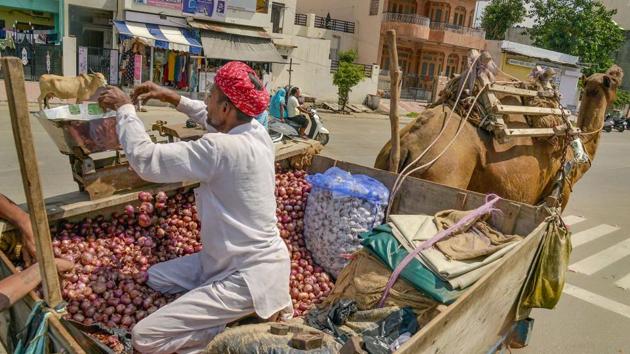
Prices have doubled in some cities between August and now, including in Delhi, Jammu, Patna and Gurugram. Usual retail rates of ~25-30 a kg have gone up to ~60-80 a kg, according to market data.
The main summer crop, sown in May-June and harvested in October-November, accounts for just 15% of the country’s annual output. Yet, this crop is critical because it replenishes markets, which generally run out stocks from the previous harvest around this time of the year.
This lean period is usually made good by onion stocks specifically set aside to tide over seasonal shortages, known as stored onions, but when the wait for new harvests gets longer, as is currently the case, prices rise.
A poor start to the monsoon pushed back sowing in the largest onion growing state, Maharashtra, along with states such as Andhra Pradesh, Madhya Pradesh and Karnataka. Skewed rainfall — first scanty, then excess — upended sowing patterns, officials said.
The June-September monsoon was 33% deficient in June, but ended up being 4% excess by mid-September, according to data from the India Meteorological Department (IMD).
“In Maharashtra, sowing was delayed due to drought. Then floods (happened). Summer output is likely to be less by 10-15%. That’s the feedback we have given to the Centre,” said Shirish Jamdade, the joint director of the state’s Pune-headquartered horticulture department.
A central government team from New Delhi last week visited key onion-trading sites, including Lasalgoan in Nashik district, which is Asia’s largest onion wholesale market.
Jamdade said a 10-15% smaller crop would “proportionately reduce output”.
“The good thing is we are definitely going to see a robust winter crop because late rains have increased groundwater levels,” an official of the state-run National Horticultural Research and Development Foundation said on condition of anonymity.
Onion harvests in southern states such as Karnataka and Andhra Pradesh are also running behind schedule, bringing Maharashtra’s stocks under pressure, said Narendra Wadhwane, the secretary of the Lasalgaon agricultural market committee, which oversees the largest volumes of onion trade in the country.
Onion, like rice, is first grown in smaller, dense plots, known as nursery beds, before saplings are transplanted onto large fields. Drought conditions hit these operations during June and July.
There’s more bad news.
“We have received reports of damage to onion stocks stored from the winter harvest,” said Sudin Tarle, another official of the Lasalgaon wholesale market.
A majority of India’s onion crop, accounting for 70-80% of total production, is grown during winter. It is sown during December -January and harvested in April-May.
The summer or kharif onion crop, now delayed, is followed by a smaller late summer crop, sown during August-September and harvested in January-February.
“By September 15, the harvests should have started arriving in good quantities,” Jagdade said.
The Centre has said there are sufficient stocks of stored onions in Maharashtra.
Onions suffer from classic seasonal volatility and face supply swings every other year, mainly due to inadequate storage and untimely rains.
According to the farm ministry data, India’s total onion output was around 23.48 million tonne in 2018-19, slightly higher than the previous year’s production. Data for the current season is still being compiled.
The Union government imposed a minimum export price (MEP) on onion of $850 (about ~65,000) a tonne on September 13. An MEP is a policy tool designed to discourage exports by making Indian produce expensive for foreign buyers, ramping up domestic supplies. It has also offered states onions from federally held reserves of 32,000 tonnes, a statement from the consumer affairs ministry said. The government has also called for bids to import onion and shipments are expected by November.
“By November we will anyway see domestic supplies go up. Then there could be a glut. Still, the government should have planned much in advance,” said Raju Shetti, a former MP and leader of the Swabhimani Shetkari Sangathana, a farm organisation.


