
 E-Paper



Quad more influential today, a force for good in Indo-Pacific region: PM Modi
The mutual trust and determination between the Quad members are giving “democratic forces a new energy and enthusiasm”, PM Modi noted

 Prefer HTon Google


NEW DELHI: The increased coordination between members of the Quadrilateral Security Dialogue, or Quad, is ensuring peace, prosperity and stability in the Indo-Pacific, and the grouping has a constructive agenda that strengthens its image as a “force for good”, Prime Minister Narendra Modi said on Tuesday.
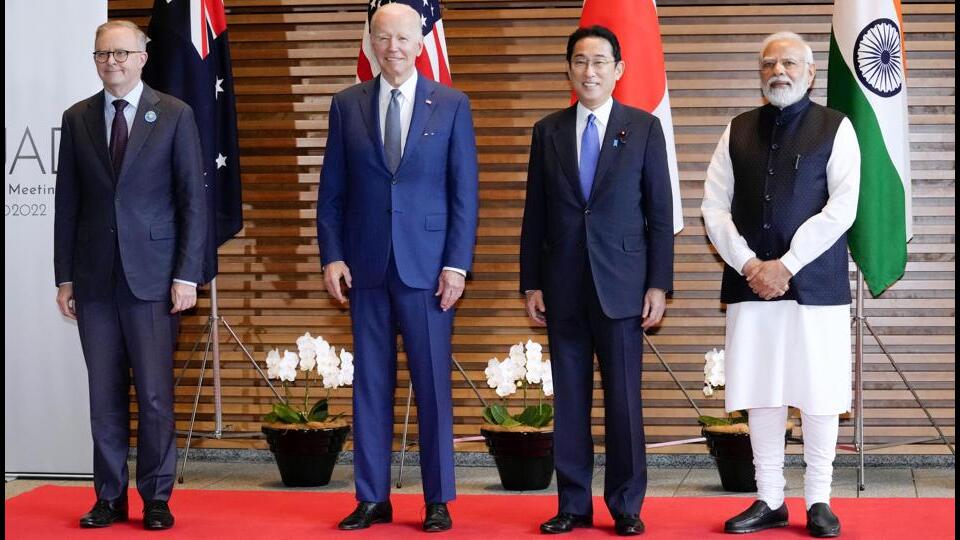
In his opening remarks at the second in-person Quad Leaders Summit in Tokyo, Modi said the Quad has made an important place for itself on the global stage in a very short time. “Today, the scope of the Quad has increased and it is more influential,” he said.
“Despite the difficult circumstances of Covid-19, we have increased mutual coordination in several areas such as vaccine delivery, climate action, supply chain resilience, disaster response and economic cooperation,” Modi said, speaking in Hindi.
“This is ensuring peace, prosperity and stability in the Indo-Pacific region. The Quad is moving forward with a constructive agenda for the Indo-Pacific region. This will continue to strengthen the image of the Quad as a force for good,” he said, flanked by US President Joe Biden, Australian Prime Minister Anthony Albanese and Japanese Prime Minister Fumio Kishida.
The mutual trust and determination between the Quad members are giving “democratic forces a new energy and enthusiasm”, Modi noted, adding “at the Quad level, mutual cooperation is encouraging a free, open and inclusive Indo-Pacific region, which is a shared objective for all of us.”
Unlike the other Quad leaders, Modi made no mention of the Ukraine crisis in his opening remarks.
Differences have emerged among the Quad members over the conflict in Ukraine, with the US, Australia and Japan being extremely critical of Russia’s aggression that has had a major impact on the security architecture of Europe.
India has consistently called for an end to hostilities in Ukraine and a return to diplomacy and dialogue. Ahead of Modi’s visit to Japan for the Quad Summit, foreign secretary Vinay Kwatra said India’s partners appreciated and understood the country’s policy on the Ukraine crisis.
In his opening remarks, Kishida described the Russian invasion as a “grave incident which has fundamentally shaken the rule of law-based international order we value”, and said the Quad members must ensure there is no repeat in the Indo-Pacific.
He said, “The Russian invasion into Ukraine squarely challenges principles which are enshrined in the UN Charter. We should never ever allow a similar incident to happen in the Indo-Pacific.”
It is “extremely significant” for the Quad members to get together and show to the international community the solidarity of the four countries and “our firm commitment towards the shared vision of a free and open Indo-Pacific”.



