
 E-Paper


Rahul Gandhi's big Kanshi Ram claim in UP Dalit outreach: 'Nehru would've made him Congress CM'
BSP under Kanshi Ram's protege, ex-CM Mayawati has tense relationship with Congress and SP, which are focusing on social justice agenda ahead of assembly polls

 Prefer HTon Google


Congress leader Rahul Gandhi made a massive, retrospective claim about what his great-grandfather, India's first PM Jawaharlal Nehru, would have done for caste justice had he been alive at the time of Kanshi Ram's rise as a political pioneer from the Dalit community.
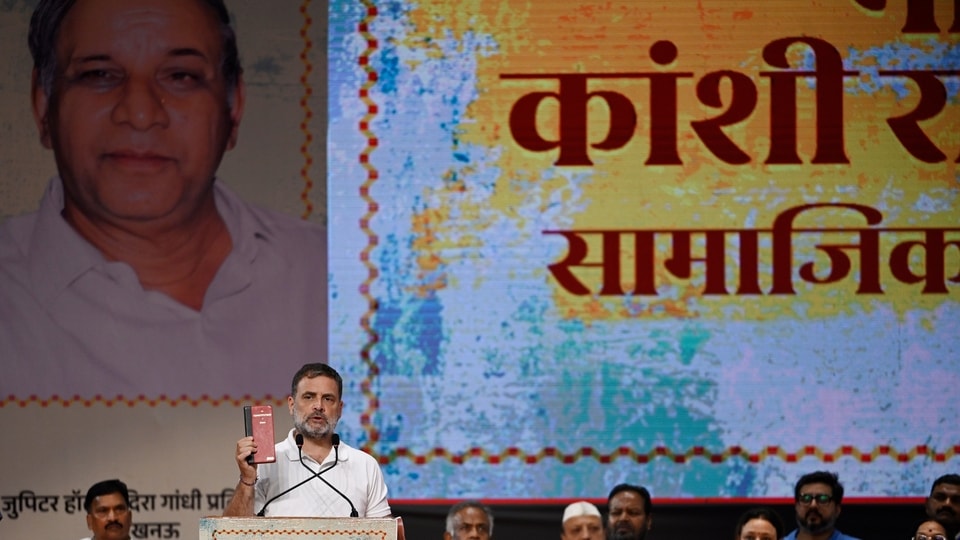
"If Jawaharlal Nehru were alive, then Kanshi Ram would have been a chief minister from the Congress," Rahul Gandhi said on Friday, speaking at the Samvidhan Sammelan held in Lucknow ahead of the birth anniversary of Kanshi Ram.
Nehru died in 1964, while Kanshi Ram broke out onto the scene with his founding of backwards-championing BAMCEF in 1978, and later, the formation of the Bahujan Samaj Party (BSP) in 1984.
Also read | Ahead of Kanshi Ram birth anniversary, parties vie to associate with his political legacy
The BSP, under Kanshi Ram's protege and multi-term former CM Mayawati, currently has a fractious relationship with the Congress and, in turn, faces political allegations of having “compromised” with PM Narendra Modi's BJP.
Kanshi Ram, who died in 2006 at the age of 72, never took up executive power directly, preferring to hand that to Mayawati instead as he focused on cadre-building.
‘Congress made mistakes’
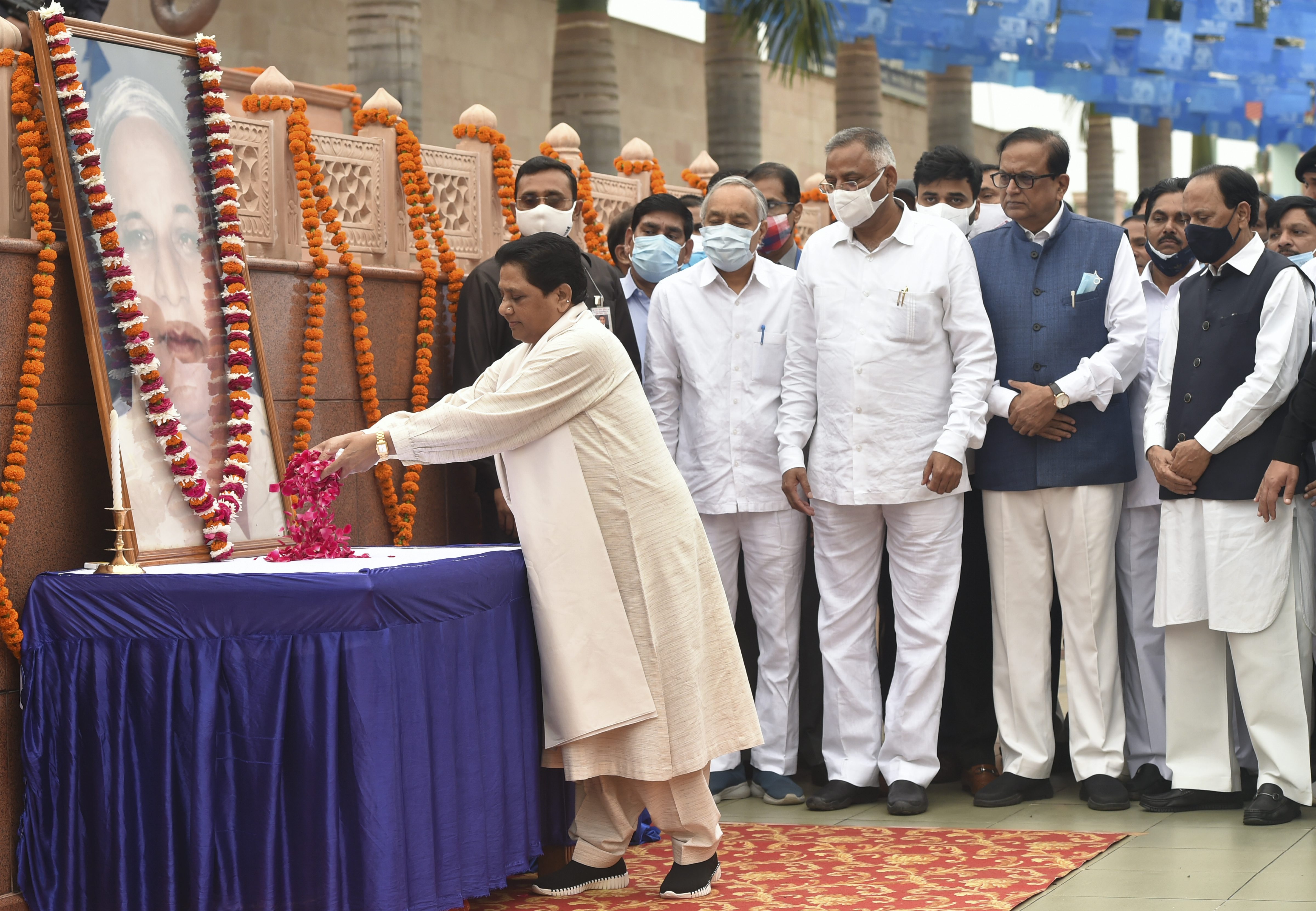
In his tribute to the social justice icon, Rahul Gandhi said Kanshi Ram never compromised on principles. He named Mahatma Gandhi and Bhimrao Ambedkar as others of the ilk.
"The path on which we were moving, we should have moved at a faster pace. There have been shortcomings on the part of the Congress party," the Leader of Opposition in Lok Sabha said.
"Gandhi-ji (Mahatma) went to jail for 10-15 years, but he did not compromise. Babasaheb Ambedkar gave his life, but did not compromise. Did Kanshi Ram ji compromise? The question does not arise. He could not have done it," Gandhi said.
Where does BSP stand?
The BSP under Mayawati currently finds itself in steep electoral decline. Having last held power in UP in 2012, the party has lost ground to both the BJP and the Samajwadi Party-Congress combine.
On her nephew and sometimes-designated heir Akash Anand, whose speeches on PM Modi went viral two years ago, she has had an angry series of u-turns, ousting and reinstating him multiple times. Her strategy apparently is to project the BSP as a standalone third force in UP politics ahead of the 2027 assembly elections.
As for Kanshi Ram's legacy, another recent claimant is Nagina Lok Sabha MP Chandrashekhar Azad, whose party is called Azad Samaj Party (Kanshi Ram), founded in 2020.
The BSP's vote share was just over 27% in 2009, but fell below 10% by 2024. In the 2022 UP assembly elections, it finished a distant fourth with less than 13% of the vote. The BSP maintained distance from both the Opposition's INDIA bloc and the ruling BJP-led NDA ahead in the 2024 Lok Sabha, results of which were the worst in the party's history with zero seats. A key reason, observers noted, was the collapse of the BSP's non-Jatav Dalit base that migrated to the SP-Congress alliance.
UP poll pitch
Rahul Gandhi has been pitching for the “sanvidhan” or Constitution, and its guarantees of equality, as a bedrock of his Dalit outreach.
Mayawati has been scathing about that, asking if it would “be in the interest of the SCs, STs and OBCs to ally with these anti-reservation parties, like the SP and Congress”.
She has also attacked the Congress over its failure to conduct a caste census during its years in power. The Modi government is conducting a caste census as part of the overall, much-delayed census after repeated demands by Rahul Gandhi among others.
The next UP assembly elections are due by early next year. While the BJP's core base is upper-caste Hindus plus non-Yadav OBCs, the SP's counter-strategy is its PDA formula — pichhda (backward), Dalit, and alpsankhyak (minorities) — that powered its 2024 Lok Sabha resurgence.


