
 E-Paper



RBI holds repo rate, keeps stance neutral
RBI's MPC maintained a 5.5% policy rate, with a possible rate cut in December. GDP growth forecast rises, while inflation projections decline.

 Prefer HTon Google


The Reserve Bank of India’s monetary policy committee (MPC) on Wednesday decided to maintain the status quo in terms of its two key monetary policy decisions: the policy rate and its monetary policy stance.
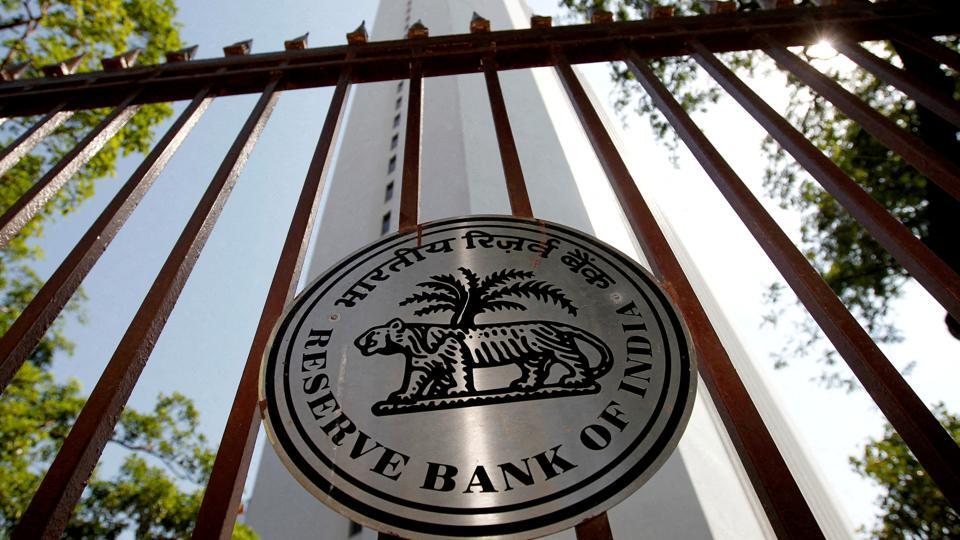
The former continues to be at 5.5% and the latter will continue to be neutral. White holding rates constant was decided unanimously, two external MPC members asked for changing the policy stance from neutral to accommodative.
However, RBI governor Sanjay Malhotra made it clear that a rate cut in the next MPC meeting scheduled for December could well be a possibility as inflation continues not to be a risk, even as “growth continues to be below our aspirations”. Experts believe that RBI’s wait and watch mode in the October MPC is meant to assess the impact of tariff disruptions and GST boost to consumption during the festive season.
“The trade-related uncertainties are also unfolding. The MPC, therefore, considered it prudent to wait for the impact of policy actions to play out and greater clarity to emerge before charting the next course of action,” Malhotra said.
While the MPC did not change its policy decisions from the August meeting, it did make substantive changes to its prognosis about the Indian economy. The GDP growth rate for 2025-26 is now expected to be 6.8%, 30 basis points – one basis point is one hundredth of a percentage point – higher than August forecast. Growth forecasts for the quarters ending September 2025, December 2025 and March 2026 now stand at 7%, 6.4% and 6.2% respectively compared to 6.7%, 6.6% and 6.3% in the MPC’s August forecasts.
The growth forecast for the quarter ending June 2026 is now 6.4% compared to 6.6% in the August MPC resolution. These numbers suggest that the upward revision to full-year growth forecast between the August and October resolutions of the MPC is largely on the account of the first half of the fiscal year which is already over and growth could actually weaken compared to earlier estimates going forward.
RBI’s inflation forecast for 2025-26 has been brought down from 3.1% in August to 2.6% in its October projections. Quarterly inflation projections now stand at 1.8%, 1.8% and 4% for the quarters ending September 2025, December 2025 and March 2026 compared to respective projections if 2.1%, 3.1% and 4.4%. The inflation projection for the quarter ending June 2026 has been brought down from 4.9% to 4.5%.
By the time the MPC meets in December, it would have access to GDP data for the quarter ending September and inflation data up to October. RBI governor’s post MPC statement was pretty clear on the future course of action if these projections appear more credible by the December meeting.
“The current macroeconomic conditions and the outlook has opened up the policy space for further supporting growth. However, the MPC noted that the impact of the front-loaded monetary policy actions and the recent fiscal measures is still playing out,” he said.
Experts believe that RBI’s decision to wait till the December meeting to administer yet another rate cut is driven by its desire for wait for more clarity on the economic momentum.
“It’s fair to ask: Why did the RBI not cut rates today? We believe for a few reasons. One, the negative growth impact of the 50% tariff so far is being offset by GST rate cuts during the festival season. But once the Diwali bounce is over, the actual weakness in growth due to the 50% tariff will be visible. If the 50% tariff sticks, there will be a case to ease in December. Two, the governor explained that about half of the transmission in select lending rates has so far been completed and its worth waiting for the remainder. Three, the governor explained in the press conference that the RBI wanted to wait and watch for the actual impact of the GST rate cuts on growth and inflation,” HSBC chief India economist Pranjul Bhandari said in a research note.
To be sure, the central bank did undertake a lot of other measures which could give a boost to credit supply in the economy and boost resilience and competitiveness of banks. These include easing credit supply for acquisitions, making deposit interest rates contingent on the risk premium of individual banks rather than a flat rate for all and simplifying foreign exchange and export documentation requirements.
“While most of these announcements involve public consultation and/or a phased timeline for implementation, many of these (once in effect) are likely to have far reaching implications on banks’ (and non-banks’) lending profile,” Aastha Gudwani, chief India economist at Barclays, said in a note.


