
 E-Paper



Resurgent Congress eyes Uttar Pradesh comeback
Late Narayan Datt Tiwari was the last Congress chief minister in Uttar Pradesh. He held office until December 1989. The party’s popularity has declined since in successive elections.


The Congress’s return to power in three states, including in Madhya Pradesh and Chhattisgarh after 15 years, has buoyed the party’s cadre in Uttar Pradesh. The cadre is now hoping the party can emulate the feat in Uttar Pradesh, where the Congress has been out of power for about 29 years.
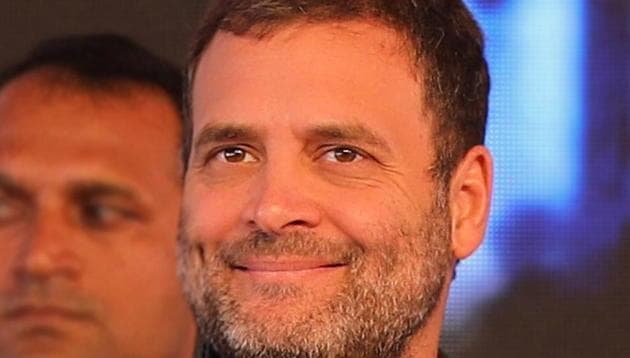
Late Narayan Datt Tiwari was the last Congress chief minister in Uttar Pradesh. He held office until December 1989. The party’s popularity has declined since in successive elections.
Congress is now demanding a more level playing field in UP after the recent wins even as its prospective partners are unlikely to concede to the demand. It is hoping to ally with UP’s two main regional parties – Samajwadi Party (SP) and Bahujan Samaj Party (BSP) – to prevent Bhartiya Janata Party (BJP)’s return to power at the Centre. The state accounts for the most – 80 – seats in Lok Sabha and BJP had swept the last national polls here with 71 seats.
The SP and BSP have over the years grabbed the political space Congress has lost in the state. They have split its traditional support base among Muslims, Dalits, and Brahmins.
Congress has lost a major chunk of Muslim voters, who account for UP’s 18.5% population, to SP, Dalits (20.5%) to BSP and Brahmins (9.2%) to BJP. Yet the mood within Congress is upbeat following the victory in the three states. The common refrain at the party state headquarters in Lucknow is: “We not only defeated BJP in two states after 15 years but also a popular leader like Shivraj Singh Chouhan in MP. Now it is the turn of Uttar Pradesh.”
Overconfidence can be tricky for the prospects of the grand alliance Congress is hoping to form. Congress leaders are divided over the issue of allying with other like-minded parties even as contesting alone in UP may not be the best choice.
The SP and BSP leaders also favour a non-Congress, non-BJP front though there is no rigidity when it comes to post-poll sharing of power. BSP chief Mayawati favours regional allies for pre-poll alliances as in Karnataka, Chhattisgarh and Haryana. SP leader Mulayam Singh Yadav, who comes from the socialist background always disfavoured any truck with Congress, though he has never fielded candidates against the Gandhis.
The scenario is similar to the one in Bihar before the 2009 polls when Lalu Prasad and Ram Vilas Paswan unilaterally divided seats, leaving barely three for Congress. Congress eventually contested alone and benefitted National Democratic Alliance.
Political expert Neerja Choudhary said the Congress brings in the national party aura to the alliance besides consolidating the anti-BJP votes.
A Congress leader said, “Both the prospective allies – the SP and the BSP – will have to take a call on whether they wish to share power at the Centre or not, or barely concentrate on acquiring national status for their respective parties.”
A grand alliance of Congress, SP, BSP, and Ajit Singh’s Rashtriya Lok Dal can unite Muslims, Jats, Jatavs, and Yadavs. The BJP, which has so far been confident about improving its 2014 tally of 71 seats, accepts the alliance will be a challenge despite Prime Minister Narendra Modi’s popularity. The prospective allies had a vote share of 50% compared to the BJP’s 42.3% despite the Modi wave in 2014. In 2019, experts feel the polarisation among the Muslims voters will be more than within the majority community, which will split sharply on caste lines in the absence of any 2014-like wave.
They feel the onus lies on the Congress to bend a little as the political complexion of the three states won recently is different from UP. Compared to bi-polar states of Madhya Pradesh, Chhattisgarh, and Rajasthan, Uttar Pradesh is a multi-party state with concentrated populations of Yadavs, Dalits, and Muslims in different pockets.
In 1995, the Congress tied up with the BSP but the alliance failed to get a majority in the state. Again in 2017, Congress allied with the SP. This alliance also failed for two reasons – infighting within the SP’s Yadav family and half-hearted late announcement of the alliance.
Even for 2019, there has been a delay in finalising sharing of seats, whereas the BJP is working overtime.


