
 E-Paper



Samrat wore a turban as vow to dethrone Nitish, took it off. He finally gets his wish, and the crown
He wore the turban for 22 months, and took it off much before Nitish left the chair, due to two U-turns by Nitish Kumar between 2022 and 2024.

 Prefer HTon Google


In the summer of 2022, when Nitish Kumar, in one of his many U-turns, left the BJP and walked back into the RJD-Congress Mahagathbandhan, a Bihar BJP leader tied a saffron turban as part of a vow. He said he won't stop wearing it until Nitish Kumar was dethroned. A lot happened in between, but Samrat Choudhary essentially got his wish four years later, and is now chosen to be the next CM of Bihar as Nitish moves to the Rajya Sabha.
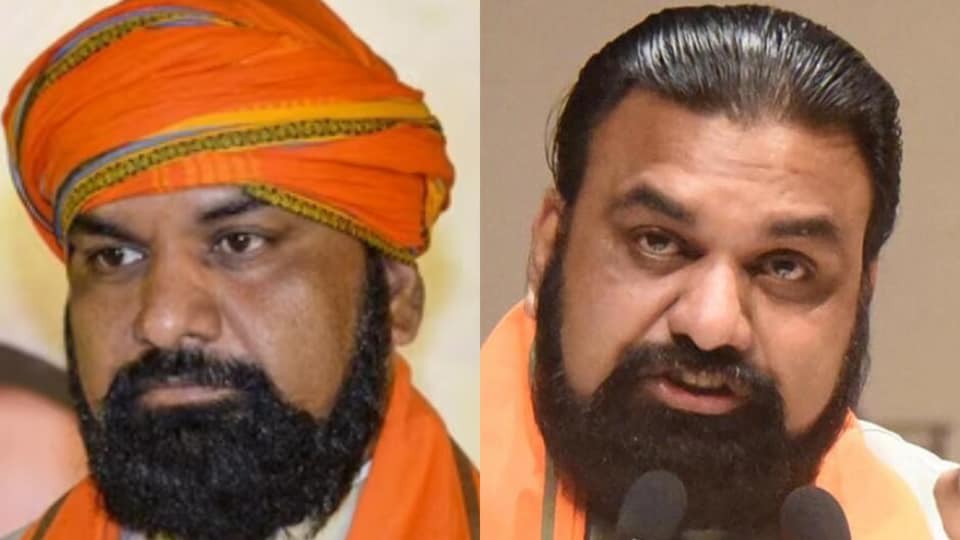
Samrat Choudhary has been chosen by the BJP legislature party as its leader, and will take oath on April 15 as the head of a new BJP-JD(U) regime in the state where the BJP has never had a CM before.
Nitish Kumar, who has dominated Bihar politics for over two decades, vacated the throne for his once-deputy on Tuesday. Choudhary may not have wished it quite this way.
From turban to crown
When Nitish Kumar re-abandoned the BJP-led NDA in August 2022 and the state government fell, the BJP, in power at the Centre for over a decade, was left politically humiliated. Union home minister Amit Shah declared that all doors to Nitish were permanently shut as he went to the Mahagathbandhan.
It was at this moment that Samrat Choudhary, freshly elevated as the BJP's Bihar state unit president, picked up a saffron turban and turned it into his symbol of defiance.
He wore the turban for 22 months, and took it off much before Nitish left the chair finally this week.
In January 2024, Nitish Kumar again dumped the Mahagathbandhan and rejoined the NDA. It was his fifth crossover in a decade, and his ninth time taking oath as CM. Samrat Choudhary, along with another BJP leader, Vijay Kumar Sinha, was sworn in as deputy CM.
On July 3, 2024, Samrat Choudhary travelled to Ayodhya in UP, took a dip in the Saryu river, shaved his head, and presented, or gave away, his turban at the Ram Temple. "I devote this turban that I had for the last 22 months to Lord Ram," he told reporters.
On being asked that Nitish had not been dethroned, Choudhary then had said, “The day Nitish Kumar resigned as the CM of the [Mahagathbandhan] and joined back the NDA, I announced that I would dedicate my turban to Lord Ram.” The vow, he argued, was about removing Nitish from the opposition camp.
BJP picks him after much suspense
Now the arc is complete in at least one, rather simplistic way. Nitish Kumar's resignation as CM to move to the Rajya Sabha, and the BJP's decision to name Samrat Choudhary as his successor, hands the 57-year-old politician the prize.
Choudhary's rise has been built on aggressive political positioning and caste arithmetic. He belongs to the Koeri-Kushwaha community, which accounts for approximately 4.2% of Bihar's population and is among the most influential OBC groups after the Yadavs.
For years, Nitish Kumar's political strength rested on the so-called ‘Luv-Kush’ combination of Kurmi and Koeri communities, using the names of Lord Ram's two sons. By projecting Samrat Choudhary, the BJP has attempted to break into that very equation, analysts have told HT.
His political journey has been anything but linear. He began with Lalu Prasad Yadav's RJD in 1990, became a minister in Lalu's wife Rabri Devi's government in 1999; crossed over to Nitish-led JD(U) in 2014, and then served in Jitan Ram Manjhi's cabinet when Nitish briefly left the chair after a poor performance of his party in the 2014 Lok Sabha polls.
Choudhary joined the BJP in 2017. After the BJP-JD(U) win last year, he even got the Home Affairs portfolio as one of two deputy CMs, essentially making him Number 2 in the regime.
But even after Nitish was announced to be going to the Rajya Sabha, the successor's name was far from finalised as the Modi-Shah-led BJP is known to pick even low-profile leaders for the CM's post at times.
Opposition leaders have raised questions about discrepancies in his election affidavits and a 1995 murder case in which his name was mentioned alongside his father's — charges his supporters dismiss as political targeting.
Family legacy of politics
Samrat Choudhary's father, Shakuni Choudhary, was an armyman-turned-politician who started off in the Congress, and frequently switched allegiance between frenemies Lalu Prasad and Nitish Kumar.
Shakuni was elected to the Bihar assembly from Tarapur, which is now Samrat's seat, as an Independent in 1985; then won the same seat on a Congress ticket in 1990, before shifting to the Samata Party, then the RJD, and later former JD(U) CM Jitan Ram Manjhi's Hindustani Awam Morcha; before finally retiring from active politics, though he appeared at BJP events. Shakuni Choudhary represented Tarapur six times between 1985 and 2010. His wife and Samrat's mother, Parvati Devi, also served as an MLA from Tarapur.


