
 E-Paper



Sanjit ‘Bunker’ Roy who redefined fight against poverty dies at 81
Social activist Sanjit “Bunker” Roy was decorated with India’s fourth-highest civilian award, Padma Shri, in 1986

 Prefer HTon Google


Social activist Sanjit “Bunker” Roy was educated at the prestigious Doon School in Dehradun and Delhi’s St Stephen’s College. Moved by the hardships rural communities faced, he chose to work at the grassroots and moved to Rajasthan, where he established the Social Work and Research Centre in Tilonia in 1972 to address water and irrigation problems.
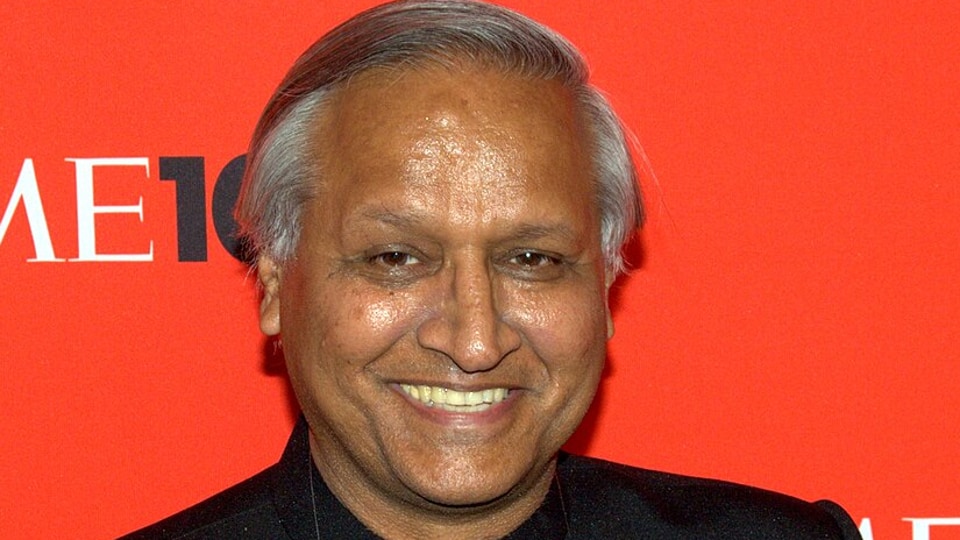
Roy spent the rest of his life in Tilonia, transforming a small village into an internationally recognised centre for grassroots development, and died there on Tuesday. He was 81.
Roy challenged conventional notions of education by centering his initiative around rural communities, particularly women. He founded Barefoot College in Tilonia (Ajmer district), demonstrating that solutions to rural problems did not necessarily have to come from urban experts, government institutions or formally trained professionals.
He put a small village on the global development map and demonstrated that some of the most innovative solutions to poverty, energy access and social inequality could emerge from rural communities.
Born on June 30, 1945, in West Bengal’s Burnpur, Roy worked on water-related issues in drought-prone villages, including digging wells alongside local communities, after moving to Rajasthan.
The Social Work and Research Centre, which later became Barefoot College, evolved into a wider experiment in community-led development, covering education, healthcare, livelihoods, water conservation and renewable energy.
The solar electrification project was the initiative’s most celebrated programme. Women from remote villages, many of them illiterate or semi-literate, were trained as solar engineers under this project. These women, popularly known as Solar Mamas, learnt to assemble, install, repair and maintain solar lighting systems before returning to electrify their villages.
Roy’s work was recognised internationally. He was decorated with India’s fourth-highest civilian award, Padma Shri, in 1986. Roy was named among TIME magazine’s 100 most influential people in the world in 2010.
TIME cited his abiding compassion for the rural poor and said Roy nurtured a grassroots social entrepreneurship that is redefining the way the world thinks about fighting poverty. It noted that Barefoot College has trained over three million people for jobs in the modern world, in buildings so rudimentary they have dirt floors and no chairs.
The magazine noted this bottom-up approach is designed to make poor students feel comfortable. It added that the college’s “barefoot professionals” then return home to use their new skills — as solar engineers, teachers, midwives, weavers, architects, doctors and more.
TIME noted Roy, who received the Jamnalal Bajaj Award for the application of science and technology to rural development in 1985 and the St Andrews Prize for the Environment in 2003, combines humanitarianism, entrepreneurship and education. It added that he helps people steer their own path out of poverty, fostering dignity and self-determination along the way. TIME said his simple formula holds a key to what nations and aid organisations might do to build a more just world.
Tributes poured in as soon as the news of Roy’s death broke. Former Rajasthan chief minister Ashok Gehlot said Roy made significant contributions to rural self-reliance, education and development by following Mahatma Gandhi’s principles.
In a post on X, Gehlot said Roy dedicated his life to empowering villages and bringing positive change to the lives of underprivileged sections. Gehlot recalled his longstanding association with Roy. He said he recently visited Barefoot College and met Roy and his wife, social activist Aruna Roy.
Congress leader Shashi Tharoor called Sanjit “Bunker” Roy a visionary social activist, pioneer and educator. Tharoor said he had dedicated his life to empowering rural India through self-reliance, sustainable development and grassroots innovation.
He said the initiative to train rural women, particularly grandmothers, as solar engineers had illuminated thousands of off-grid homes in India and across the developing world.


