
 E-Paper



Satya Niketan building collapse: What we know about the property
The collapsed PG was a load-bearing structure without a reinforced cement concrete frame, with thin brick walls measuring about 4.5 inches in thickness.

 Prefer HTon Google


On Sunday afternoon, a building that housed a PG facility collapsed in Delhi’s Satya Niketan, killing at least seven people and triggering a rescue operation involving the Municipal Corporation of Delhi (MCD), Delhi Fire Service, Delhi Police and other departments.
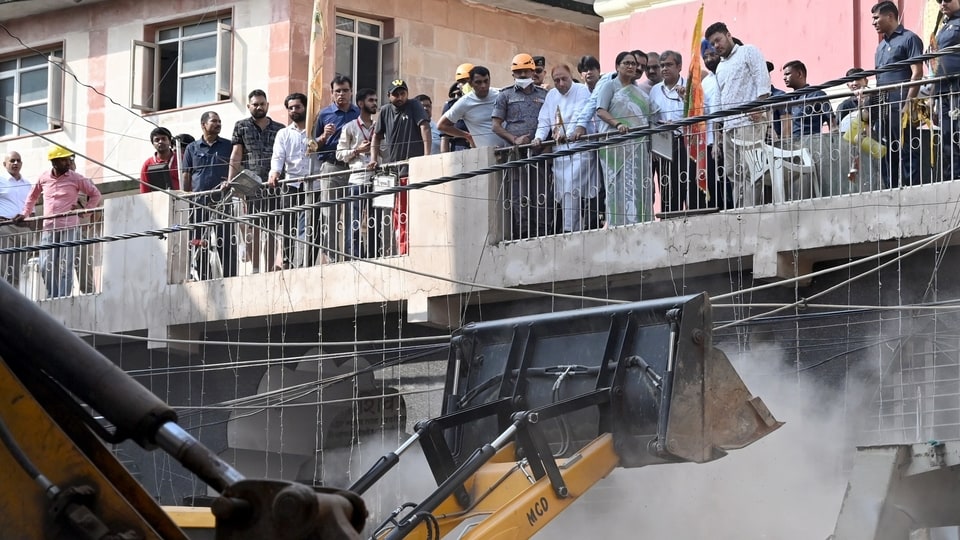
The area is a densely populated resettlement colony in South Delhi, where plots are typically small, measuring around 55 square yards. A large number of properties in the area are used as paying guest accommodation, mainly catering to students. Building-related activities in the area fall under the jurisdiction of MCD. Follow live updates on Delhi building collapse here.
According to property-tax records, the collapsed structure was a basement plus four-storey building. Construction of the ground floor, first floor, second floor, and part of the third floor dates back to 1970-1980. A basement in part of the property and the remaining portion of the third floor were constructed later, in 1997-98.
Also Read | Collapse at 1:30 pm to night-long rescue: Blow-by-blow of Delhi's Satya Niketan PG tragedy
Deep Dive

The building was a load-bearing structure without a reinforced cement concrete frame, with thin brick walls measuring about 4.5 inches in thickness.
The road outside the property is a commercially notified road. The ground floor was being used for shops, while the upper floors were used as paying guest (PG) accommodation. The property had been paying the applicable conversion charges annually for this use since 2007.
Property-tax records also show that the owners availed themselves of the SUNIYO scheme from 2020-21 to 2025-26.
Also Read | MCD issues notices to ruinous buildings after Satya Niketan PG building collapse
MCD officials who reached the site found, as a preliminary assessment, that no new construction was underway at the time of the collapse. However, the owner had recently undertaken some repair and renovation work.
The exact cause of the collapse has not yet been established. Officials have, however, indicated that heavy rainfall over the preceding several days may have weakened the old structure.
Rescue operations began immediately after the collapse. As of 8:30 am on Monday, debris removal and site clearance were continuing and were expected to be completed by the end of the day.

Wider crackdown on unauthorised construction
The collapse comes amid intensified action by MCD against unauthorised construction and misuse of premises, following recent incidents in Saket and Malviya Nagar.
Between June 1 and September 3, 2026, the civic body carried out demolition at 983 properties, sealed 464 properties, issued 1,516 show-cause notices for unauthorised construction and 708 sealing show-cause notices, and issued 726 demolition orders.
MCD has also conducted a three-month survey of residential areas to identify commercial misuse of residential properties. Around 300,000 properties across 404 colonies and 168 wards have been surveyed.
The survey has identified more than 8,000 cases of commercial activity in residential areas, with the civic body initiating action against activities considered impermissible under the Master Plan for Delhi. Around 30-40 properties have already been sealed, while action against several others is at various stages.


