
 E-Paper



SC puts on hold felling of trees for road projects
The Supreme Court on Wednesday put the Uttar Pradesh government in a quandary over the assessment of oxygen-releasing capacity of trees that the state government seeks to cut for road projects around the Krishna Janmabhoomi in Mathura.

 Prefer HTon Google


The Supreme Court on Wednesday put the Uttar Pradesh government in a quandary over the assessment of oxygen-releasing capacity of trees that the state government seeks to cut for road projects around the Krishna Janmabhoomi in Mathura.
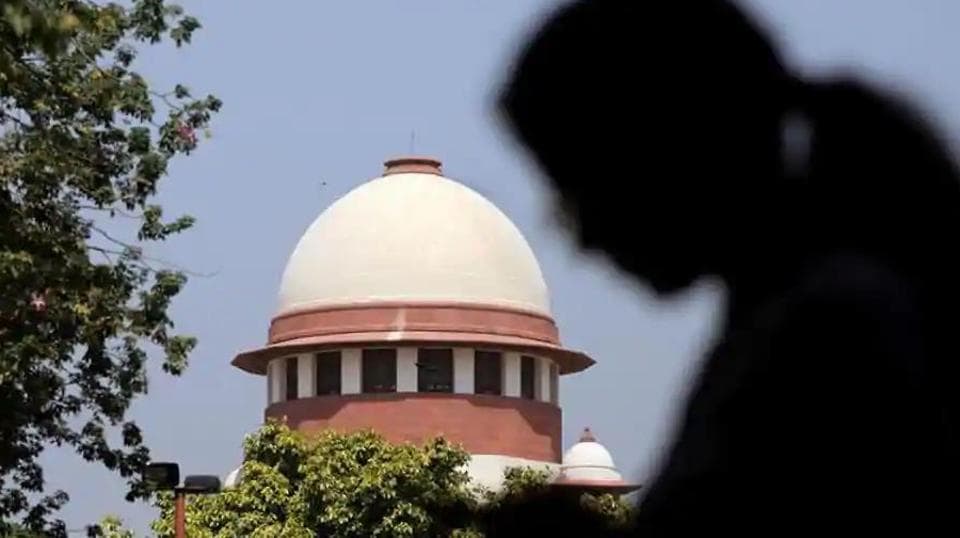
A bench led by Chief Justice of India (CJI) SA Bobde declined to approve the tree felling in the Taj Trapezium Zone (TTZ ), a defined area of 10,400 sq km around the Taj Mahal to protect the monument from pollution, until the state spells out its method of evaluating a tree, including how much oxygen it gives off.
“You cannot cut trees...only in the name of Lord Krishna. Is there any evaluation on how much oxygen these trees produce? You cannot simply say we will plant a week-old sapling in lieu of a 100-year -old tree.There can be no comparison between the two in terms of oxygen they release,” the bench told additional solicitor general Aishwarya Bharti and senior advocate SWA Qadri.
Bharti was appearing for the state government while Qadri represented the Public Works Department (PWD). PWD had to seek permission from the court to cut more than 3,000 trees since the areas comes under the TTZ, earmarked by the Supreme Court to protect the Taj Mahal from environmental pollution.
When asked about the classification of trees based on their age and oxygen releasing capacity, Qadri expressed his inability to give such details.
This prompted the CJI to question how permission for felling thousands of trees can be given when the PWD has no clue about such information. The judge added that living trees cannot be evaluated merely as timber, which is dead wood.
“Living trees give oxygen and it must be taken into account while evaluating them. How much oxygen a tree releases during its life time and the loss of it once it is cut; these are important factors,” said the bench, asking Bhati if the state government has any policy in this regard.
As Bhati sought some time to get instructions, the bench asserted that meaningful reforestation requires a detailed assessment of the trees sought to be felled.
The court added that not pulling down certain very old trees may only mean a road taking a turn around such trees. “It will only slow down the traffic which is also a good thing since this can prevent deaths due to high speed,” it said.
The court then recorded in its order: “It is not possible to accept the compensation in just arithmetic terms particularly since there is no specific statement coming forth from the Uttar Pradesh government or PWD as to the nature of the trees i.e, to say whether they are classified as shrubs or large trees.”



