
 E-Paper



SC seeks Karnataka’s reply on tiger deaths, flags forest staff shortage
The court noted that in MM Hills Wildlife Sanctuary, where a tigress and four cubs died, 80% of forester and forest watcher posts were lying vacant

 Prefer HTon Google


New Delhi: The Supreme Court on Wednesday sought a response from the Karnataka government over the alleged poisoning deaths of five tigers in the state and flagged the severe understaffing of forest ground personnel in several wildlife sanctuaries. It also directed the Centre to find a permanent solution to the man-animal conflict.
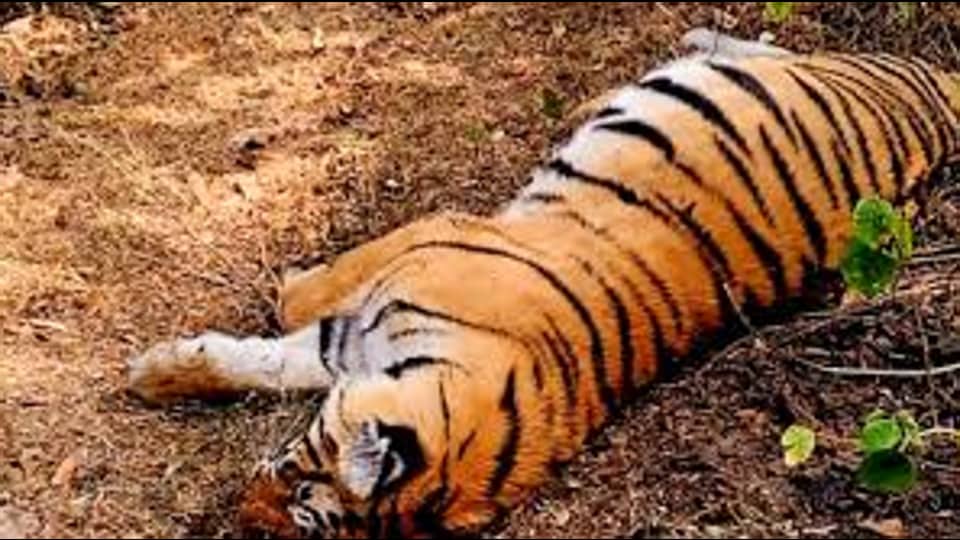
The court pointed out that in the Male Mahadeshwara (MM) Hills Wildlife Sanctuary—where a tigress and four cubs were found dead last month—80% of the posts for foresters and forest watchers were vacant.
A bench headed by Chief Justice of India (CJI) Bhushan R Gavai said, “A permanent solution has to be found by taking all states on board. There is such a huge vacancy,” and issued a notice to the ministry of environment, forests and climate change (MoEFCC), along with the Karnataka government, seeking their response.
The court was considering a report from the expert body — Central Empowered Committee (CEC) — assisting the court on wildlife and environmental issues, which claimed this is the highest number of tiger deaths reported in a single incident.
The CEC produced findings of a Special Investigation Team (SIT) constituted by the National Tiger Conservation Authority (NTCA), which concluded that the tiger deaths were related to poisoning and were a deliberate act by villagers who had sprayed pesticide on a cattle carcass that was consumed by the tigers.
The court expressed concern over the large number of tiger deaths discovered on June 26. “This is the first incident of retaliatory poisoning in MM Hills, although similar cases have occurred in nearby areas like Bandipur Tiger Reserve in 2019–2020. The deaths caused a major public outcry, particularly due to the presence of four cubs under one year of age,” senior advocate K Parmeshwar, who is assisting the court as amicus curiae, said while presenting the CEC report.
The CEC raised another concern related to the severe shortage of forest staff deployed on the ground at MM Hills. The report found a huge vacancy — 80% of the posts of Forest Watchers and 51% of the posts of Foresters — at MM Hills Sanctuary, which forms a critical part of a 3,000-square-kilometre contiguous tiger landscape linking three tiger reserves: BRT, Cauvery, and Sathyamangalam in the state.
Also Read: Six people detained for the deaths of 8-year-old tigress, her 4 cubs
“We direct Karnataka to file an affidavit explaining why such a huge vacancy of 80% of ground staff required to protect wildlife exists,” said the bench, also comprising justices K Vinod Chandran and Joymalya Bagchi.
Additional solicitor general (ASG) Aishwarya Bhati appeared for the union government and agreed to take necessary action based on the concerns expressed by the court. “We issue notice to the MoEFCC to take all states on board and find out a concrete solution.”
The amicus pointed out that the SIT report detailed another concern — delayed salary payments to existing foresters, which affected their performance at work. Parmeshwar said that such high vacancies of forest staff are found in other sanctuaries across the country, and in most cases, these posts are outsourced to contractors who refuse to release payments on time.
Following the MM Hills incident, the SIT found that the contractor, bound by agreement to pay wages, had not released salaries for the period from March to May 2025, citing financial burden, even though budget allocations were sanctioned and released in May–June 2025.
The SIT found that many watchers had taken high-interest loans to support their families but continued to patrol diligently. The matter has now been brought to the notice of the concerned deputy conservator of forests (DCF) for consideration of additional fund release and resolution of pending payments.
Also Read: 3 forest officials suspended over deaths of 5 tigers in state
As part of its recommendations, the CEC urged the court to provide adequate resources, equipment, and manpower to areas affected by man-animal conflict, and to integrate human-wildlife conflict management into gram panchayat and district development plans.
In a specific suggestion related to the present case involving the poisoning of five tigers, the CEC supported putting in place a system for the timely release of ex gratia in cases of human deaths and a compensation scheme for livestock loss, to reduce instances of retaliatory poisoning by villagers.
The state has arrested three persons for allegedly poisoning the cattle carcass that killed the tigers. The CEC informed the court that in Karnataka, around 80 tigers have died in the last five years, some due to unnatural causes, including poisoning.


