
 E-Paper



Search for missing AN-32 aircraft gets bigger, Navy craft, satellites join in
Thirteen people were onboard when the transport aircraft took off from Jorhat in Assam at 12.27 pm on its way to an advanced landing ground at Mechuka in Arunachal Pradesh’s West Siang district.

 Prefer HTon Google


As civil and military agencies put more boots on the ground to locate the missing Indian Air Force An-32, the Navy’s surveillance aircraft and ISRO’s satellites also joined in the massive search effort to look for the aircraft that lost contact with ground staffers more than 24 hours ago.
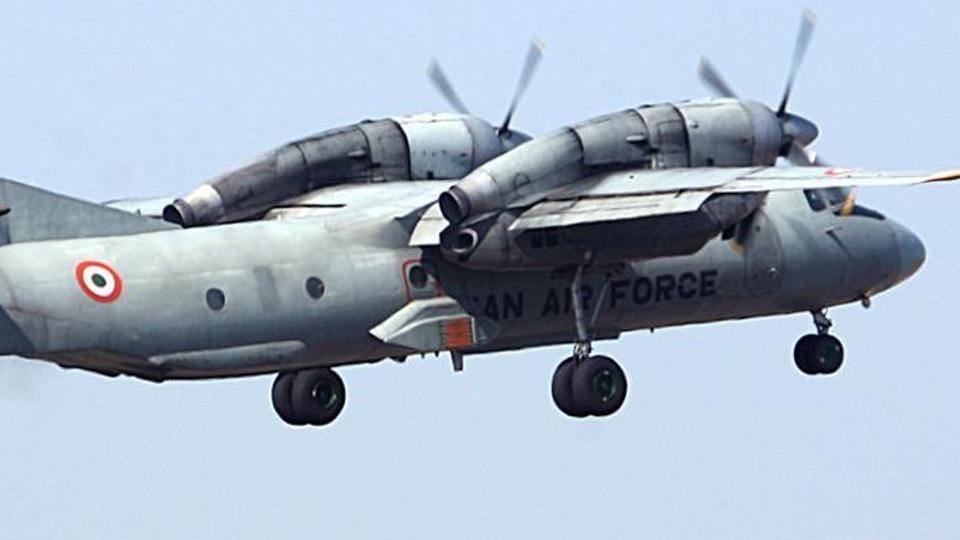
Thirteen people were onboard – eight of them crew members – when the transport aircraft took off from Jorhat in Assam at 12.27 pm on its way to an advanced landing ground at Mechuka in Arunachal Pradesh’s West Siang district.
It disappeared from the radar 35 minutes later, just 70 km short of its destination Mechuka.
IAF and army choppers and aircraft have been flying all night to look for signs of the aircraft on ground, at times to follow up on tip-offs about fire and smoke that could indicate the location of a possible crash site. On the ground, soldiers have also been scouring the state’s thick jungles.
This afternoon, the Navy sent an US-made P8i naval maritime aircraft – also called the submarine hunter – joined the effort to look for the transporter. The Indian Space Research Organisation’s satellites such as RISAT – Radar Imaging Satellite – had also been roped in to help.
“P-8 I of #IndianNavy, satellites like RISAT and aircraft equipped with multiple sensors have joined the concerted efforts to locate the missing aircraft,” the IAF spokesperson tweeted.
Also read: Praying for his safety, says family of IAF officer onboard missing aircraft
Officials told HT that they had been focused the search to a few hundred square kilometres on the basis of estimates of the furthest area the aircraft could have flown given the fuel on board.
But, an IAF official said, “the terrain is proving to be a big challenge” and the “thick foliage hindering search operations”.
The An-32, considered the IAF’s workhorse – does have a beacon - Sarbe-8 ELT (Search and Rescue Beacon) equipment - on board that emits on all international distress frequencies- 121.5 MHz, 242.1 MHz and 406 MHz.
This beacon gets automatically activated when the aircraft experiences force in excess of 20 times the gravitational force.
“But the distress signals travel in the line of site, so if there is an obstruction like a hill feature, it won’t be picked up, “ a senior defence ministry official who did not want named said.
“Till now we haven’t picked up the signal,” the official said.
Apart from foot patrols of the Indian Army and the Indo Tibetan Border Police, a C-130J Hercules special operations and tactical airlift aircraft, US made naval maritime aircraft -P8i and Russian made Mi-17 Helicopters and Advanced Light Helicopters have been pressed into service. “The C-130J did as many as three sorties last night,” a second senior defence ministry official not authorized to speak to the media said.
Also Read: All the IAF’s flying, fighting machines: Blenheim, Caribou, Tiger Moth, Rafale
The AN-32 safety record has been blemished by two fatal crashes over the last decade. In July 2016, an AN-32 went down in the Bay of Bengal with 29 people on board. Also, a decade ago, an AN-32 crashed in West Siang killing all 13 men on board. The wreckage of that plane was spotted by a search team at over 12,000ft above sea level, more than 24 hours after it went down.
An AN-32 also crashed near Palam in March 1999 killing all 18 personnel on board.


