E-Paper



Sitharaman announces appointment of first GSTAT president
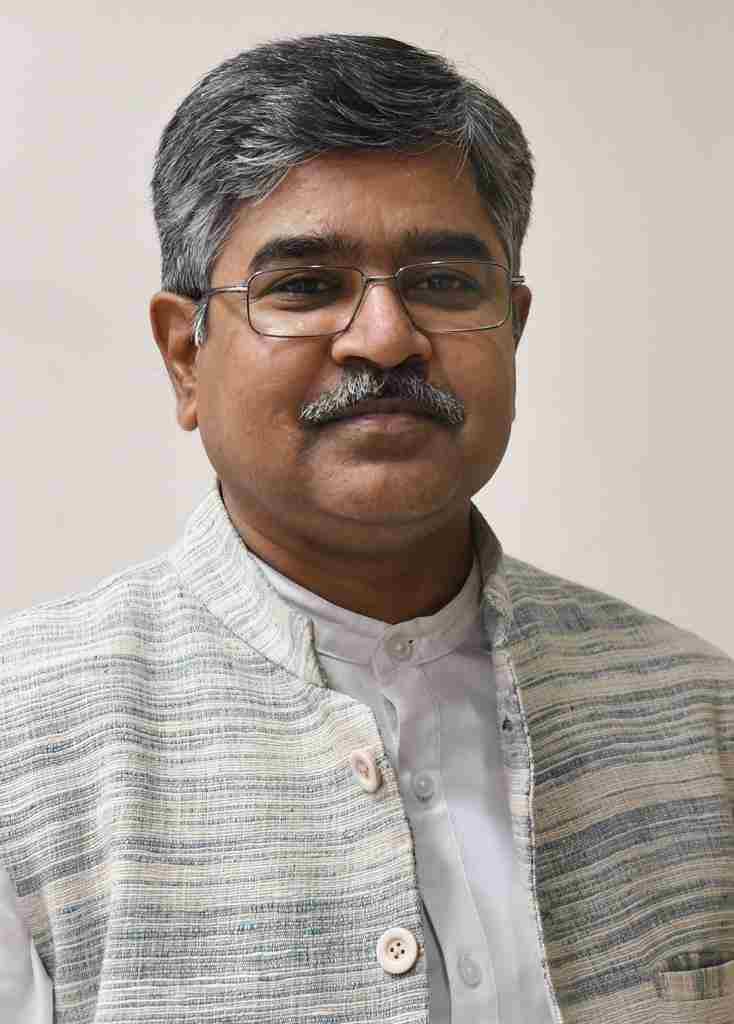
Union finance minister Nirmala Sitharaman on Monday announced appointment of Sanjaya Kumar Mishra as the president of the Goods and Services Tax Appellate Tribunal (GSTAT)

 Prefer HTon Google


Union finance minister Nirmala Sitharaman on Monday announced appointment of Sanjaya Kumar Mishra as the president of the Goods and Services Tax Appellate Tribunal (GSTAT) and called it as one of the two “significant milestones” in the larger GST architecture.
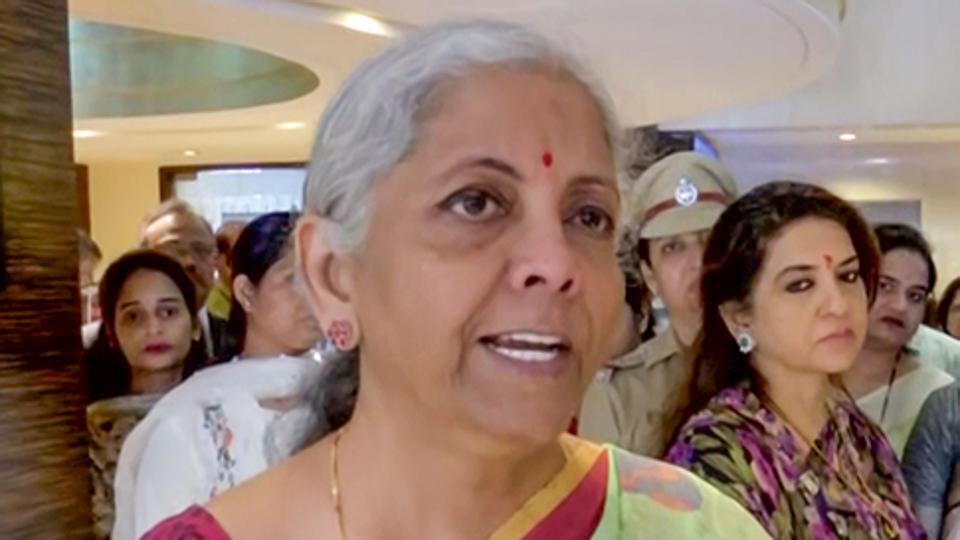
The second, according to her was crossing the ₹2 lakh crore monthly revenue collection benchmark for the first time since the indirect tax reform was launched by the Modi government on July 1, 2017. FM said the growing GST collections is testimony of “heightened” economic activities in India, world’s fastest growing major economy. India’s monthly GST collections soared past the ₹2 lakh crore mark for the first time to ₹2,10,267 crore, while collections in FY24 surpassed the ₹20 lakh crore, reflecting a buoyant economy and better compliance,
According to FM, the tax reform augmented revenues of both the Centre and states. “GST has improved tax buoyancy from 0.72 (pre-GST) to 1.22 (2018-23). Despite compensation ending, state revenues remain buoyant at 1.15. Without GST, states’ revenue from subsumed taxes from FY 18-19 to 2023-24 would have been ₹37.5 lakh crore. With GST, states’ actual revenue amounted to ₹46.56 lakh crore,” she said.
Experts said the appointment of justice (retd) Mishra as head of GSTAT would take the indirect tax reform to yet another level as it would expeditiously resolve pending litigations. GSTAT’s first president is the former chief justice of the Jharkhand high court, who has been selected by a search-cum-selection committee headed by the hon’ble Chief Justice of India.
GSTAT could not be set up earlier due to technical reasons and political oppositions by a few states. Even as the Union cabinet on January 23, 2019 approved the creation of a national bench of the GSTAT, the matter was pending because of various differences among members such as how to maintain a right federal balance and other technical issues. As approved by the GST Council, the government has notified the principal bench, to be located at New Delhi, and 31 state benches at various locations across the country.
Sitharaman took this opportunity to recall the near seven-year tax reform journey in three parts that unified the domestic markets. “The first part explores the origins of GST and its role in streamlining the Indirect tax system. The second part discusses how GST has benefitted people through a pro-poor approach. The third part underscores GST’s role in promoting cooperative and fiscal federalism,” she said in a post on X (formally twitter).
According to her, “the idea of GST was first mooted during the former PM Atal Ji-led NDA government. In 10 years, UPA was unable to achieve political consensus on GST. Under the leadership of Prime Minister Shri @narendramodi, the necessary consensus was carefully built, and GST Acts were passed by Parliament in 2016,” she said.
Before GST, India’s indirect tax system was fragmented and complicated, and every state was practically a distinct market in itself with different rules and tax rates. Inputs for central excise duty, etc, could not be availed, leading to an increased tax burden for the common people, she said.
GST streamlined 17 taxes and 13 cesses into a five-tier structure, simplifying the tax regime. The turnover threshold for registration rose to ₹40 lakh for goods and ₹20 Lakh for services (from ₹5 lakh on average under VAT). GST also reduced 495 different submissions (challan, forms, declarations, etc) across states to just 12, she added.
Number of registered taxpayers under GST grew to over 14 million in about seven years from about 6.5 million in 2017. “The E-way bill system removed inter-state checkpoints, reducing logistics costs. Trucks travelled 44% more daily, and corruption at tax “nakas” decreased. Consequently, domestic goods’ inter-state trade surged to 35% of GDP in FY22, up from 23.5% in FY18,” she said.
The second part of the note focused on impact of the indirect tax on people and ease of total tax burden. “Reflecting a pro-poor approach, the effective weighted average GST rate has consistently fallen since 2017. The Revenue Neutral Rate was suggested to be 15.3% but was lower at 14.4% in 2017, and it has come down to 11.6% in 2019,” she said.
Sitharaman said GST lowered taxes on many essential items compared to pre-GST rates. Common items like hair oil and soaps saw tax cut from 28% to 18%. Electrical appliances taxed at 12% v/s 31.5% before. Movie tickets were taxed lower, too. Further tax rate rationalization has been done since 2017. National Anti-profiteering Authority ensured that companies passed the benefits to the consumers.
“GST has exempted many essential items and services, such as unbranded food items, certain life-saving drugs, healthcare, education, public transport, sanitary napkins, hearing aid parts, agricultural services, etc,” she added.
In the third part of her write-up, Union finance minister underscored impact of GST on strengthening Indian federal structure. “GST exemplifies Cooperative Federalism in India, empowering states. The
@GST_Council, with a 75% majority vote requirement, assigns one-third voting power to the Centre & two-thirds to states. Out of 52 meetings, all decisions but one was reached through consensus. As Chairperson of @GST_Council, I have ensured all states’ voices are equally heard without bias,” she said in another post in X.
Sitharaman said that the benefit of higher revenue duly shared with states as per the agreed formula even as some opposition-ruled states try to politicise the revenue-sharing mechanism. “It is a myth that all GST collections are pocketed by the Centre. GST contributes significantly to state revenues – States receive 100% of SGST collected in that state, approx. 50% of IGST (i.e. on inter-state trade). A significant portion of CGST, i.e., 42%, is devolved to the states based on the Finance Commission’s recommendations,” she said.
“GST is an expression of Modi Govt’s commitment to‘Sabka Saath, Sabka Vikas, Sabka Vishwas, Sabka Prayaas’. Our continuous efforts are towards ensuring that new heights are scaled through better taxpayer services and increased efficiencies instead of increased taxes,” she said.