
 E-Paper



EVM VVPAT case: What are Supreme Court's two directives? | Verdict highlights
EVM-VVPAT case: A bench of Justices Sanjiv Khanna and Dipankar Datta delivered two concurring verdicts and dismissed all pleas in the matter.

 Prefer HTon Google


The Supreme Court on Friday, April 26, rejected pleas seeking 100% cross-verification of votes cast using EVMs with a Voter Verifiable Paper Audit Trail (VVPAT) and said “blindly distrusting” any aspect of the system can breed unwarranted scepticism.
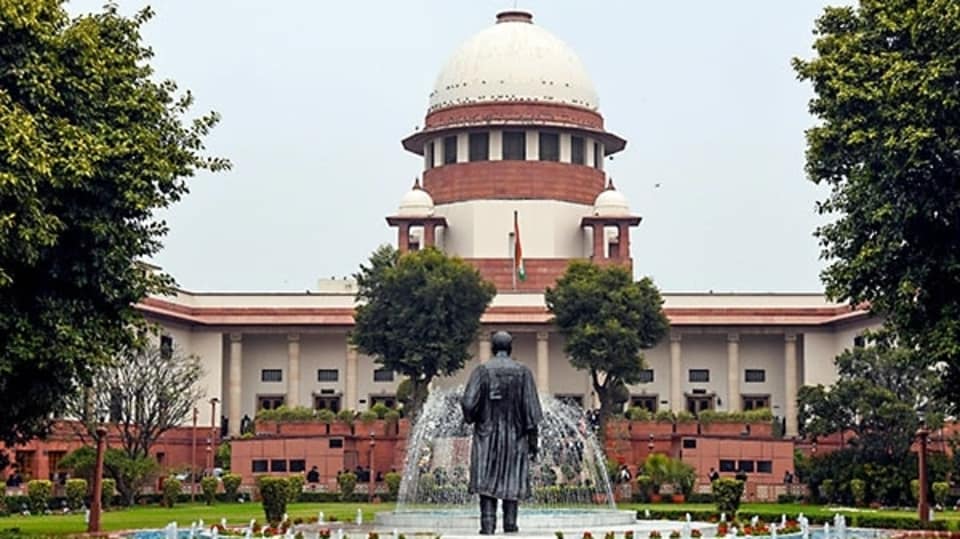
A bench of Justices Sanjiv Khanna and Dipankar Datta delivered two concurring verdicts. It dismissed all the pleas in the matter, including those seeking to go back to ballot papers in elections.
An EVM comprises three units – the ballot unit, the control unit and the VVPAT. All three are embedded with microcontrollers with a burnt memory from the manufacturer. Currently, VVPATs are used in five booths per assembly constituency.
EVM VVPAT case: Supreme Court issues two directives
- Justice Khanna directed the Election Commission of India to seal and store units used to load symbols for 45 days after the symbols have been loaded to electronic voting machines in strong rooms.
- The Supreme Court also allowed engineers of the EVM manufacturers to verify the microcontroller of the machines after the declaration of the results at the request of candidates who stood second and third. The top court said the request for the verification of the microcontroller can be made within seven days of the declaration of the results after payment of fees.
Option for candidates to seek verification of EVM programmes
- Candidates who secure second and third position in the results can request for the verification of burnt memory semicontroller in 5% of the EVMs per assembly segment in a Parliamentary constituency. The written request to be made within seven days of the declaration of the results.
- *On receiving such a written request, the EVMs shall be checked and verified by a team of engineers from the manufacturer of the EVMs.
- Candidates should identify the EVMs to be checked by a serial number of the polling booth.
- Candidates and their representatives can be present at the time of the verification.
- After verification, the district electoral officer should notify the authenticity of the burnt memory.
- Expenses for the verification process, as notified by the ECI, should be borne by the candidate making the request.
What did the Supreme Court say?
- "If EVM is found tampered during verification, fees paid by the candidates will be refunded," the bench said.
- "While maintaining a balanced perspective is crucial in evaluating systems or institutions, blindly distrusting any aspect of the system can breed unwarranted scepticism...," Justice Datta said.
Who filed the petitions?
NGO Association for Democratic Reforms, one of the petitioners, had sought to reverse the poll panel's 2017 decision to replace the transparent glass on VVPAT machines with an opaque glass through which a voter can see the slip only when the light is on for seven seconds.
The petitioners have also sought the court's direction to revert to the old system of ballot papers.
The seven-phase Lok Sabha polls began on April 19 and will conclude with the announcement of results on June 4.
(With inputs from Live Law and PTI)


