
 E-Paper



Supreme Court upholds life sentence awarded to 4 for terror plot
Four of five convicts in the case moved the top court after the Karnataka high court in 2016 enhanced their seven-year sentence to life term


Any conspiracy to cause damage to public property and injury to general public should be strictly dealt with, the Supreme Court held on Tuesday as it upheld life sentence awarded to four people for a terror plot following a shoot-out at Bengaluru’s Indian Institute of Science in 2005.
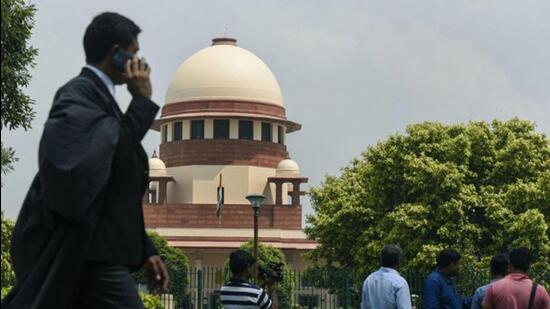
“Such conspiracies to cause danger to public property or to the safety of the members of the general public ought to be dealt with strictly,” said a bench of justices UU Lalit, Hemant Gupta and S Ravindra Bhat.
Four of the five convicts in the case moved the top court after the Karnataka high court in 2016 enhanced their seven-year sentence to life term for the conspiracy under Indian Penal Code (IPC)’s Section 121A (to wage war against the government).
Karnataka Police said it came to know about terror outfit Lashkar-e-Taiba (LeT)’s larger conspiracy following the shoot out to carry out strikes and arrested the appellants. They pursued the investigation into the conspiracy separately. The shoot-out left a professor dead and four others injured.
Seven people were arrested and police said they recovered explosives, and bombs from their possession. The trial court acquitted one and sentenced remaining six in December 2011.
“The conspiracy in the instant case, the intent of which was clear from the minutes of the meetings [held by the convicts prior to incident] and the consequential acquisition of arms and explosives to effectuate the purpose and intent of said conspiracy, would thus come well within the latter part of the conspiracy dealt with in Section 121A of the IPC,” said the bench.
It added the group could not succeed in its plans and appreciated police’s efforts in foiling the plot. Justice Lalit wrote the judgment for the bench.
“The conspiracy as disclosed in the instant matter, if it had been carried out, would have resulted in great damage and prejudice to the life and well-being of the members of the general public as well as loss to the public property,” the bench said.
“Considering the acquisition of substantial quantity of arms and explosives as well as the intent disclosed by diary [seized from them] and other materials on record, the High Court was right in enhancing the sentence after accepting the appeal preferred by the state in that behalf.”
The accused were tried under IPC sections 121 (waging war against state), 153A (promoting enmity between different groups), 153B (assertions or words prejudicial to national integration). They argued their offence came under Section 121A as the high court held and that recovery of explosives alone will not be sufficient for conviction in the conspiracy case.
The bench said even though no untoward incident actually happened as a result of the conspiracy, the matter still pertains to Section 121A. It agreed with the state, which referred to the recovery of detonators, gelatin sticks, hand grenades, and other inflammatory literature from the convicts as sufficient to prove the case against them beyond any doubt.


