
 E-Paper





Follow the latest breaking news, major developments and agenda-setting stories from India and around the world with the newsdesk at Hindustan Times. Operating round the clock, the desk brings together experienced editors, reporters and correspondents to deliver fast, accurate and contextual reporting across subjects that influence public policy, governance, business, society and international affairs. The HT News Desk covers politics, elections, government policies, the economy, business and markets, science and technology, the environment, law and order, infrastructure, education, climate issues and geopolitics, while closely tracking developments across states, institutions and global capitals. The team also leads coverage of major breaking news events, policy announcements, court proceedings, natural disasters, public emergencies and significant international developments. Reports published by the newsdesk are based on information gathered from reporters on the ground, official statements, government agencies, court records, regulatory filings, recognised institutions and other authoritative sources. Stories undergo editorial scrutiny and verification processes to ensure accuracy, fairness and relevance, and are updated as events evolve and additional information becomes available. Whether covering a key political decision in New Delhi, an economic policy shift affecting millions, a landmark court ruling or a major global event, the HT News Desk aims to provide readers with reliable, fact-based journalism that delivers not only the latest developments but also the context and analysis needed to understand their wider implications.
Temperature crosses 50°C in Churu as heatwave continues
The maximum temperature in Delhi was 40.6 °Celsius. The Palam Observatory recorded a high of 42.6 °Celsius.


There was no let-up in heatwave conditions in large swathes of India on Monday, with Rajasthan’s Churu remaining the hottest in the country at 50.3 °Celsius.
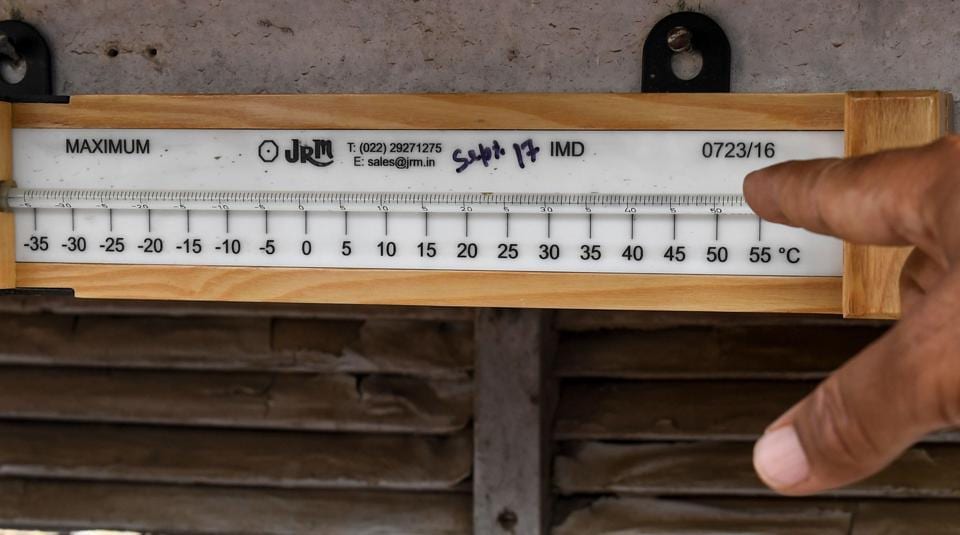
Temperatures remained three to five notches above normal in Haryana, Rajasthan and Jammu and Kashmir, while there was slight relief for Odisha and Telangana after the states received scattered rains.
The maximum temperature in Delhi was 40.6 °Celsius. The Palam Observatory recorded a high of 42.6 °Celsius.
The city recorded a low of 29.4 °Celsius and the humidity levels oscillated between 39 to 62%.
The national capital is likely to get some respite from the scorching heat on Tuesday. The India Meteorological Department has predicted a partly cloudy sky with chances of rain or thunderstorm accompanied by lightning and gusty winds.
Churu, also known as the gateway to the Thar desert, remained the hottest place in the country for the third consecutive day with a maximum temperature of 50.3 °Celsius.
In most cities of Rajasthan, maximum temperatures were four to eight notches above normal, whereas the minimum were three to five degrees above normal, a meteorological department official said.
Sriganganagar was the second hottest in the state at 48.8 degrees °Celsius, followed by Bikaner at 48.4 °Celsius and Kota at 47.4 °Celsius.
The MeT department has predicted severe heat wave in east and west Rajasthan for the next two days.
If the maximum temperature of a weather station in the plains crosses 45 °Celsius for two consecutive days, it is termed heatwave. And if the temperature breaches 47 °Celsius for two days, it is termed severe heatwave.
Haryana also reeled under heatwave conditions, with Narnaul being the hottest place in the state at 47.2 °Celsius — five notches above normal. Hisar sweltered at a high of 45 °Celsius, three notches above normal.
In Punjab, Amritsar braved a hot day at 42.2 °Celsius, two notches above normal, while Ludhiana recorded a maximum of 40.5 °Celsius.
According to the MeT department forecast, many places in the two states could get respite over the next few days.
Jammu and Kashmir’s winter capital, Jammu, also recorded an above normal maximum temperature at 41.1 degrees Celsius.


