
 E-Paper





Follow the latest breaking news, major developments and agenda-setting stories from India and around the world with the newsdesk at Hindustan Times. Operating round the clock, the desk brings together experienced editors, reporters and correspondents to deliver fast, accurate and contextual reporting across subjects that influence public policy, governance, business, society and international affairs. The HT News Desk covers politics, elections, government policies, the economy, business and markets, science and technology, the environment, law and order, infrastructure, education, climate issues and geopolitics, while closely tracking developments across states, institutions and global capitals. The team also leads coverage of major breaking news events, policy announcements, court proceedings, natural disasters, public emergencies and significant international developments. Reports published by the newsdesk are based on information gathered from reporters on the ground, official statements, government agencies, court records, regulatory filings, recognised institutions and other authoritative sources. Stories undergo editorial scrutiny and verification processes to ensure accuracy, fairness and relevance, and are updated as events evolve and additional information becomes available. Whether covering a key political decision in New Delhi, an economic policy shift affecting millions, a landmark court ruling or a major global event, the HT News Desk aims to provide readers with reliable, fact-based journalism that delivers not only the latest developments but also the context and analysis needed to understand their wider implications.
Timeline: Jat quota protests in 2017
All India Jat Arakshan Sangharsh Samiti has called off a protest that threatened to cripple Delhi after reaching a truce with the Haryana government on Sunday evening


The All India Jat Arakshan Sangharsh Samiti (AIJASS) has called off a protest that threatened to cripple national capital Delhi on Monday after reaching a truce with the Haryana government. Dharnas will, however, continue in Haryana till March 26, when the AIJASS will review its decision.
The Jats are demanding quota in government jobs and education.
Here is the timeline of the Jat stir this year :
January 29: All India Jat Arakshan Sangharsh Samiti (AIJASS) begins dharnas in 19 Haryana districts.
February 7: Haryana government constitutes five-member panel headed by chief secretary DS Dhesi to hold talks with Jat leaders.
February 11: Jats hold dialogue with government panel in Panipat. No breakthrough but Jats agree for another round of talks.
February 19: Jats observe Balidan Divas, call for Parliament gherao, non-cooperation movement (non-payment of power, water bills, loans).
February 20: Jats hold second round of talks with government panel in Panipat. The talks remain inconclusive, but government agrees to form panel to see legality of case withdrawal.
February 24: No breakthrough by legal panel, Jats once again refuse to hold talks with government panel, calling it powerless. Demand new panel.
February 26: Jats observe ‘Black Day’, ask community to stop buying goods from shops that are not supporting their agitation in written. Momentum for Parliament gherao builds up.
March 2: Jats take protest to Jantar Mantar in Delhi, say will choke Delhi and gherao Parliament on March 20.
March 16: Haryana government forms new panel under education minister Ram Bilas Sharma. Talks positive, Sharma says agitation to end. Jats say will meet CM Khattar on March 17 and take a final call.
March 17: CM Khattar does not show up for meeting. Angry Jats say protest to go on.
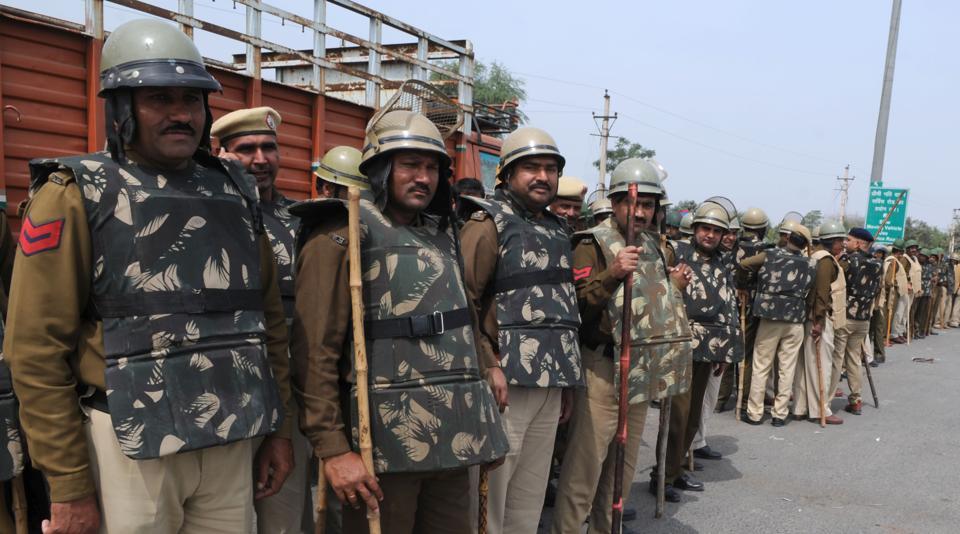
March 19: 50-day-long peaceful protests turn violent in Faridabad. Security forces injured in clash.
March 19: CM calls Jats for meeting in Delhi. Agreement reached on six demands. Delhi protest plan called off. Jats to decide on lifting dharnas on March 26.


