E-Paper



Two-stage NEET, permanent exam body among suggestions to reform India’s exams
ABVP, United Doctors Front and Educators Federation of India propose a two-stage NEET, a permanent exam authority and independent audits to improve exam security.

 Prefer HTon Google


A two-stage NEET, a permanent statutory national examination authority and an independent body to audit examination standards are among the proposals submitted to the High-Powered Task Force (HPTF) on public examination reforms, as stakeholders call for a more secure, transparent and error-free system for national-level entrance tests.
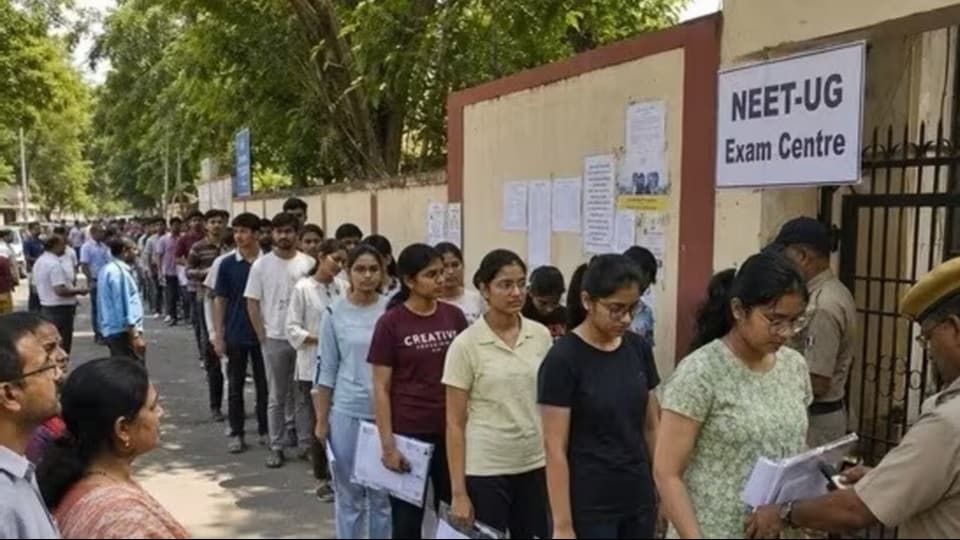
The suggestions, covering examination security and design, governance, technology, malpractice prevention, infrastructure, transparency and student well-being, came after the Infosys co-founder Nandan Nilekani-led HPTF invited inputs from students, parents, teachers, academic institutions, examination bodies and technology experts on making India’s public examination system “robust, secure, transparent, equitable and future-ready”.
The Rashtriya Swayamsevak Sangh (RSS)-affiliated Akhil Bharatiya Vidyarthi Parishad (ABVP), doctors’ and medical students’ body United Doctors Front (UDF), and coaching group representatives Educators Federation of India have proposed measures ranging from restructuring the examination authority to changing the architecture of the National Eligibility cum Entrance Test (NEET) and tightening the movement and handling of question papers.
Also Read: NEET mess: NTA orders retest for NEET UG as CBI probes leak
The ABVP has proposed a two-stage model for major competitive examinations, with the first stage used for shortlisting and the second for final selection. It has also suggested examining the feasibility of conducting NEET twice a year, with the better score considered. Its recommendations call for “stronger question-paper security”, uniform standards for examination centres, robust candidate verification, transparent answer-key and normalisation systems, and independent security audits.
UDF has called for the creation of a permanent statutory examination authority through an Act of Parliament, arguing that examinations such as NEET-UG (undergraduate) and the Joint Entrance Examination (JEE) require an institution with “permanent and adequately trained manpower” and specialised divisions for cybersecurity, digital forensics, psychometrics, statistics and examination logistics.
It has also proposed a standardised chain of custody for question papers, recording the identities of those handing over and receiving papers, along with the time, location and condition of the material. Where physical transportation is used, it has suggested GPS tracking and tamper-evident packaging.
A separate 15-page document containing suggestions submitted by Educators Federation of India president Keshav Agarwal proposes a two-stage NEET pilot comprising a broad offline prelims followed by a secured, single-day mains. The document says the model could reduce the number of candidates requiring high-security computer-based testing infrastructure.
Also Read: From NTA’s Delhi building to Pune: How NEET questions made it out
The suggestions also propose reducing the physical movement of question papers through encrypted transmission to secure print cells, with papers printed shortly before the examination under CCTV surveillance and dual custody. Each paper could carry centre, room and booklet identifiers to trace its origin in case of a compromise.
The groups have sought clearer rules for when examinations are disrupted. UDF has proposed a predefined mechanism for compromised examinations, with decisions on cancellation or re-examination based on “objective criteria and transparent procedures”. The Educators Federation similarly recommends proportionate remedies, with wider re-examination only when a breach is systemic or its reach cannot be reliably identified.
On oversight, the Educators Federation has proposed a permanent “National Assessment Integrity and Standards Council”, separate from day-to-day examination operations, to issue technical standards, accredit centres, empanel auditors and review psychometric reports.
The six-member HPTF was constituted by the Centre in July under Nilekani to examine comprehensive reforms covering the “conduct, security, design and governance” of public examinations, including those conducted by the National Testing Agency (NTA).