
 E-Paper



Extradition to India cleared, Nirav to appeal
The decision came as a shot in the arm for the Indian government, which has been trying to bring fugitive economic offenders back to the country, but Nirav Modi reserves the right to appeal his extradition in the high court.

 Prefer HTon Google


UK home secretary Priti Patel has approved the extradition of fugitive businessman Nirav Modi almost two months after a court found him guilty of fraud and money laundering in the Punjab National Bank scam case, people familiar with the development said on Friday.
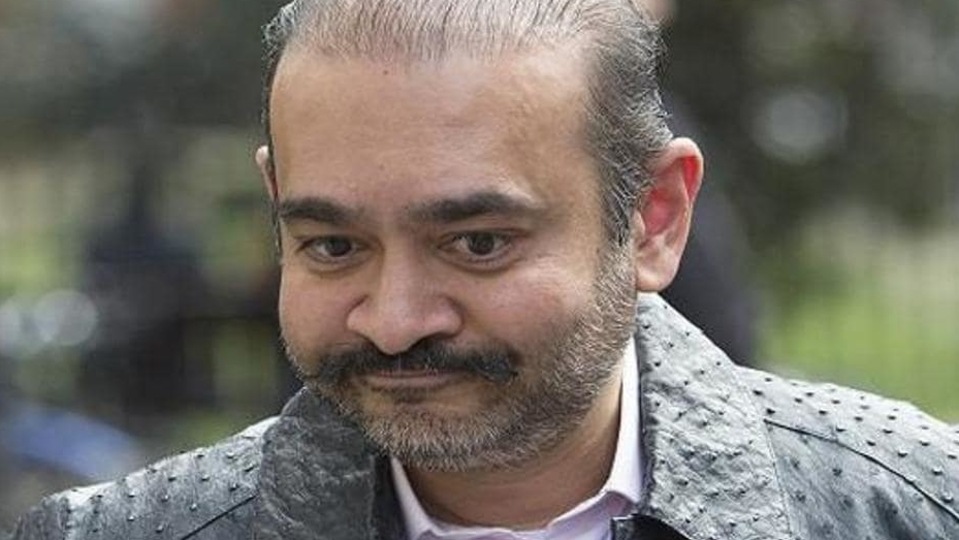
The decision came as a shot in the arm for the Indian government, which has been trying to bring fugitive economic offenders back to the country, but Nirav Modi reserves the right to appeal his extradition in the high court, which his lawyer said would be the next course of action.
“We will now go to the high court challenging the order of the Westminster magistrate court,” Zulfiquar Memon, who represents Nirav Modi, told HT.
A UK home office spokesperson said: “On February 25, the district judge gave a judgment in the extradition case of Nirav Modi. The extradition order was signed on April 15.”
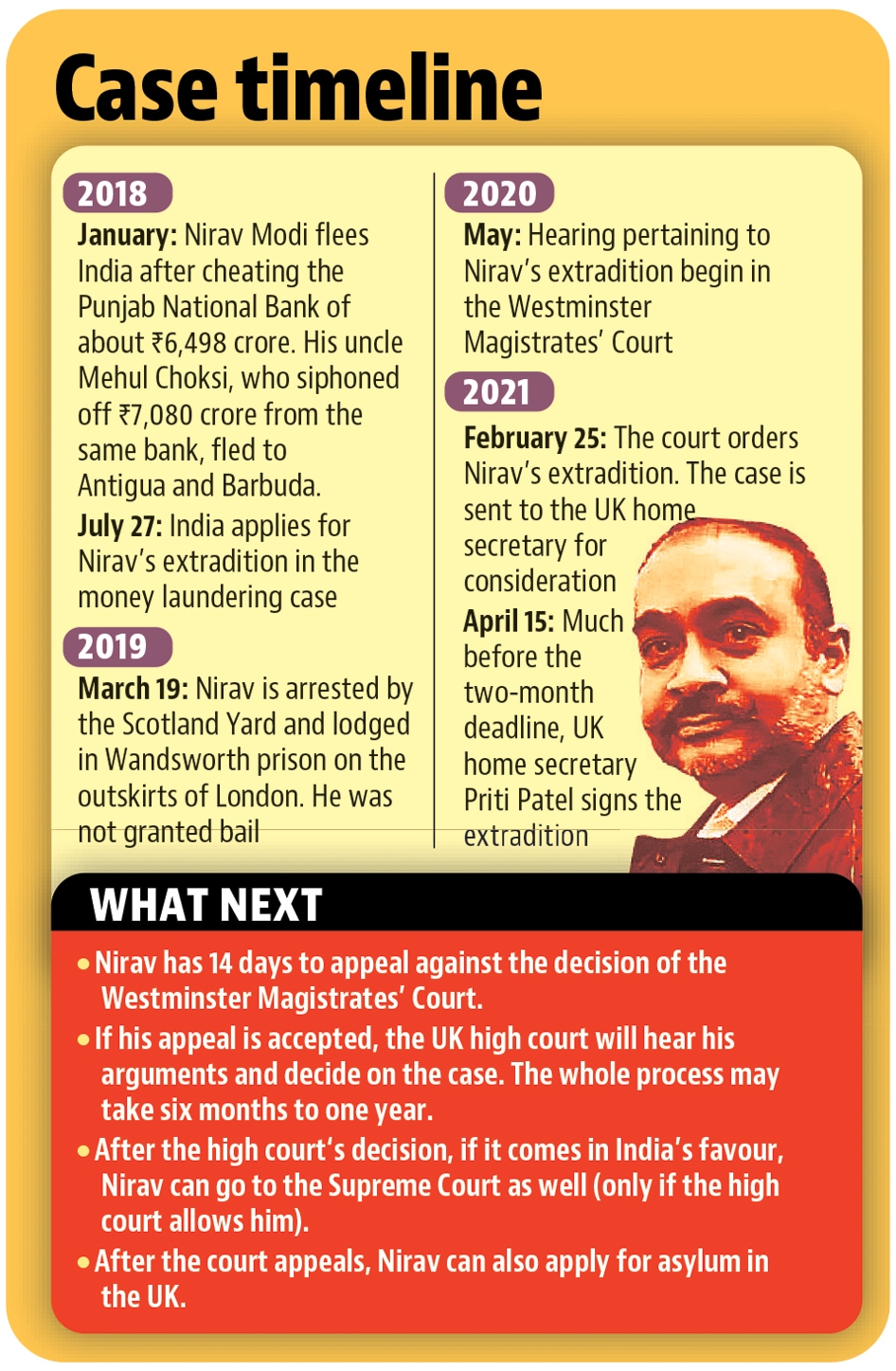
Nirav Modi now has 14 days to make an application for leave to appeal to the high court. He may seek leave to appeal against both the decisions of the district judge and of the home secretary, the people cited above said.
While ordering his extradition on February 25, Westminster district judge Sam Goozee stated that Modi has a case to answer in India as he, along with his brother Nehal Modi and others, had defrauded the public sector bank, laundered the money taken from it and conspired to destroy evidence and intimidate witnesses.
The judge observed that the circulation of pearls, diamonds and gold between Nirav Modi firms and Dubai- and Hong Kong-based dummy companies was not genuine business and the companies were being used for transferring funds generated in the guise of sale-purchase/export-import of goods colloquially referred to as round-tripping transactions.
Nirav Modi’s contention that he won’t get a fair trial in India and that he was being targeted due to political reasons was junked by the court.
A Central Bureau of Investigation (CBI) official following the case said, “The UK government signing the extradition order is a positive development. Even if he goes to a higher court, he doesn’t stand a chance as there is very strong evidence against him.”
Nirav Modi has been lodged in Wandsworth prison on the outskirts of London since March 19, 2019, when he was arrested on the basis of India’s extradition request.
Nirav Modi is the second high-profile economic offender after former liquor baron Vijay Mallya whose extradition has been cleared by a trial court in the UK. Mallya lost his appeal against extradition in April 2020 as well as any opportunity to approach the UK Supreme Court the next month but the British government has claimed that his extradition is held up due to a “confidential legal issue”.
Officials familiar with the Mallya case say that he has applied for asylum in the UK and it is not known how much time British authorities will take to decide.
CBI and Enforcement Directorate (ED) investigators are confident that the UK high court will reject Nirav Modi’s plea just as it did Mallya’s, as there is irrefutable evidence of fraud and money laundering.



