
 E-Paper



UN looks to set up fund to promote ancient Indian languages: Officials
The United Nations is looking to set up a multi-donor fund to “revitalise, preserve and promote” ancient and tribal languages across the globe, including ancient Indian languages such as Prakrit, Pali and Sharda among others.

 Prefer HTon Google


The United Nations is looking to set up a multi-donor fund to “revitalise, preserve and promote” ancient and tribal languages across the globe, including ancient Indian languages such as Prakrit, Pali and Sharda among others, officials familiar with the matter said.
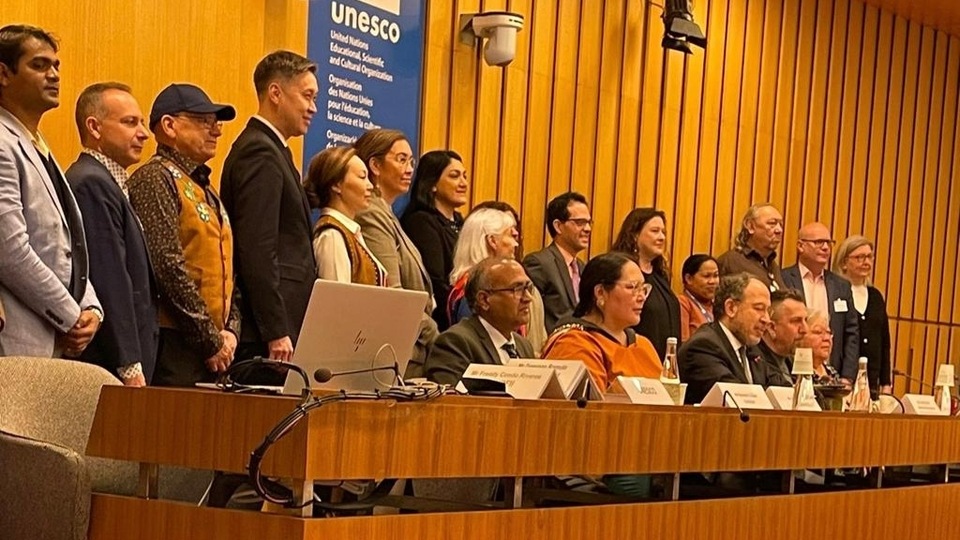
The International Decade of Indigenous Languages programme by Unesco has launched a task force l, co-chaired by Ramesh Gaur, head of Kalanidhi Division at the Indira Gandhi National Centre for the Arts, and director, National School of Drama, that aims to translate these languages, including other indigenous ones from across the world, to more accessible modern ones to preserve and promote them.
Also Read | Inside India’s 200-years quest for vernacular medical textbooks
The fund will be available to communities and non-governmental organisations. “The fund will be made available to any community organisation looking to revive the languages,” an official said, seeking anonymity.
According to Gaur, who co-chaired the eighth meeting of the task force in December, a new action plan will be implemented by all member countries. “The idea is to make a policy to promote languages that may help revive these languages, ancient and indigenous,” he said.
Also Read | Byculla station receives UNESCO merit award for conservation
UNESCO established the global task force for making a Decade of Action for Indigenous Languages on March 22, 2021. “As an international governance mechanism, the Global Task Force ensures the equitable participation of all stakeholders in the International Decade, and provides guidance on the preparation, planning, implementation and monitoring of activities, in line with the objectives of the Global Action Plan of the IDIL2022-2032,” its website states.
Also Read | British Library celebrates India ties with exhibition on Hampi
The members include Canada, Iceland, Norway, Latvia, Russia, Ukraine, Bolivia, Paraguay, Peru, Australia, India, Thailand, Gambia, Madagascar, Zimbabwe, Bahrain, Kuwait and Saudi Arabia.
There nearly 1,700 languages in India, out of which there is no data for 949, Gaur said. “For starters, India must compile its own atlas of languages and identify the modern languages comparable with them,” he said.
The fund set up by the UN can be utilised for digital archiving of the lost languages. “There needs to be central and state government-level task forces in order to ensure that the programme is effectively implemented, especially considering our country’s focus on regional languages with the new education policy,” he said.


