E-Paper



Union Budget 2026 set to lay down India's ‘Reform Express’ path
The budget will also focus on strengthening manufacturing to leverage the eight free trade agreements (FTAs) concluded recently.

 Prefer HTon Google


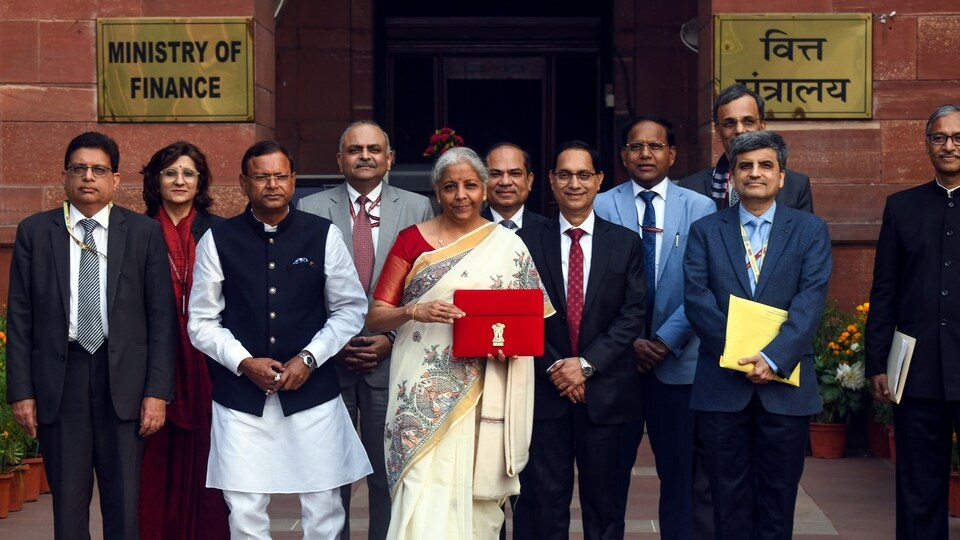
New Delhi: The Union Budget to be presented by finance minister Nirmala Sitharaman on Sunday is expected to accelerate regulatory reforms by dismantling compliance burdens for citizens, businesses and professionals to drive the “Viksit Bharat” (Developed India) 2047 goal, people familiar with the matter said, attributing it to Prime Minister Narendra Modi’s “Reform Express” focus in recent policy directives.
The regulatory easing may include exemptions from mandatory audits and corporate social responsibility (CSR) rules for small and medium enterprises (SMEs), allowing them to focus on core operations, the people said. While CSR is not mandatory for most micro, small and medium enterprises (MSMEs), it applies if net profit exceeds ₹5 crore. Follow live updates related to Union Budget here.
“Reforms are a work in progress. They may get a mention in the Budget. But this government works 24x7, throughout the year, hence reforms are a continuous process that does not wait for the Budget,” one person said.
The government is also considering easing quality control orders and reducing customs duties on intermediaries to boost MSME competitiveness. Input duties on chemicals, electronic items, electric vehicles and capital goods components may see corrections to aid “Make in India” goods.
ALSO READ | Exclusive: Sitharaman's Budget speech today set to be unique, focus on long-term goals
The Budget is unlikely to raise customs duty on gold and silver despite a spike in imports, as they enter through official channels.
“Higher duty on gold and silver would unnecessarily encourage smuggling,” a second person said.
India’s gold imports in October 2025 soared over 199% year-on-year to $14.72 billion before falling over 12% to $4.13 billion in December. Cumulative gold imports in the first nine months of fiscal 2026 rose 1.83% to $49.39 billion. Silver imports surged 128.95% to $7.77 billion in the April-December period.
The Budget is expected to realign the customs duty regime with India’s manufacturing growth. Union finance minister Nirmala Sitharaman, in her remarks at the Hindustan Times Leadership Summit on December 6, said that reforming the regime — by lowering rates on select goods, increasing transparency and reducing official discretion — would be the next major reform.
The government may introduce a customs duty amnesty scheme following the success of ‘Sabka Vishwas’ for excise and service tax cases, and ‘Vivad se Vishwas’ for income-tax issues. The government and businesses are embroiled in legacy disputes regarding classification, valuation and rules of origin.
After massive tax reforms in the recent past no major overhaul of the direct or indirect tax rates are expected.
“Investors want policy continuity and a predictable tax regime, which have been achieved over the past few years,” the first person said.
The person noted that corporate tax remains competitive and middle-class tax liabilities have been eased, with income up to ₹12 lakh exempt — and ₹12.75 lakh for salaried persons. Goods and Services Tax (GST) rates were also rationalised in October, making most items — from everyday essentials to automobiles and medicines -- cheaper for consumers.
Another area of focus, the people cited above added, is social security penetration. Following the allowance of 100% foreign direct investment in insurance, the government may introduce measures to deepen social security coverage. Budgetary support will continue for schemes such as the Pradhan Mantri Jeevan Jyoti Bima Yojana, the Pradhan Mantri Suraksha Bima Yojana and Ayushman Bharat.
The Budget will emphasise robust macroeconomic fundamentals and social indicators, including over 270 million people rising above the poverty line in a decade.
“The government is working to take its startup ecosystem to the next level with a new definition that will promote and fund innovation. It will nudge startup transformation from aggregators of services to pioneers in deeptech and artificial intelligence,” the second person said.
States will receive incentives, monetary and non-monetary, to promote digital governance and power reforms. The budget will also focus on strengthening manufacturing to leverage the eight free trade agreements (FTAs) concluded recently.
Prime Minister Narendra Modi on Thursday urged producers to focus on quality to utilise duty-free access to Europe, describing the proposed India-EU pact as the “Mother of All Deals”.
The budget will align with the “Viksit Bharat” and “Atmanirbhar Bharat” (Self-reliant India) goals. Priorities include strategic defence, energy security, semiconductors, rare earth minerals and digital sovereignty, the officials said.