E-Paper



Uttarakhand govt forms high-level committee for smooth conduct of Char Dham pilgrimages
The decision to set up the panel was made at the first meeting of the newly formed Char Dham Devasthanam Board chaired by chief minister Trivendra Singh Rawat.

 Prefer HTon Google


The Uttarakhand government on Friday formed a high-level coordination committee for the smooth conduct of pilgrimages to Char Dham and 51 other shrines in the state.
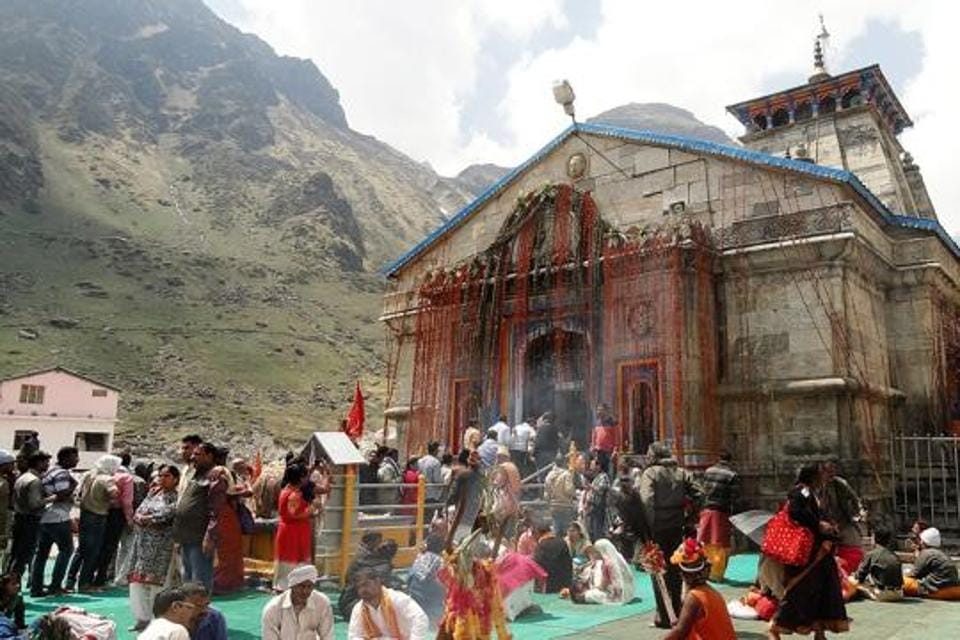
The committee comprising representatives from different departments will be headed by the chief secretary. The decision to set up the panel was made at the first meeting of the newly formed Char Dham Devasthanam Board chaired by chief minister Trivendra Singh Rawat.
Other important decisions made at the meeting included the take over of properties and assets of temples by the board, creation of a separate account for the board for which the state government will give ₹10 crore, transfer of funds from the Badrinath Kedarnath Temple committee to the board and adjustment of people working in this committee with the board, and creation of a separate logo for the board.
It was also decided that the additional chief executive officer of the board will be appointed soon, a tribunal will be set up to deal with legal issues related to the board, and the board will take over the website of the Badrinath Kedarnath Temple committee and upgrade it as the board’s main website.
After the meeting, chief minister Rawat said that Uttarakhand is famous as a spiritual hub, given the antiquity of shrines in the Himalayan state.
“It is important that we should maintain the sanctity of these ancient shrines and manage them in a better way,” he said.
Rawat directed the board to create a facility for online digital worship for devotees across the world.
“Through digital worship, except for sanctum sanctorum, people who want to have darshan of temples or their premises, or listen to prayers being offered through audio, should be able to do so from any part of the world,” he said.
In February, Rawat had announced that people across the world will be able to experience the spirituality of Uttarakhand through the online darshan of the Char Dham shrines and other major temples.
Rawat said the creation of a museum, with ancient manuscripts, artifacts and objects of historical importance related to these shrines, was discussed at the meeting.
The state government set up the board after passing the Char Dham Management Board Bill last December. In January, Governor Baby Rani Maurya assented to the Char Dham Devasthanam Management Act 2019. The board has the mandate to manage the Char Dham shrines and 51 other temples.
The four Himalayan pilgrimage sites - Yamunotri, Gangotri, Kedarnath and Badrinath, collectively called Char Dham - are among the most revered pilgrimages among Hindus and attract hundreds of thousands of pilgrims each year. Traditionally, the Char Dham pilgrimage begins from the west from Yamunotri, then proceeds to Gangotri, Kedarnath and Badrinath in the east.
Last year, a record 2.9 million pilgrims visited Char Dham, including 920,000 to Kedarnath, 1.02 million to Badrinath, 440,000 to Yamunotri, and 503,000 to Gangotri, compared to more than 2.7 million pilgrims in 2018.