
 E-Paper



‘Very concerned’, says German ambassador on India-China clash in Tawang
The German envoy also outlined Germany’s plans to back green transition in India, including providing about €1.5 billion a year over the next 10 years for climate change, biodiversity and smart city sustainability projects


The skirmish between Indian and Chinese troops along the Line of Actual Control (LAC) in Arunachal Pradesh is a matter of concern and there should be no violation of international borders, German ambassador Philipp Ackermann said on Wednesday.
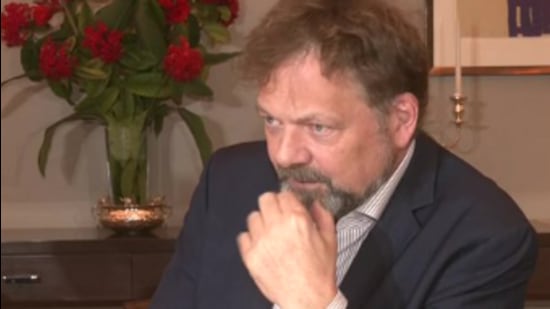
Ackermann acknowledged during an interview that while European countries now have a greater understanding of India’s position on the Ukraine conflict, they also hope the Indian side understands the European position since the war is having a “very big impact” across the continent, in terms of energy prices, refugees and the fallout on the global rules-based order.
Also Read: UN reacts to India-China border clash in Tawang, calls for ‘de‑escalation’
Following German foreign minister Annalena Baerbock’s recent visit to India, both sides have agreed to stay in close contact at the top level on the issue of China and Russia, the envoy said, noting that the relationship with these two countries is a “strategic geopolitical priority”.
Ackermann also outlined Germany’s plans to back green transition in India, including providing about €1.5 billion a year over the next 10 years for climate change, biodiversity and smart city sustainability projects.
Referring to the clash on the LAC near Tawang in Arunachal Pradesh on December 9 that left several soldiers injured on both sides, the German envoy said: “I’m not fully aware of every detail, what I’m reading are media reports, but I can say that we are very concerned. We should avoid violation at international borders at all times.”
He added, “There was violence in the western part [of the LAC], there is violence in the eastern part. I think this is a matter of concern. There shouldn’t be violence.”
Ackermann further said, “We in Europe see this war of aggression of Russia in our daily lives when it comes to energy prices, refugees or dealing with Russians, and at all levels. But on an abstract level, it’s a concern for the whole world because it’s a breach of international law.”
Asked if the Ukraine conflict has implications for the rules-based order in other parts of the world, he replied, “Absolutely, frankly, this is what we see. You may say it’s not our part of the world, but what we see is a blatant violation of international law and we should only try hard to not make these violations happen. What we’ve seen in Arunachal [Pradesh] lately is also kind of just that.”
Expressing confidence that the Indian presidency of the G20 will be able to bridge divisions caused within the grouping by the Ukraine crisis, Ackermann said: “We have high hopes, but I think the guess is certainly not unfounded that this conflict will play a role in the G20. You can’t exclude it.”
Also Read:‘No other country that can cope with China’: German envoy on India-EU trade pact
While European states have “understood the Indian position [on the Ukraine crisis] to a certain extent”, they “hope the Indians have also understood the European position to a certain extent. The war in Ukraine is something that is having a very big impact on our daily life in Europe. It’s not only for Germany or Ukraine, it’s for the whole continent,” he added.
Referring to Baerbock’s discussions with her Indian counterpart S Jaishankar during her visit last week, Ackermann described China and Russia as a “strategic geopolitical priority”. He added, “I think both ministers agreed to keep in close contact at the top level on these two areas, where I think in our analysis when it comes to China, we are listening very carefully to what India has to say. We feel that India has a lot to say on China and I think there is a lot of overlap in our analysis.”
The two ministers had a “very fruitful discussion on the Russian war of aggression in Ukraine” as that is also a priority, he said.
Under the partnership for green and sustainable development, Germany will back a range of projects in India, from helping energy providers in Rajasthan switch from fossil fuels to renewables to supporting a solar-driven water transport project and helping biodiversity and organic farming projects in the northeastern states.
Germany is also keen to collaborate with India on the production of defence hardware, though this will take time, and work more closely in the Indo-Pacific, including through the deployment of warships and joint exercises, Ackermann said.


