E-Paper



Winter could lead to spike in Covid-19 cases: Health minister
The minister also emphasized the need for being extra careful during the coming festive season as congregations n large numbers could turn into super-spreaderevents, and also if people do not follow government-prescribed guidelines to cut disease transmission.


The onset of winter could lead to a spurt in cases of the coronavirus disease (Covid-19) in India, Union health minister Dr. Harsh Vardhan warned on Sunday, as the country braces for a more rapid transmission of the respiratory virus in cold weather.
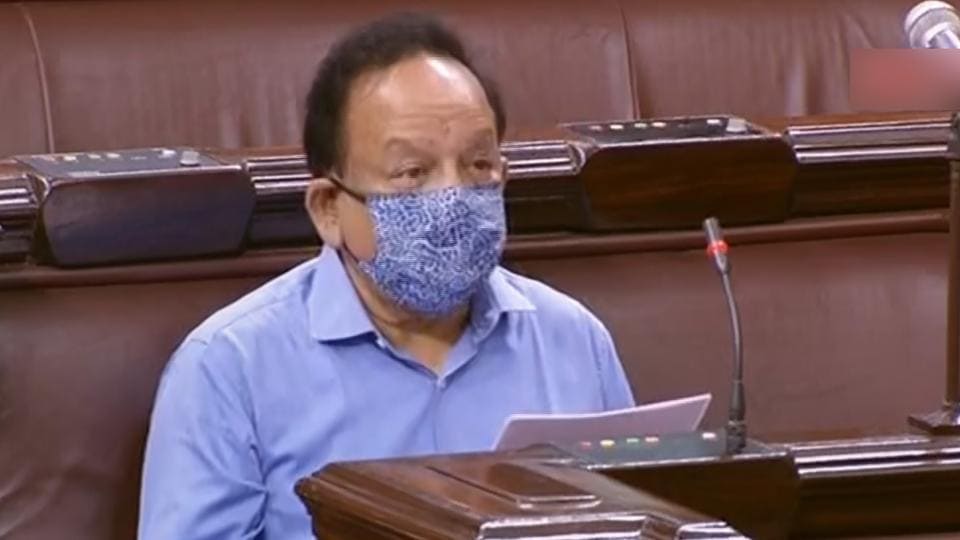
“These viruses are known to thrive better in the cold weather and low humidity conditions. Overcrowding in residential dwellings also increases during cold weather. We also have evidence from the European countries that with the onset of winters the number of Covid-19 cases is increasing as is the case of the United Kingdom,” Harsh Vardhan said. “In view of these, it would not be wrong to assume that the winter season may see increased rates of transmission of the novel coronavirus in the Indian context too.”
“This is the reason why we are emphasizing on following the preventive measures prescribed by the government. The measures are simple; people need to follow Covid-19-appropriate behaviour such as maintaining a physical distance of six feet from people, wearing a mask and following hand hygiene,” he added.
The minister also emphasized the need for being extra careful during the coming festive season as congregations n large numbers could turn into super-spreaderevents, and also if people do not follow government-prescribed guidelines to cut disease transmission.
He appealed to the people to celebrate the festivals at home, with their families and friends, instead of going out to fairs and pandals, reminding citizens that the fight against Covid-19 was their foremost dharma, for mitigating the virus and preventing deaths at any cost.
““The Bhagavad Gita condones war for the warrior class. So, there is no need to congregate in large numbers to prove your faith or your religion. If we do this, we may be heading for big trouble…Our goal is to finish this virus and save humanity. This is our religion…,” he said.
“Extraordinary circumstances must draw extraordinary responses. No religion or God says that you have to celebrate in an ostentatious way, and that you have to visit pandals and temples and mosques to pray,” he added.
Experts also say that the coming weeks could determine what shape the pandemic takes in India.
“Even though nothing can be said with certainty because it is a new virus and we are getting to know it better; still going by the pattern of respiratory viruses in the past, this virus could also spread faster in cold weather. There are many factors that aid growth of respiratory viruses in winters that includes high pollution levels, low humidity etc. that helps them stay in the atmosphere for a longer period of time. Also, overcrowded spaces during winters are also common, and all this is ideal for virus multiplication,” said Dr Vikas Maurya, head of respiratory medicine and interventional pulmonology at Fortis Hospital.