
 E-Paper



Home run: India has an ancient, unbreakable bond with natural diamonds

 Prefer HTon Google


HT SELECT: For centuries, India was a primary source of diamonds. Some of the world’s largest and most exceptional gems were mined here. Diamonds from Golconda continue to shape global perceptions of purity. See how this bond has lived on, and evolved.
Diamonds are part of an unbroken story in India. This is widely recognised as the earliest historically documented primary source of these gems.
The Gemological Institute of America (GIA) traces the country’s diamond trade to the 4th century BCE.
India’s position as the world’s primary diamond supplier lasted, in fact, until discoveries in Brazil in the early 18th century altered global supply.
The specifics of India’s earliest diamond-mining practices are harder to establish.
Historical accounts identify deposits across regions in present-day Andhra Pradesh, Karnataka, Odisha and Madhya Pradesh. Diamonds were recovered from alluvial deposits, as well as from shallow underground workings, long before modern mining techniques emerged.
A 1988 study by American researchers Leonard Gorelick and A John Gwinnett found evidence of a diamond-tipped drill in a rock-crystal artefact from Arikamedu, a trading settlement in present-day Puducherry, occupied between roughly 250 BCE and 300 CE. The finding suggests that Indians used diamonds as tools in this period, though it doesn’t establish when they first began mining them.
Over more than two millennia, the story has unfolded to contain rich histories of extraction, craftsmanship and commerce. Priceless stones have travelled far beyond their points of origin, entering wider trading networks and attracting distant markets.
THE MOTHERLODE
Golconda is something of a legend in this respect: a place of gleaming treasure, with stones unlike any found in the world.
Golconda diamonds are, in fact, still shaping global perceptions of purity.
The region’s reputation rests partly on its geological history: diamonds attributed to Golconda are often Type IIa, a rare category characterised by the fact that they contain no measurable nitrogen. Such diamonds can be exceptionally transparent.
The mines of Golconda had been largely exhausted by the 19th century, but auction houses continue to foreground such a history, whenever a diamond with roots traceable to this region goes under the hammer.
In December 2023, for instance, Christie’s highlighted a necklace featuring a 40.05-carat, internally flawless diamond, describing its transparency and luminosity as qualities associated with Golconda stones. In April 2025, the auction house announced the Golconda Blue, a vivid blue 23.24-carat diamond believed to have once belonged to Indore’s Holkar royal family. With an expected price of at least $35 million, the stone was scheduled for a Geneva sale, but was later withdrawn.
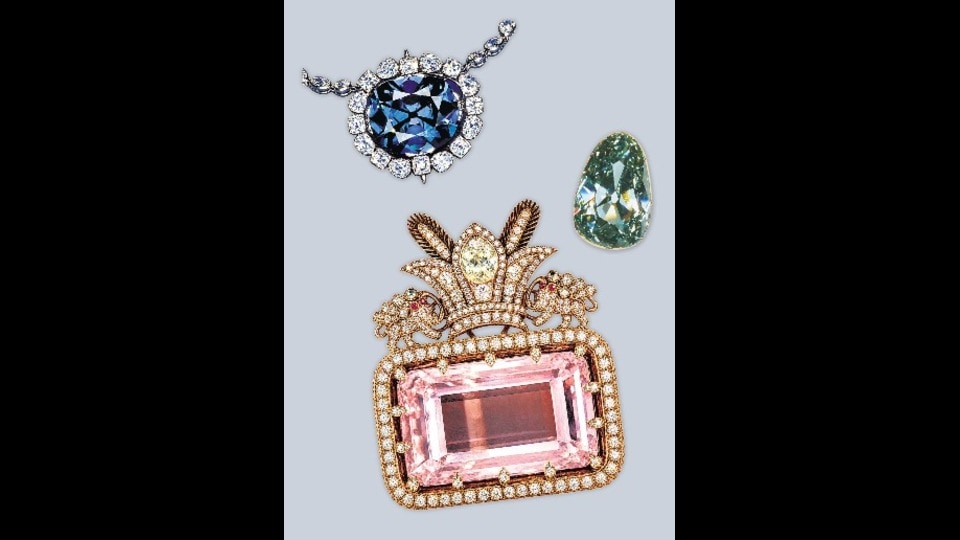
Some of the world’s most celebrated stones have their origins here.
The gray-blue, 45.52-carat Hope Diamond, donated by its last owner (the legendary New York jeweller Harry Winston) to the Smithsonian Institution, is believed to have originated in the Kollur mines.
The Koh-i-Noor (Persian for Mountain of Light), a 105.6-carat gem famous for its size and brilliance and now part of the crown of the British monarch, is thought to have come from the Golconda province.
The Darya-i-Noor (Persian for Sea of Light), a massive, 182-carat, pale pink tablet-like stone, came from Golconda, and is now a prize gem among the national jewels (formerly the crown jewels) of Iran.
The Dresden Green, a 41-carat apple-green stone, is believed to have come from the Golconda mines and is the largest natural-green diamond on record.
Diamonds, of course, have also been among the gemstones considered auspicious by Mughal rulers and ancient Sanskrit texts, by people looking for a talisman today or a way to let the light in at Diwali.
NEW FACETS
That cultural history now sits alongside a formidable industrial presence.
India’s gems and jewellery sector accounted for about 7% of GDP in 2022–23, according to a NITI Aayog Trade Watch report published in 2026. India is the world’s leading centre for diamond cutting and polishing. Surat anchors this network, with thousands of factories cutting rough stones into polished gems. Mumbai, meanwhile, is a major centre of trade, export and industry institutions.
India’s multifaceted association with this gem, therefore, represents an interesting arc. While its historical identity is tied to diamond-producing regions, it now derives much of its global importance from the skilled labour and infrastructure that give stones mined elsewhere their finished form.
The Bharat Diamond Bourse, which began operations in 2010, provides infrastructure for diamond traders and exporters, connecting Indian manufacturers with international markets. Beyond exports, natural diamonds have a growing story at home, particularly in terms of who buys them, and the occasions they mark.
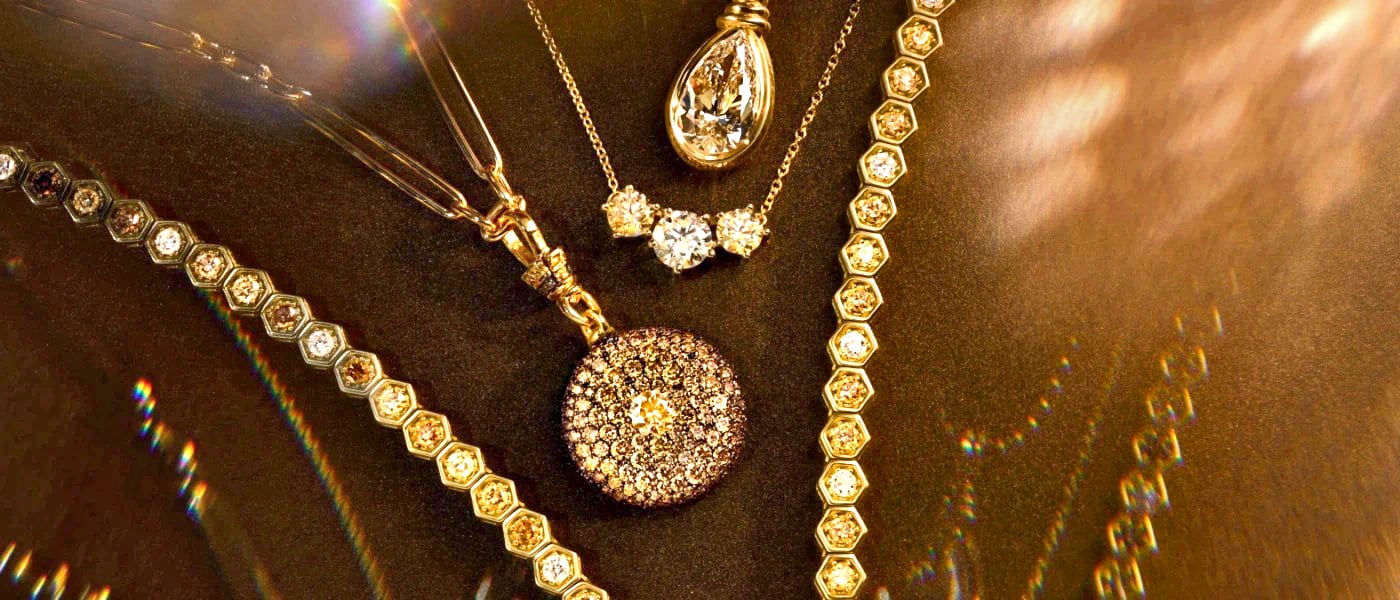
Younger consumers and women are increasingly buying jewellery for themselves, to celebrate a career milestone or special occasion. Rising incomes and shifting consumer preferences are moving diamonds from occasional to everyday wear too. They are becoming increasingly popular as engagement tokens, and anniversary gifts. Wedding jewellery remains a vital element of this market.
From centuries of trade in these prized stones, and generations of kings, queens and emperors displaying them as symbols of wealth and power, the natural diamond is also now the investment, the indulgence, the heirloom in the family safe. Nothing, after all, sparkles quite like it does.


