
 E-Paper



Big bang theory: The intriguing history of fireworks

 Prefer HTon Google


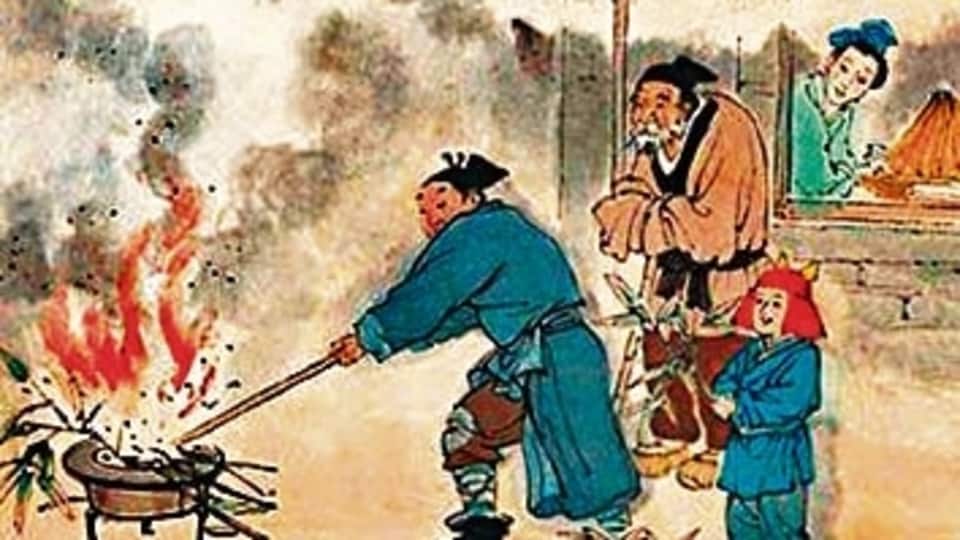
They were used to scare away evil spirits, large animals. See how fireworks were born, and why we might want to replace them with a light that is brighter still
As with so many dramatic inventions, the first firecracker may have been born of an accident.
In 1st century BCE China, it is said, someone tossed a hollow bamboo stalk into a fire and watched it explode with a bang.
Bamboo, it turned out, was a natural firecracker. The sealed air pockets in its hollow stalk expand when heated, until they burst with a sharp crack. Records indicate that, once this was known, traders and travellers began to carry sticks of bamboo with them on long journeys, setting them alight to frighten away animals (or even evil spirits, if their luck seemed suspiciously bad).
Then, most likely in China again, we began to unlock the intricacies of chemical combustion, with gunpowder. Taoist alchemists, in their endless search for the elixir of life, combined sulphur, charcoal and saltpetre; and discovered instead a shortcut to the big end.
They called it “huo yao” or “fire medicine” (because it was originally used to treat skin diseases).
Chinese records credit the invention of the first firework — bamboo stalks filled with gunpowder — to a monk named Li Tian. Sometime between the 7th and 10th centuries, he “saved” the Hunan province from the floods and droughts that plagued it, by using his firecrackers to frighten off evil spirits. His statue still stands in Liuyang, a city in the Hunan province, and locals make offerings in thanks each year.
By the 12th century, Chinese fabricators had replaced bamboo with paper tubes, and were using string as a fuse. These were lit for entertainment, in the emperor’s court. Over time, they became popular with commoners, as a way to ward off demons, then to mark the Lunar New Year, and later still to celebrate births and weddings.
They came in different varieties then too: devices that shot up towards the sky, like today’s rockets; “ground rats” that zipped along the floor like today’s dragon wheels or chakras; wheels and fountains that threw out showers of sparks, notes the British journalist John Withington, in A History of Fireworks from Their Origins to the Present Day (2024).
Over the following century, gunpowder and fireworks both made their way to India and beyond, along the Silk Road.
Writing in 1443, Abdur Razzaq, an ambassador in the court of the Vijayanagar king Devaraya II in the Deccan, wrote of how fireworks were used to celebrate Mahanavami there.
The Mughals took to fireworks wholeheartedly; paintings from that era indicate they were an intrinsic element of celebrations. The 16th-century emperor Akbar even used them for some fiery propaganda, filling an effigy of one of his enemies with the little explosives and setting it alight, Withington notes.
BLASTS FROM THE PAST
By the 13th century, sparks were flying in Europe too.
Italy became the heart of pyrotechnic innovation, producing new varieties, from exploding shells to spinning “girandolas” or “candlesticks” that inspired today’s Catherine wheels. The word “rocket” itself comes from “rocchetta”, meaning “little bobbin.”
By the Renaissance, fireworks had become a courtly spectacle, somewhere between theatre and power display. Elizabeth I (1533-1603) began a tradition of employing a Fire Master of England, in charge of all royal pyrotechnic displays. The papacy used them to generate awe, lighting up the already dramatic fortress of Castel Sant’Angelo (topped by an angel carved in stone, pointing a giant sword downwards) in storms of fire, visual metaphors for heaven and hell.
Japan gave fireworks their most poetic name: “hanabi”, literally “fire flowers.”
The first recorded Japanese display was in 1613, organised by an emissary of King James I of England for the shogun. By the 1700s, Edo’s summer fireworks over the Sumida River had become a national institution.
Sanskrit texts from the 16th century indicate that experiments were underway here too, mainly to substitute hard-to-find materials with local ingredients such as the barks of trees and cow urine. Records indicate that pyrotechnics were already a feature of temple worship and weddings by this time.
India’s Diwali displays would begin a couple of centuries later, by the 1800s.
POP CULTURE
By the 20th century, firework manufacturers were shifting focus from innovation to safety. The Italian-American Grucci family became pyrotechnical royalty thanks in part to their 1954 invention of the string-less shell, which eliminated the use of string in certain varieties. Instead, when a shell was shot into the sky to explode into sparkling shapes, all its debris was eliminated amid the tiny blazes, so that none returned to the ground.
Today, fireworks are guided by GPS and increasingly complicated software. London’s New Year’s Eve show uses over 12,000 of the explosives, choreographed down to the millisecond. Such shows account for not just the colour, shape and sound but for variables such as weather and air pressure too.
Disney, the world’s largest fireworks consumer, spent over $18 million on these devices in 2016, and has pioneered compressed-air launches that ignite shells in mid-air rather than at ground level, in something of an attempt to reduce pollution.
Amid all the technology, something ancient remains.
Fireworks have always existed in the uneasy space between destruction and delight, science and superstition, danger and art. What began as an accident in China has become a universal ritual of wonder. A reminder that for all our progress, we still thrill at the sight of fire controlled, and chaos contained.
It may not be a symbol we can justify much longer, as the bill for some of that progress comes due.
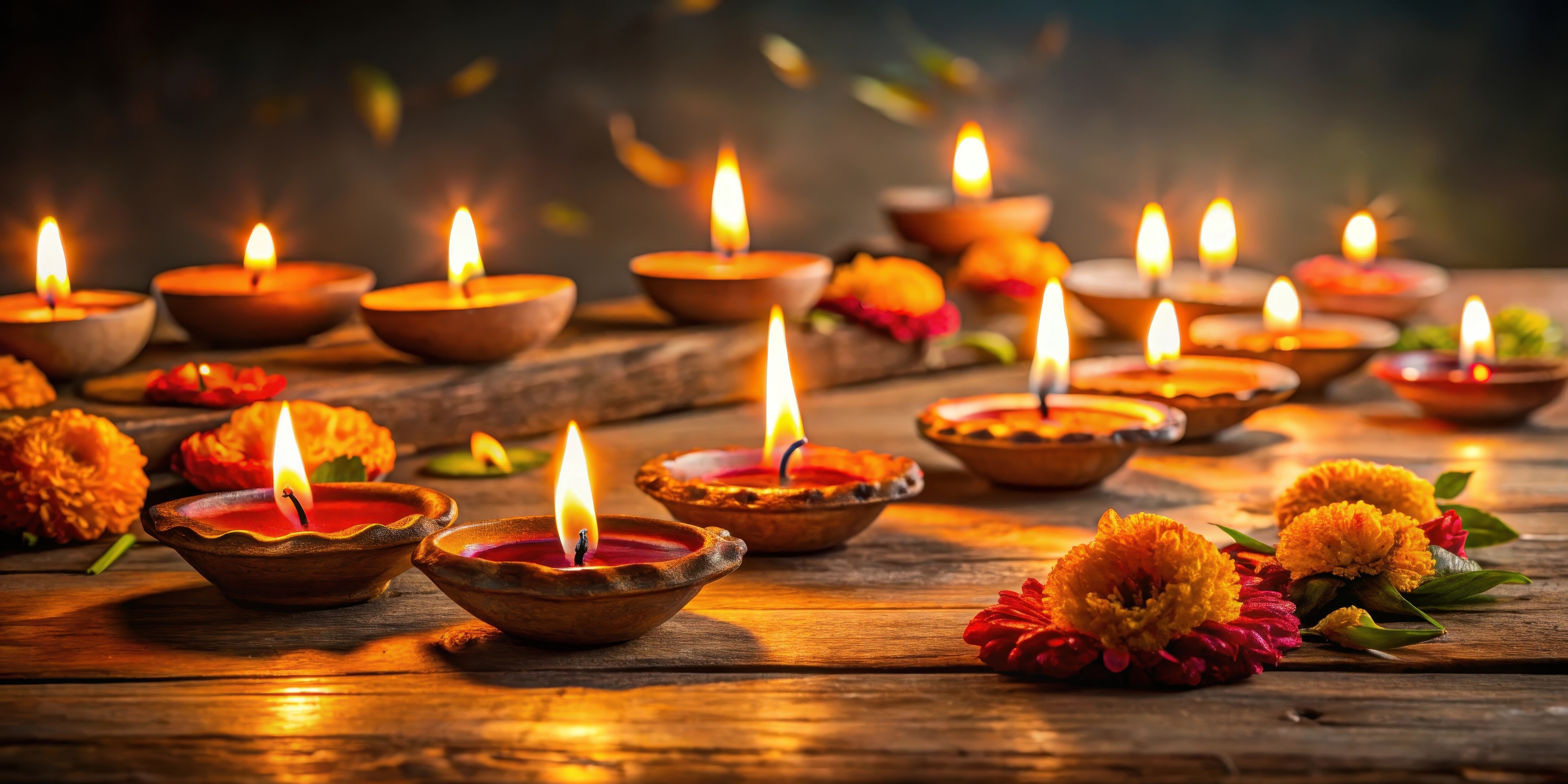
Wknd wishes you a happy, and safe, Diwali. After all, no matter who we are or what we’re celebrating, wisdom, in the end, remains the brightest light of all.


