
 E-Paper



Flying without wings: A snowboarding film tells a tale of freedom in Kashmir

 Prefer HTon Google


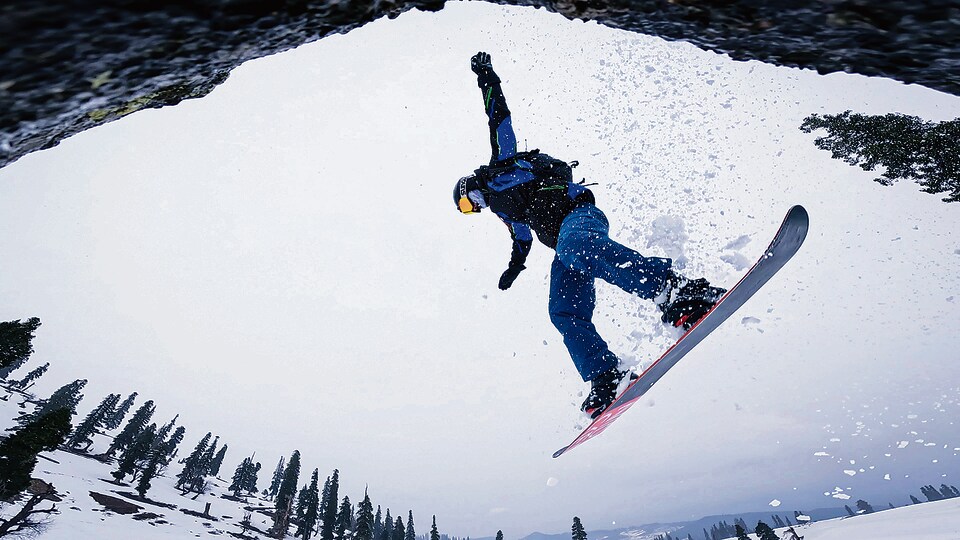
Titled It Is This, the 11-minute film uses GoPro cameras to track snowboarders in the troubled state. ‘This sport changed my life,’ says director Rizza Alee.
“Snowboarding is a metaphor for finding balance, and that’s what most young people are looking for today,” says Iranian-American filmmaker Shidan Majidi. “It’s a rush, but a healthy rush.”
Majidi recently co-produced the Indian short film It Is This. Released in June, the 11-minute documentary tells the story of 54-year-old Firdous Ahmad Chaila, who has been promoting snowboarding in the Kashmir Valley since 1994.
The film was made by Rizza Alee, a 22-year-old from a village in Baramulla district who says snowboarding changed his life. Alee was introduced to the sport five years ago, during a day trip with cousins to Gulmarg. “It was love at first glide,” he says.
As he taught himself to navigate bumps and turns, he often turned to YouTube for help. “There’s no dearth of films about snowboarding in Kashmir’s pristine ecosystem but what they lacked were relatable, brown faces,” says the mountaineer and adventure filmmaker.
That’s how It Is This began. It soon became about a lot more than representation.
Co-produced by GoPro India and shot over six months, the film is a story of personal triumphs: for Chaila, who took up a sport no one else took seriously; for Alee, who wanted to take a step forward in his filmmaking (this story has been notoriously difficult to shoot); and for the small but growing community of locals for whom snowboarding has offered new ways to soar.
Gulmarg has been a skiing destination since the 1920s. But amid insurgency, tourism all but collapsed between the early 1990s and early 2000s.
Chaila started out as a skiing instructor at the start of this troubled period, and stumbled upon snowboarding in 1994, via a vacationer named Tim May. The New Zealander showed him the ropes and eventually left him his boots and snowboard. But it was a one-line instruction that would stay with him: “Whatever happens, keep trying to stay on your feet.”
“It is advice that has guided me through life,” Chaila says.
He was 24 then, and there was little opportunity in Gulmarg. “Snowboarding was probably the only good thing that happened to me during those dark days. I think the sense of purpose overtook other emotions like fear. At the time, I needed something that demanded perseverance and dedication.”
Locals laughed at him as he attempted this new sport alone. He did fall over a lot, Chaila admits. But his family was supportive, particularly his uncle Mohammad Ashraf Sheikh, a skiing enthusiast. “When he backed me on my snowboarding journey, I felt I was on the right path.”
By 2006, Chaila was guiding tourists to snowboarding spots around Gulmarg. Skiing classes with local academies remained his mainstay, but local youngsters were now showing an interest too. He didn’t hold formal training classes for them, but encouraged everyone who wanted to try it out, to do so.
A local community began to form, of people who stayed in touch and returned year after year, sharing food, equipment and memories. Just waiting for strong winds to subside could mean hours of chatting. Zipping down on a board takes barely 20 seconds. “But those 20 seconds are pure bliss,” says Alee. “It’s the closest you can get to flight and freedom. It’s just you, your snowboard and the mountain.”
For the film, Alee handed out GoPro cameras that could be attached to snowboarders’ helmets and boards, to capture what it is like to climb, surf and crash.
Among the youngsters in the footage is Iqkan Bhat, a 23-year-old computer science student from Magam who has been snowboarding for nine years. “The sport lets you push yourself in unexpected ways. From being physically prepared to make the climb to being mentally prepared to take the plunge, it really lets you explore your capabilities,” he says.
There is Chaila, of course, who finally set up his own travel company, X-Adventure, last year.
And in the footage is Alee, who says the sport helped him overcome mental-health issues that had built up through his adolescence.
He opted out of school at 18, searching for a mission that would give his life meaning. He attempted to scale Mt Everest in 2019, but had to call off the attempt 800 metres from the summit, after his oxygen tank began leaking.
With It Is This, he faced challenges and potential for failure again. Harsh weather and snow-blindness made shooting difficult. A drone they were using for aerial views was knocked down by the winds. But he had his mission now: he wanted to tell this story. So when the drone was knocked down, they simply went in search of it. The search lasted almost 24 hours, but they did manage to salvage the footage.
This movie is part of his mission, he says, “because I found my peace and my calm in snowboarding. I still wait for the other three seasons to rush by so that I can get back on my board again.”
The response to the film has been heartening so far. Majidi and Alee are taking it around on the festival circuit, where it has so far won the audience choice award at New York City’s Astoria Film Festival.
Failure, struggle and success are the theme of Alee and Majidi’s next film too. It is called Climbing My Everest, and explores more of Alee’s story, and the stories of adolescents in Kashmir seeking and finding calm amid the storms that surround them.
“We want to give hope to people all over the world,” says Majidi, “through stories of young people like Rizza, who find their voice in the silence of the mountains.”


