
 E-Paper



He frees information, one way or another: A Wknd interview with Carl Malamud

 Prefer HTon Google


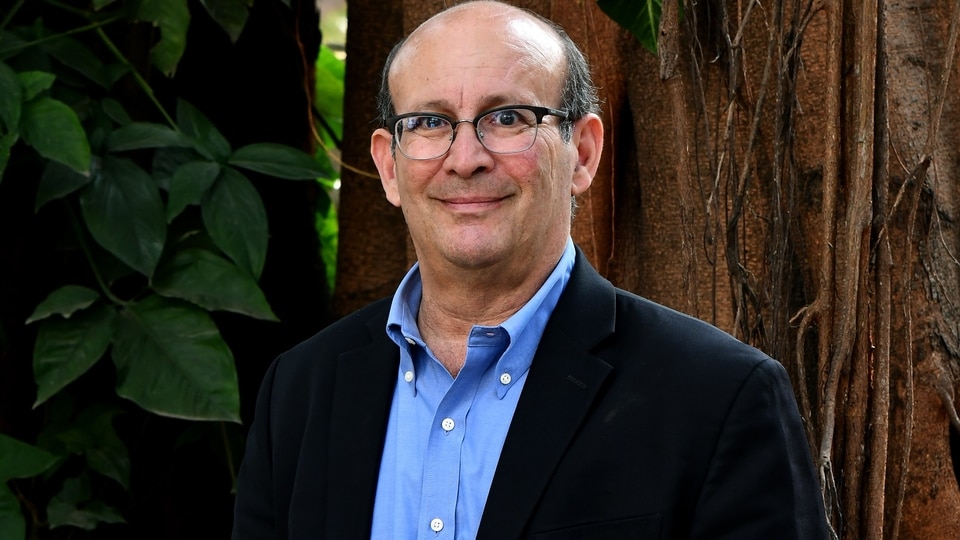
He starts by publicising paywall-protected public information, then reaches out to institutes to say, ‘Here’s what I did. It’s working. What do you think?’
Carl Malamud, a prolific campaigner of liberating information, has a simple modus operandi: always have a proof of concept — and skin in the game.
“When I see a member of the US Congress, and we’re talking about PACER (the Public Access to Court Electronic Records repository), it isn’t like I’m just some thinktank saying PACER should be free. I’ve got some skin in the game. I took 20 million pages of PACER and put them online. Same thing with the Bureau of Indian Standards (BIS). It was not like I was just saying Indian standards should be free. I posted 19,000 standards online. So I put myself at risk and I understood the government might come after me. They didn’t [because it was] non-commercial use,” says the 64-year-old.
It’s not just people saying “You’re doing a bad job,” he adds. It’s him saying “I took your database, put it online; it didn’t cost much money. And I’ve got a million people a day looking at it. What do you think?”
When the authorities bring their digital teams in and conclude that it will cost them a fortune, Malamud offers the services of his own team.
He was one of the key figures who pushed for BIS to make their standards available for free. (They have a host of parameters for thousands of consumer goods, that were all behind a paywall.) At the Bangalore Literature Festival earlier this month, Malamud was showcasing his work with the Servants of Knowledge initiative that seeks to digitise books across Indian languages.
How did his “information liberation trade” begin in India?
Malamud has been visiting India since the ’80s. He says he has been deeply influenced by Mahatma Gandhi’s ideas on how to question authority. The fight for transparency on the internet is a kind of satyagraha, he says.
In 2009, while talking to US President Barack Obama’s chief technology officer Aneesh Chopra, Malamud said he was thinking of making BIS data available online. Chopra told him to connect with tech pioneer Sam Pitroda, who was then an advisor to Indian prime minister Manmohan Singh on public information infrastructure and innovation.
When Malamud met Pitroda in 2010, “I brought copies of Indian standards and said ‘I’m thinking of putting these online because I think they’re important for public safety’. And he goes, ‘Why do they cost money? Why do they have copyright?... That is stupid…. Go for it.”
Eventually, in 2015, a group of activists including Malamud, founder of the website Indian Kanoon, Sushant Sinha and digital activist Srinivas Kodali filed a plea with the Delhi high court, asking that the charges be lifted. Earlier this year, BIS began publishing their standards online for free; the plea was withdrawn.
“The Bureau did the right thing. I sent the director general a letter saying, ‘This is great. This is wonderful’. That’s one of the lessons I learnt over 30 years ago — when the government does the right thing, don’t sit there and say ‘Well, you should have done it earlier’. You congratulate them, you make them own the decision.”
Did the director general ever write back? “No,” Malamud says, “but they never do.”
***
Some time after his meeting with Pitroda, Malamud met the philanthropist and former Infosys CFO TV Mohandas Pai in Bengaluru. Pai put him in touch with others, who have helped in his mission of digitising, for instance, textbooks published in India.
Malamud started working out of the basement of the Indian Academy of Sciences in Bengaluru, digitising their books, as well as a lot of Kannada literature.
“We did 5,000 Konkani books, and there had been no Konkani books on the internet before them,” Malamud says.
He and his team, working with Indian contractors, have also scanned the entire library of the National Law School of India University. “They’re available to blind people around the world because that’s legal under international law. They’re also available for research purposes for professors, but we’re not serving it up for everybody,” he says. Across centres, “we are now scanning 15 lakh pages a month; about 2 crore pages a year. We could easily grow it bigger but we are keeping it stable for right now.”
In the US and in India, he ignores political divides and reaches out across the aisle. “I knock on every door of anybody who is willing to see me and try to explain what we are doing, and often people say, ‘Well, that’s interesting’.”
***
How does the organisational structure work?
Malamud runs a non-profit organisation in the US called Public.Resource.Org. Servants of Knowledge is an informal group of people which regularly contributes to the Internet Archive. There is talk of also registering it as a non-profit organisation in India.
“Our hope is that eventually, there’s going to be a lot of places all over India, that have these massive, high-speed scanners, and are scanning their own stuff. Our vision is a bottom-up distributed public library in India, rather than a top-down big government programme in which you hire a contractor and then some ministry runs the ultimate library sites,” he says.
Millions in funding, from organisations ranging from the UK’s Arcadia Fund to Google, help keep it all going.
“[For the Google grant, other applicants were] fancy think tanks from Washington, DC, who proposed holding conferences, I was like give me the money and here’s the data I will put online,” he says.
Public.Resource is a million-dollar-a-year operation, of which half is spent in the US and about half in India, on contractors, Malamud says. “I’ve been operating on a similar budget for 10 years. It is not like we’ve got bigger,” he says.
***
Much of Malamud’s “information liberation” journey is informed by his work with the
Internet Engineering Task Force (IETF), which was initially supported by the US Department of Defense but has been operated by the not-for-profit organisation Internet Society since 1993.
IETF sets the technical standards for the internet such as the TCP/IP. At IETF, Malamud says, one of the few rules was that all standards had to be open and free of copyright.
He conducted his first “information liberation project” in 1991, when he uploaded the United Nations International Telecommunication Union’s main book of standards, commonly called the Blue Book, to a young internet.
“Everybody started downloading it. I got a call from the National Science Foundation, saying, ‘Carl, you’re using all the bandwidth on the internet right now. All the international bandwidth’.” And yet a common hurdle Malamud has to overcome is the authorities believing that laypeople wouldn’t be interested in or understand documents from an arcane field.
Malamud would go on to put the data from US Securities and Exchange Commission (SEC) in the public domain, using a grant from the National Science Foundation.
His fight to put the PACER database in the public domain continues. That data is currently available for a fee, and the paid version contains sensitive personal data such as social security numbers, information about criminal informants, and the health records of minors. Malamud argues that it should safely be made accessible at no cost, given that it was collected at the taxpayer’s expense.
“We haven’t won that fight. It has been over 15 years… [with] little progress,” he says.
THE PACER PROJECT
* Carl Malamud’s work on PACER, the repository for US federal court documents, perhaps best illustrates how he works. He continues to appeal for the archive to be freely accessible (it is currently accessible for a fee).
* Meanwhile, he has opened up the floor to citizens. The Public.Resource website allows individuals to upload documents relating to cases they were involved in, thus “reinjecting” them into the public domain.
* Since these are public documents, this is legal. Malamud calls it the “recycling” of paperwork. Meanwhile, he continues to advocate for the paid access to be made safer, scrubbed of sensitive personal detail.


