E-Paper



How mangoes in a tent led London-based chef Asma Khan to set up Darjeeling Express

 Prefer HTon Google


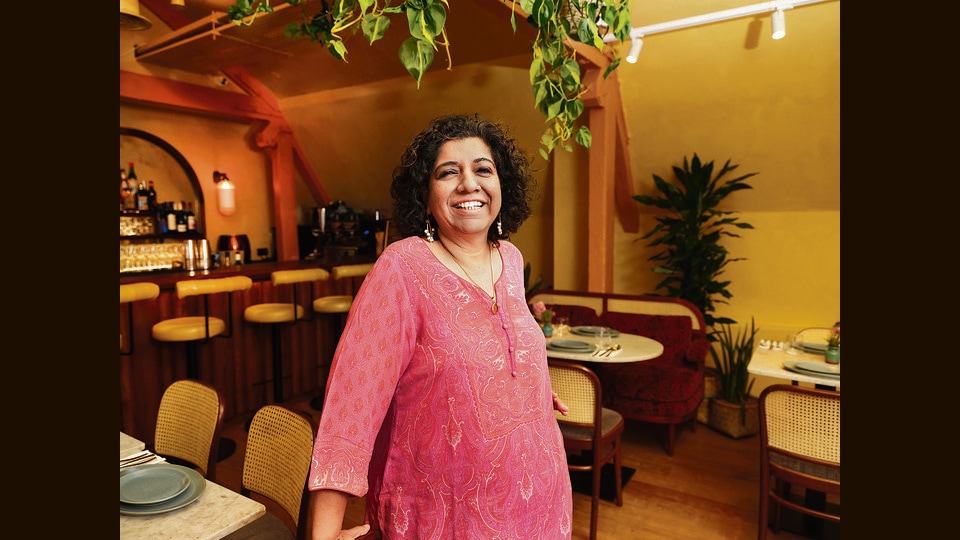
Khan, 54, just received an honorary doctorate from SOAS, for unique efforts that use food to promote women entrepreneurs, unite strangers.
It was a stranger’s reaction to a mango, in a fluttering tent in London, that first gave Asma Khan a sense of how food could unite strangers.
He was an unhoused senior, Khan remembers. She was serving some chicken biryani and mango lassi she had made. The tent had been set up by students of the School of Oriental and African Studies (SOAS) University, to bring people together during Ramzan.
About 60 people were being served; among them the elderly man who told her he had never eaten a mango. “He said he had seen them, and always wondered what they tasted like. He really loved the lassi,” says Khan, 54. “And that made me realise the sheer power of food to bring people, of such varying cultures, religions and backgrounds, together.”
That was in 2013. Khan has since earned a PhD in British constitutional law; raised two sons (Ariz Khan, 23, and Fariz Khan, 18); built a restaurant, Darjeeling Express, with an all-women kitchen team that serves Bengali and Mughlai fare and Kolkata-style street food (the restaurant opened in 2017); hired and mentored South Asian immigrant women trying to make it as hospitality professionals; written two cookbooks; and, in September, been awarded an honorary doctorate in social sciences by SOAS.
She has also returned each year, with food and beverages, to the Ramadan Tent Project, which has grown to serve thousands of people across the UK and beyond.
“My father, who worked all his life with labour unions, once told me, ‘Asma, surround yourself with birds who sense light in the darkness, who tell you that dawn is coming. And be that bird for others.’ It is advice I have carried in my heart,” Khan says.
Excerpts from an interview.
You’ve said that your home and family were your first source of confidence…
My parents, Farrukh Said Khan and Faizana Khan, raised us – my elder sister, younger brother and me – strictly as equals. Relatives often brought me down for being dark, fat. My mother and my sister gave me confidence. My sister would hold my hand and say, “Asma, tu Jhansi ki Rani banegi (You’ll be like the warrior-queen of Jhansi).” That was my first lesson in the power of women raising up other women.
At home, I was not encouraged to cook; my mother had a catering business so we had more cooks than a usual household. I spent a lot of time in the kitchen, eating. Because my mother’s side is Bengali Muslims, my father’s side is Muslim Rajputs, and our cooks were Bihari Muslims, the food at home was a vibrant mix: kofta, saalan, qorma, kebab, biryani. All of this left me with a very distinct, layered culinary heritage.
Kolkata remains the food capital of the world for me, with its influence of Persians, British, Chinese, Sikhs and Marwari cuisines.
When you moved to the UK with your husband, it was your first time living away from home…
I moved to Cambridge in 1991. I was very excited to get married and shift. I had not prepared myself emotionally for how hard it would be.
My husband Mushtaq, now 62, was teaching economics at Cambridge University. He had said he would cook for us, and I imagined eating murgh musallam. But he made simple, fuss-free food, and I couldn’t really cook.
It was a severe uprooting. In those years, there was no easy way to keep in touch with family across countries. My father would write to me, and I always opened his last letter only when the next one had arrived. I didn’t want to not have a letter from him. I would wait and wait. And if I missed my family and Kolkata too much, I would rip it open anyway.
I gradually realised I couldn’t change anything around me, so I started learning to cook, from an aunt who lived nearby. She bought me my first set of utensils. As I sauteed the jeera and browned the onions, and played songs by Kishore Kumar, I could feel the presence of my Ammu, my mother. On my next visit home, I learnt to cook everything I could.
What prompted you to start the supper club out of your home, and eventually the restaurant?
It turned out that I love to cook. More than that, I love to feed. And since my cooking journey helped me heal from the initial jolt of moving abroad, I thought there might be other people who felt lost. I wanted to welcome them to my home, offer them a sense of community, because in my tough days, I didn’t have that.
I also realised that there was hardly any information out there about our specific cuisine. I wanted to counter this idea of “Indian food” because it doesn’t exist. My family alone has such a diversity of culinary influences. I wanted to create a space to celebrate that.
I moved the supper club to a local restaurant, once my family got tired of the hubbub. One day, as my pop-up was drawing to an end, the landlord of the space dropped by. He insisted I take a look at another space, for a restaurant. I had never thought about it, but tagged along because he was sweet. The moment I saw the place, I could smell the aromas of Ammu’s cooking.
I didn’t even own a credit card then. I had no idea how to do this. But friends stepped in. They taught me how to use Excel, how to craft a pitch, draw up investment plans and tax policies. I managed to get funding, but it fell through at the last moment. I thought, ‘This is it’. I was in tears.
Mushtaq came to me and said, “You’re Jhansi ki Rani, and you’re crying?” He then offered me all of his savings. He’s never been too interested in food. But in all these years, he has been my source of strength.
What gave you the idea for a women-only team?
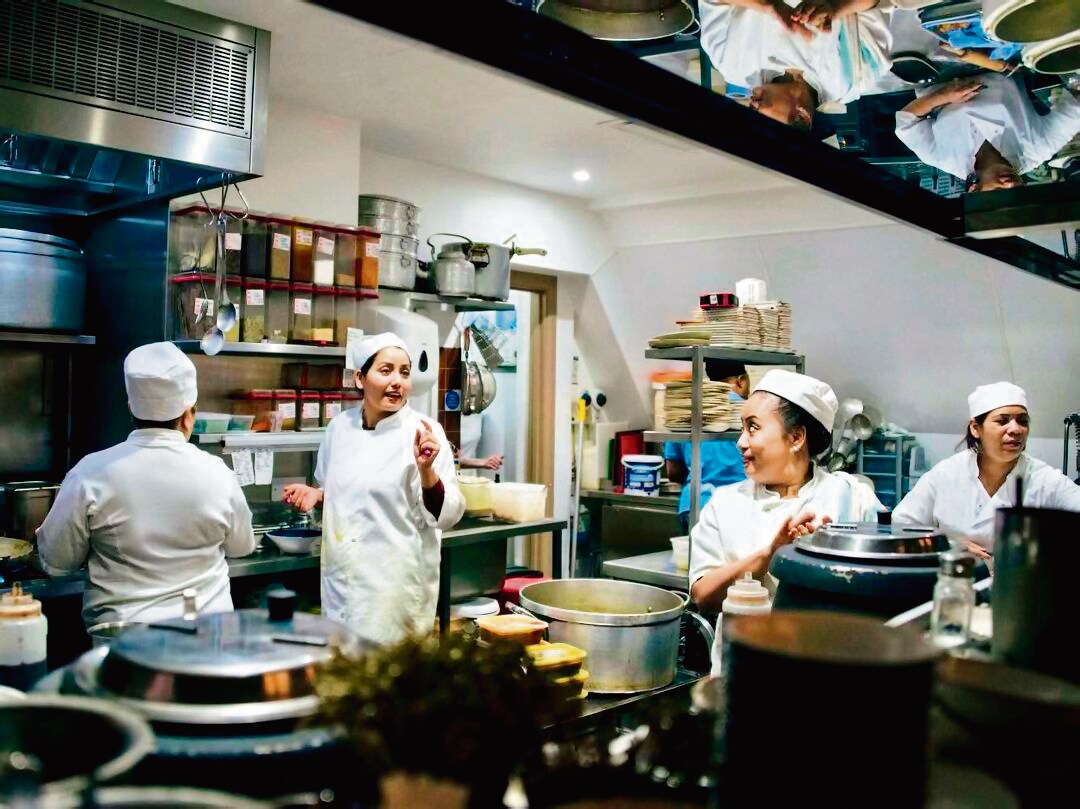
Women, especially South Asian women, know how to cook by andaz (instinct). They are not part of the stainless-steel empire of most male chefs today; many don’t even use an oven. So, I knew I wanted to work with them.
We have 40 employees, including nine kitchen staff members, hailing from different parts of South Asia — Gujarat, Nepal, Hyderabad. They’re aged 21 to 66. There’s a daily antakshari in the kitchen during prep work; I keep losing out to the grandmothers because they know all the songs.
Women have joined, and then so have their daughters-in-law. We have two such pairings right now. Sons have grumbled, and then become supportive. So we work together, change together, celebrate together.
Your regulars include Keira Knightley, Paul Rudd, Nigella Lawson, Anil Kapoor and Danny DeVito. What do you think keeps them coming back?
Somebody once left me a note that said: “The food left me yearning for a place I’d forgotten existed. And now in my heart, I need to go back.”
I think everybody relates to food cooked with patience and love, because for many, there’s only that one time in their life that they have had that: their childhood.
I think our food somehow takes people back to that place; a happier, innocent time. A lot of diners who are not South Asian tell me, if their grandmother could cook Bengali or Mughlai food, this is how it would have been.
It’s not just the food. None of the staff have been through professional hospitality training; they treat guests as they would treat them at home. They are compassionate, talk to children, help the elderly. We don’t know any other way to have people over for a meal.
What kind of role do you see food playing, in polarised times such as the present?
Unfortunately, food has always been used to divide people. But when people from different backgrounds break bread together, I believe a deep bond can form. When people from different religions, upbringings, cultures don’t sit around a shared dinner table, we let the distances between us grow.
Sharing food is a way to say, “I see you. I’m with you.” Food is heritage, identity. When we spurn each other’s food choices, or far worse, ban them, we’re saying to that community: “You are unacceptable to us”.
This is where community kitchens and restaurants can play such an important role — in bringing people together. Food needs to be used to unite, not divide.
What’s next for you?
I’m hoping to start work on my third cookbook. I’m also looking to expand, with some version of Darjeeling Express in the US or Europe.
I aim to create a formal school of leadership for women — a network of women who can mentor up-and-coming entrepreneurs. A lot of women have great ideas, but don’t know how to monetise them, or need help learning about finance, logistics, technology. I hope to find the right funding partners for this venture.
I want mentors who can also help other women navigate guilt, burnout, exhaustion. I rarely get to have dinner with my children, and it makes me so guilty about not doing enough. Women are constantly conditioned to do it all; do it all perfectly. I want to create a space where they’re told they don’t need to be perfect, where they can forgive themselves.