
 E-Paper



1.4 billion, the whole and the parts: A tale told in puzzles, by Kabir Firaque

 Prefer HTon Google


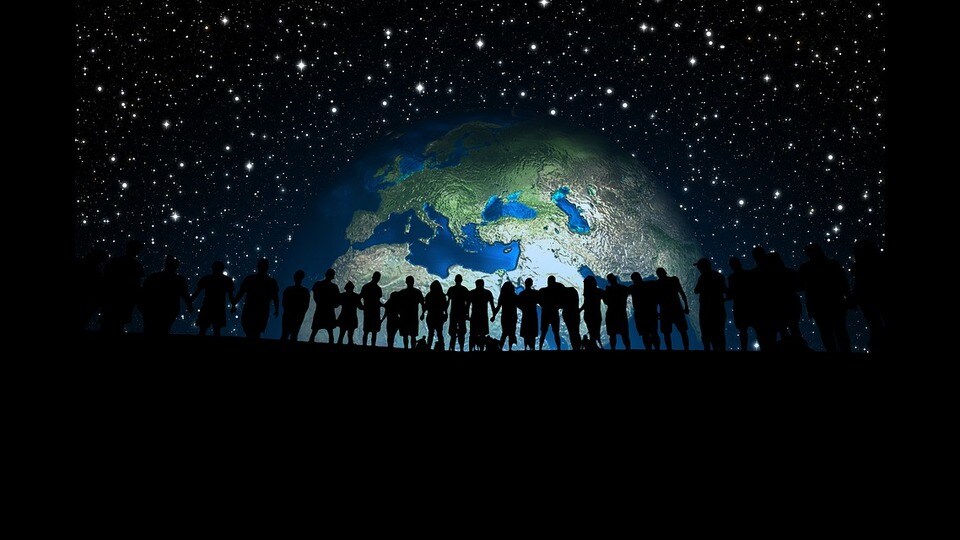
How many years would it take to count to this tally, at a number per second? How many squares on a chessboard, if each held twice the sum of its predecessor?
Two staggering numbers, one on either side of the point when India tops the world population hierarchy, will be used as reference points in years to come. The country’s population was 1.417 billion at the end of 2022, when it was still behind China, and is projected to be close to 1.429 billion at the end of 2023, by when China will have fallen behind, according to projections by the United Nations World Population Prospects report of 2022.
How big are those numbers? The answer is that they are unimaginably so.
People cannot perceive some numbers as clearly as they can others. We know the difference between 1 and 2 (which is why our ancestors taught themselves to count in the first place) and we can spot that there are 10 digits on a person’s hands even if we didn’t know that from memory. We usually know what 100 means (think of a chessboard with 10x10 squares instead of 8x8), and those among us who are well networked might even define 1,000 in terms of the number of people they are in close contact with.
A billion, however, or a million for that matter, is way out of reach. We know one billion has nine 0s and that 1.4 billion can be expressed as 1.4 x 10⁹, and we may comfortably do sums involving a number of zeroes and higher powers of 10, but it is impossible to visualise a billion or a million as a quantity that can be caught in the sweep of an eye, let alone counted.
What can be done, however, is to compare huge numbers with other numbers. That is what numbers are for, in any case.
India and the rest
India accounts for more than 1/6th of the world population (as does China). This global population is expected to stand at 8.045 billion by the end of 2023. Either country has more people than the five countries immediately below the two on the list, put together: the United States (340 million), Indonesia (277 million), Pakistan (240 million), Nigeria (224 million) and Brazil (216 million). These add up to a projected population of about 1.3 billion by the end of 2023.
To pick the low-hanging fruit first, India’s population is more than four times that of the US, five times that of Indonesia, six times that of Pakistan and almost seven times as that of Brazil. While these multipliers are easy to relate with, we still cannot visualise Indonesia’s 277 million any better than we can imagine a group five times that large.
The comparison becomes more striking when we match these populations against sections of the Indian demography, particularly its young. Of the nearly 1.43 billion projected in India by the end of 2023, 610 million Indians (42%) will be under the age of 25. That number by itself is beyond comparison, for it’s a larger constituency than any country in its entirety, other than China.
Breaking 610 million up by gender leaves 319 million men and 291 million women, each figure not far short of the entire US population. The benchmark is really crossed when we extend the age bracket up to 29. India’s projected under-30 populations by gender are 383 million men and 349 million women, each constituency larger than the entire US population.
If Indian men under 30 out-populate America, the population of women in this age bracket will be higher than the 277 million total of Indonesia. Indians in their 30s (225 million) will outnumber both Nigeria and Brazil, while Indians aged 40 to 54 (245 million) will exceed the total population of Pakistan.
Large and larger
Besides comparing population to population, there can be various ways to approach 1.4 billion.
* If you started counting from 1, one number every second, it would take you 45 years to reach 1.429 billion, and that is assuming you counted 24×7. If you counted for 16 hours a day, it would take you a little under 68 years.
* Delhi’s Indira Gandhi International Airport has an annual capacity of 70 million passengers, which divides 1.4 billion neatly; 20 consecutive years running at full capacity would give it a passenger count equal to India’s current population. But this comparison is probably more a statement on the capacity of the airport than on the magnitude of India’s population.
* If humans formed a queue in space from Earth to the Moon, maintaining a safe distance of one metre between every two individuals, Indians (or Chinese) alone would be more than enough to get there, but no one else would. The Moon is 384,400 km or roughly 384 million metres away, so the 340 million Americans would fall far short.
* Mars, on the other hand, would be too distant even for Indians spaced 1 m apart. The planet is 220 million km, or 220 billion metres, away. To get there, the separation between Indian individuals would need to be raised to a little over 1.5 metres.
* To end with a variation on a familiar puzzle: If you place one grain of wheat on one of the 64 squares of a chessboard, two grains on the next square, four on the third, eight on the fourth, and so on, when will you get to 1.4 billion? The answer is that once you have placed 537 million grains on the 30th square, the board will have a total of 1.074 billion grains. Another 1.074 billion will go on the 31st square, taking the total well beyond 1.4 billion.
Eventually, the completed chessboard will take 18 quintillion grains (a quintillion has 18 zeroes). It’s a number that would dwarf even the 1.4 billion Indians.


