Fans of Jane Austen tend to be smug. They can quote the opening line of Pride and Prejudice as proof of their devotion. They’ve analysed Emma’s every move and misstep. They compare every man they meet to Mr Darcy (and privately find each of them utterly wanting). They own at least one empire-waist dress. Austen’s books — she only wrote six — were published more than 200 years ago. But the stories, characters and relationships still resonate.
A new Austen adaptation is out on Netflix, of a book that smug fans rarely reference. Use our guide to persuade them that her best work is Persuasion.
Love isn’t only about frothy meet-cutes. Women don’t always despise decent men on the first meeting. They don’t have to be headstrong, spirited manic pixie dream girls to find love. Persuasion’s plot starts out weighted down by the couple’s history. Anne Elliot and the dashing Frederick Wentworth were engaged. Friends, family and a godmother (who all meant well) persuaded her to call it off. He had no fortune, few prospects. She was young, pretty and wealthy. She could do better. We meet them eight years later. Anne, now 27, is still unmarried, her family nearly broke. Wentworth is a Navy captain, rich, single and back in the neighbourhood. Austen’s plot is not about discovery, but about whether there can be second chances among changed people.
Persuasion is the grown-up classic. It’s the last novel Austen completed before she died in 1817. She was 42 at the time, unmarried, her health failing, and her confidence in her own talents waning. She also had a brief courtship with someone at 19, and accepted a proposal from another at 27. It’s possible this book wasn’t easy for her to write. There’s wit but no banter. Little satire, and no truths universally acknowledged.
Anne is quite a heroine. She’s the most quiet, introspective and practical of all Austen protagonists. She’s dealing with a vain, snobbish father; an unmarried elder sister who spends recklessly; and her own unacknowledged regrets. When Wentworth meets Anne for the first time since the break-up, he says she is “so altered that he should not have known her again”. Where Austen’s other heroines produce flying comebacks, Anne offers a resigned shrug.
Love is worth waiting and working for. At least a few happily-ever-afters come early in Austen’s other books. Persuasion makes both parties struggle. Wentworth, once jilted, must confront old feelings and his ego. Anne must acknowledge her own desires and weigh them against the opinions of others. And readers must think about what persuades us to love and trust the people we do.
As they move towards love (despite a few detours), Austen’s genius social insight has more room to shine. Anne says that women “live at home, quiet, confined, and our feelings prey on us”. They’re socially predisposed to stay in love. Men “have always a profession, pursuits, business of some sort or other, to take you back into the world immediately”. They’re just less likely to pine.
It has the best love letter. The best one in an Austen novel, at least. Somewhere towards the end, Anne is in a pub, talking to a friend. Wentworth is at a table within earshot. He writes her a letter that clears up what the glances, chance encounters and loaded moments couldn’t. No spoilers here, but one bit reads: “You pierce my soul. I am half agony, half hope.” No one in Pemberley, Sussex or Mansfield Park was as eloquent.
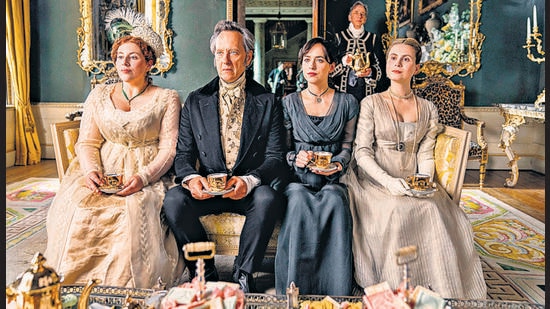
The film looks promising. There have been several adaptations since the BBC produced a mini-series in 1960. Netflix’s version, released on July 15, is light and frothy. Cosmo Jarvis, who played Barney Thompson on Peaky Blinders, is Wentworth. There’s Henry Golding, quite charming, as Anne’s distant relative, with an eye on the family’s title and property. Dakota Johnson, as Anne, frequently addresses the camera. Smug fans will find plenty to like.

 E-Paper