
 E-Paper



Step inside Maharani Radhikaraje Gaekwad's Lukshmi Vilas Palace, the largest private residence in the world

 Prefer HTon Google


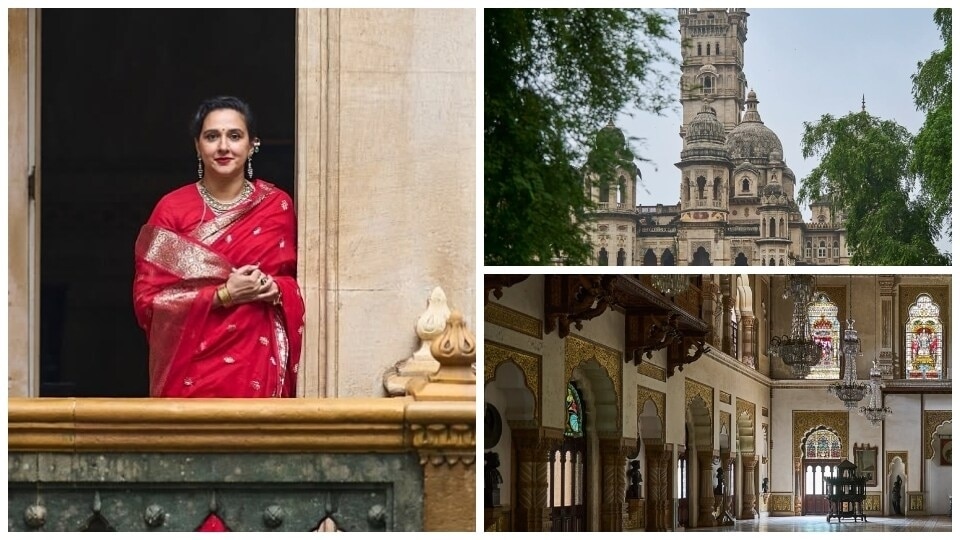
Lukshmi Vilas Palace is the world's largest private residence. It was commissioned in 1878, and features a blend of architectural styles and global influences.
Regal, culturally significant, and the world’s largest private residence, these are some adjectives that define Lukshmi Vilas Palace in Vadodara, Gujarat. At 30.5 million square feet, the palace is ten times bigger than Turkey’s White Palace, and its square footage is 36 times that of Buckingham Palace.
In an Instagram post shared by Architectural Digest Middle East on August 5, Maharani Radhikaraje Gaekwad of Baroda opened the doors of Lukshmi Vilas Palace, giving a glimpse inside her palatial home.
Inside the 135-year-old Lukshmi Vilas Palace
Commissioned by Maharaja Sayajirao Gaekwad III in 1878, the monumental 135-year-old Lukshmi Vilas Palace took 11 years to build, with Sonagadh sandstones sourced locally and the interior built with inspirations drawn from around the country and other parts of the world.
Radhikaraje told AD Middle East, “The scale of the palace is larger than life. I’ve lived here for 23 years, and even now I’m discovering things for the very first time. I’ve come to regard it as our oldest family member.”
The interiors
Apart from the Islamic domes and carvings inspired by Hindu temples that make up the exterior of the palace, Radhikaraje also talked about the elements from around the world that make up the interiors of Lukshmi Vilas Palace, Radhikaraje revealed that the residence has stained glass from Renaissance Europe, chandeliers from Europe and Belgium, mosaic from Italy, sculptures from around Europe, Rococo paintings and rare porcelain from China and Japan.
Additionally, art by Indian masters, including some of Raja Ravi Varma’s largest works, also decorates the halls."It's an amazing mixture of countries and culture coming together in this space," she said.
Talking about the grand Durbar Hall, calling it the most important public space of the palace where the Maharaj would host, greet and attend to his subjects, she said, “The Durbar Hall, where the king would receive his audience, was designed to highlight the collaborations that came to exist over 135 years ago between India and other cultures.”


