E-Paper



Why do Bengali women wear white sarees with red borders during sindoor khela? The history and symbolism behind the tradition

 Prefer HTon Google


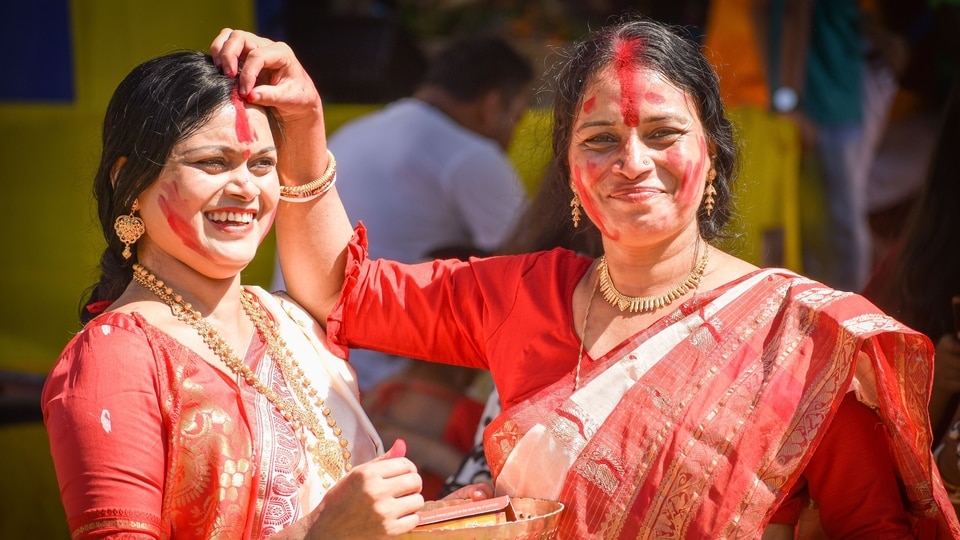
From symbolism to tradition, here’s the reasons why Bengali women wear white and red sarees during sindoor khela.
The sight of Bengali women dressed in white sarees with striking red borders is one of the most recognisable images of Sindoor Khela during Durga Puja. But the white-and-red combination is more than a festive fashion choice. Rooted in Bengali customs and cultural symbolism, it carries associations that have been passed down through generations. Saru Subba, historian and founder of Carol School Guwahati, shared the cultural significance behind the choice.
Also read | Bengal: Theme-based Durga idol orders slump after “requests” from BJP, Hindu rights groups
Why does the white-and-red saree define sindoor khela?
Saru highlighted that the white saree with a red border worn by Bengali women during Sindoor Khela is deeply connected to Bengal’s cultural history, traditional ideas of womanhood, and the visual language of Durga Puja. To understand this attire, it is important to look beyond the ritual itself and examine how colours, textiles and religious practices became intertwined in Bengali social life.
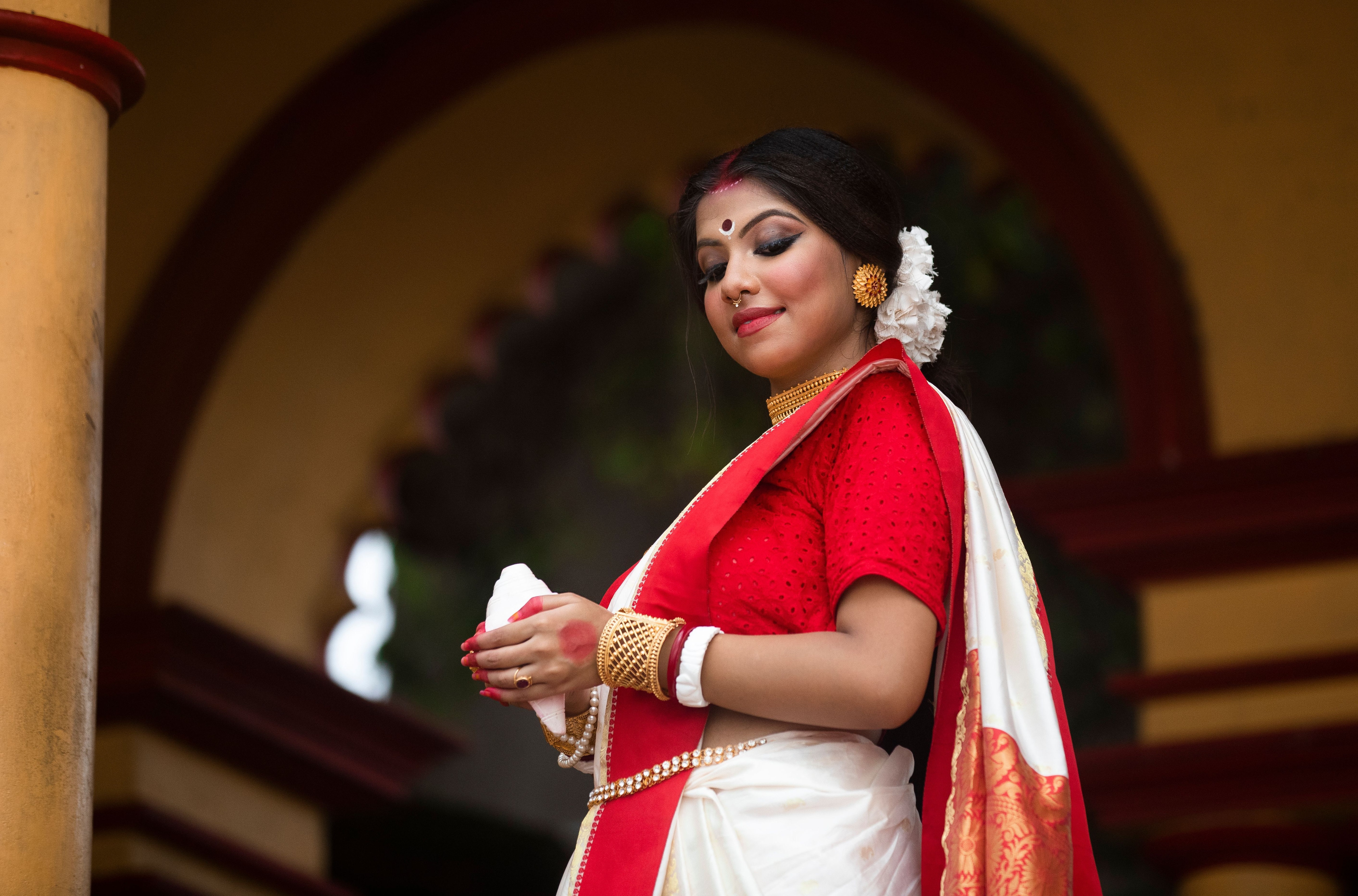
Significance of white-and-red saree
White and red have long held particular significance in Bengali Hindu traditions. “White is associated with purity, simplicity and auspicious beginnings in several ritual contexts, while red represents fertility, prosperity, marital auspiciousness and the life-giving energy of the goddess,” Saru explained. When added to the traditional Bengali saree, these colours create a striking visual expression of celebration, femininity and cultural identity. However, their meanings are not universal or fixed, and their significance varies across rituals and communities.
According to Saru, the traditional white saree with a red border is often associated with the laal paar shada saree, a distinctive form of Bengali attire. Its cultural prominence developed through Bengal’s textile traditions and changing social customs over several centuries.
Cotton weaving centres in Bengal produced sarees that were suitable for the region’s climate, while red borders provided a distinctive contrast against the white body of the fabric. Over time, this combination became closely associated with Bengali women’s festive and ritual attire, particularly during Durga Puja.
About Sindoor Khela
Sindoor Khela takes place on Vijaya Dashami, the final day of Durga Puja, when married Hindu women traditionally apply vermilion to the goddess Durga and to one another. The ritual is associated with prayers for marital wellbeing, prosperity and the continued happiness of families.
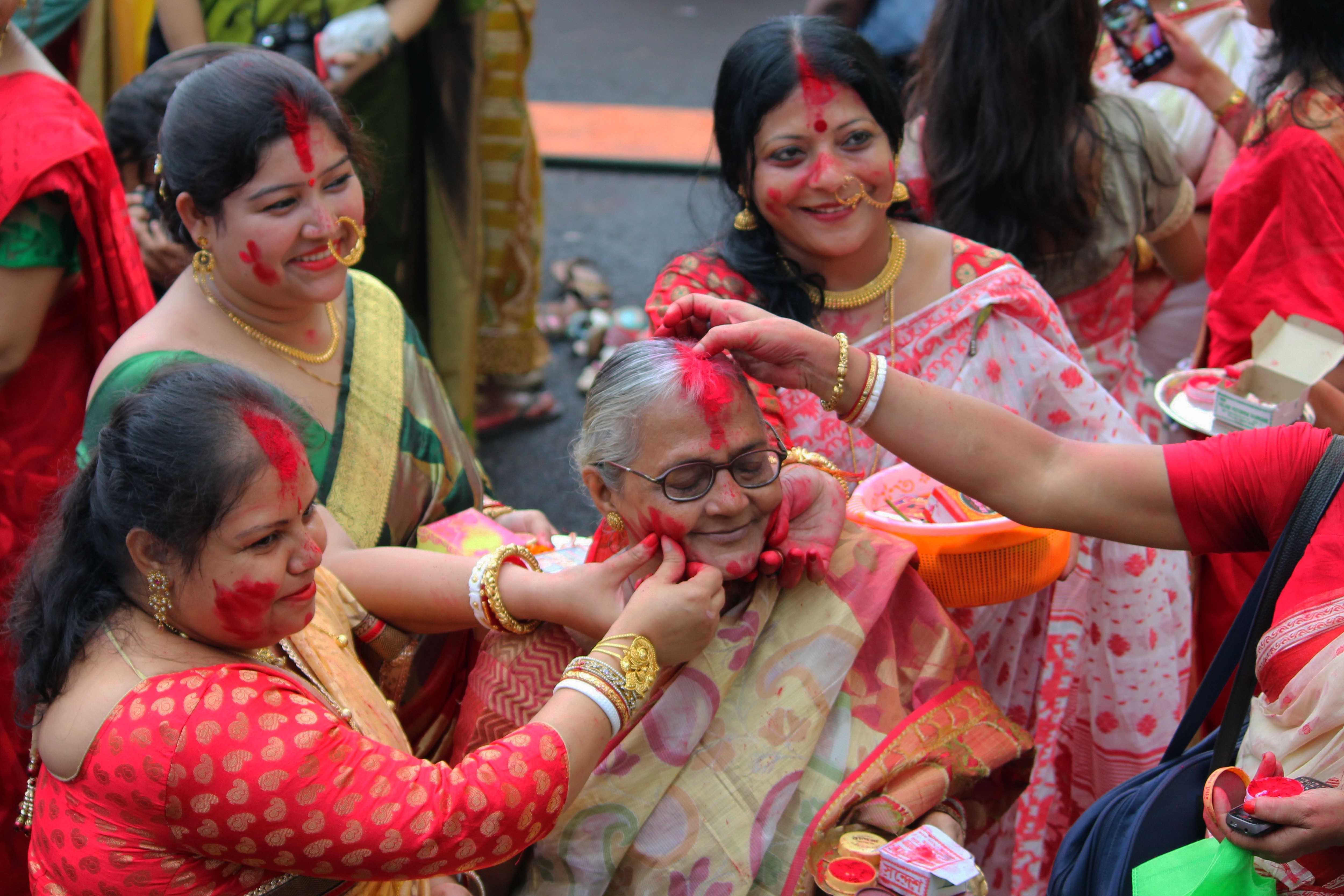
The red vermilion itself carries particular symbolic importance because it is traditionally associated with marriage and auspiciousness in many Bengali Hindu communities. Wearing a white saree with a red border complements this ritual symbolism, bringing together the colours of the saree and the vermilion used during the ceremony.
Saru also emphasised that it would be historically inaccurate to suggest that all Bengali women have always worn this saree during Sindoor Khela, or that the tradition has remained unchanged. Clothing practices have evolved with changing textile markets, regional customs, social identities and individual preferences. Today, women may participate in the ritual wearing sarees in different colours and styles, while the white saree with a red border continues to hold a special place because of its cultural resonance.