
 E-Paper



Write and wrong: We’re losing our last manual skill, says Charles Assisi

 Prefer HTon Google


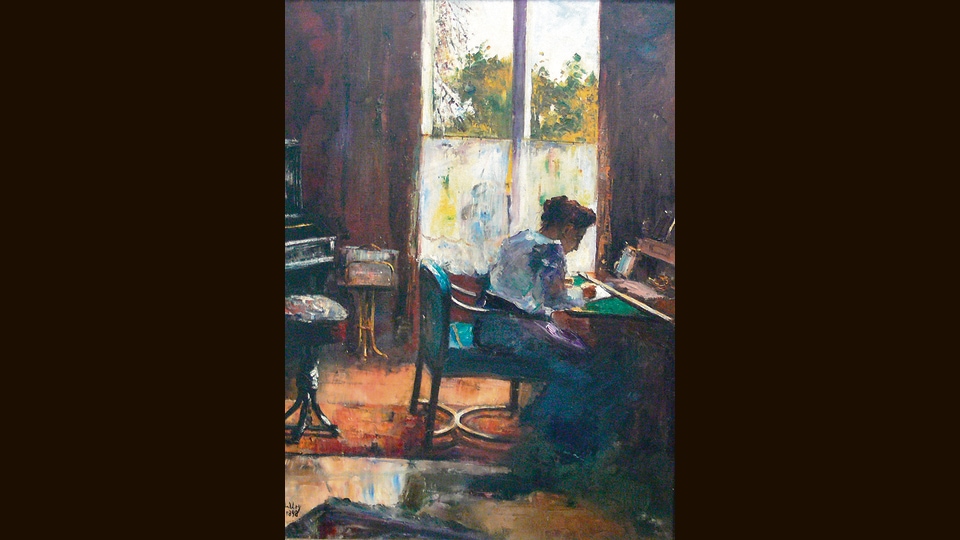
It was once so revered, a child learning to write was celebrated with prayer. There's a lot we stand to lose, if we let ease and indifference take this from us.
A cheque I wrote bounced recently, not because there wasn’t enough money in the account but because the teller at the bank said my signature didn’t match the one they had on file.
I looked at her records, then at the piece of paper I had just signed. She was right. The new one was lazy, hurried, a smudge of habit. The older one, from years ago, was careful, precise, deliberate. I could even remember practising it.
Back then, it felt like a declaration: This is how I will mark the world. Now, my hand doesn’t remember or care. That disturbed me more than I expected.
I grew up in a time when learning to write was not just a rite of passage but an actual ritual. I have a faint memory of my first lesson, at our home in Mumbai. A brass lamp was lit. A plate of rice was placed on the floor. My father held my forefinger and guided it gently across the grains of rice, tracing the first letter of the Malayalam alphabet. My mother stood by, watching.
This wasn’t just about beginning to learn how to spell. It was a sacred initiation into language, learning, life. It was our parents’ way of saying: You are joining the world now, and words will be one of the ways you make your way through it.
Later, at school, writing became everything. We were judged on it. Praised for it. Scolded about it.
We graduated proudly from pencils to fountain pens. Ballpoint pens were frowned upon; the narrative was that they made one lazy. Fountain pens, by contrast, forced you to slow down. To think. To press just enough. To glide, not scratch.
There was a rhythm to it all; a kind of music the hand had to learn. And it did. Essays. Letters. Notes. Some to myself. Some to others. My handwriting became a mirror of how I felt, how much I cared, how much attention I was paying.
Then, somewhere along the way, the pen slipped out of my life. Keyboards arrived and then touchscreens. Even the grocery lists moved onto an app. I was still surrounded by words, but the hand no longer held the weight of them.
Now, I scribble. Even that’s a generous description, honestly, for the notes that lie somewhere between a doctor’s prescription and a seismograph.
I don’t just write badly, I write thoughtlessly. The hand races ahead of meaning. The body no longer participates in the act. The connection between mind and muscle has been severed.
Which is why that moment at the bank sank in. When the teller couldn’t accept the cheque, I realised I had truly lost something. At the very least, I had lost the sense of what it meant to make something slowly and deliberately with my own hand.
I looked at my old signature and felt like that version of me no longer existed.
I thought, then, of my father. If he were alive, he would have clucked his tongue in quiet disapproval. He was never one to raise his voice, but I’d have felt it all the same.
I remembered how his notes had looked, written in his looped, careful script. The pride he took in letters to family. The way he paused before signing something, not out of hesitation, but out of a sense of deliberation.
I wondered what he would think of the way I write now. The scrawl, the speed, the indifference. For him, the physical act of writing was about intention. It was about showing up, and being present and thoughtful. Most of all, it was about leaving an indelible mark.
There is a strange kind of shame attached to forgetting something one once did well. It’s not the kind of failure people talk about. It’s not dramatic. It doesn’t make for a great TED talk. But it stings all the same, with its sense of how much of oneself one has allowed to slip away.
In this case, it feels even bigger; like a long line of something has ended with my generation. An inheritance passed on for centuries has dwindled, down to almost nothing. This is how it is in the world of humans, I guess: change and change and change again. Time heals all things, they say; but oh how the march of time sometimes steals things away too.
(Charles Assisi is co-founder of Founding Fuel. He can be reached on assisi@foundingfuel.com)


