
 E-Paper



Humour by Rehana Munir: Kolkata is where the pandals are

 Prefer HTon Google


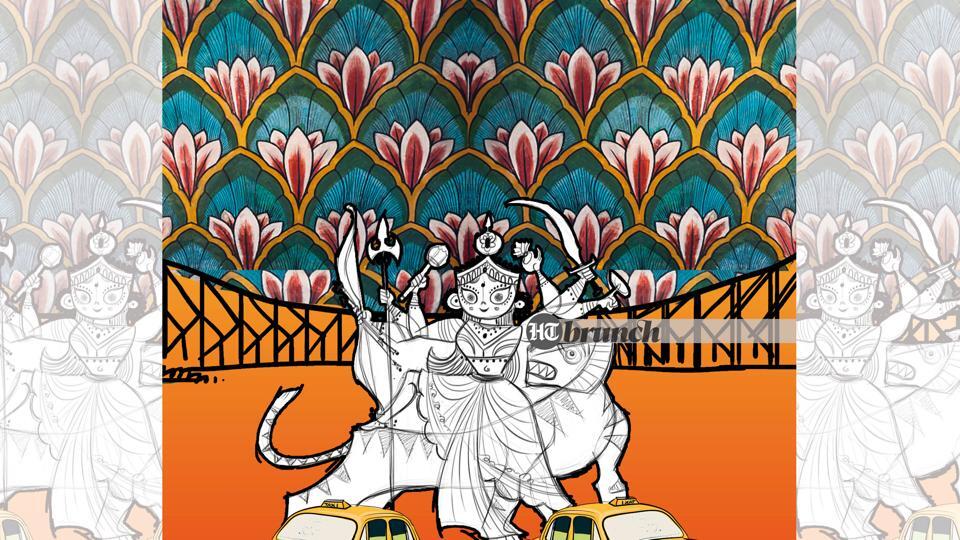
Durga Puja festivities call for an annual renewal of that Bong connection. Will you be going pandal hopping this season?
It’s Durga Puja time, and in my head, I’m jostling crowds at pujo pandals with topical themes ranging from the Queen’s life to Federer’s retirement while headed in the decadent direction of mangsho and luchis. Ah, to be in Kolkata when it’s goddess season there. Though there’s never a bad time to be in Kolkata, unless you have a particular aversion to sinful foods and intense conversations between sweaty rides in ancient Ambassador cabs. Like so many visitors who don’t have to endure its famous indolence for too long, I’m of the opinion that the time warp is charming.
“What’s your native place?”
Currently immersed in a strange and interesting memoir, How I Became A Tree by Sumana Roy (published 2017), I’ve been thinking about the historical sense that is a particular Bengali legacy. The author makes a case for adopting the traits of a physical tree, a species she loves both sensually and viscerally. She prefers the slowness and stillness of trees to the hustling and hankering of humans. What struck me was her frame of reference, which is dominated by venerated Bengali men of the Rabindranath Tagore and Jagadish Chandra Bose variety.
Of the same generation as Roy, the book makes me feel my rootlessness achingly. Having grown up in Bombay, now Mumbai, that’s where all my allegiance lies. There is no “native place” to go back to, in the physical or spiritual sense. But I’ve yet to meet a Mukherji or a Sen from any part of the world who doesn’t identify with the Bangla language and all the passionate regional associations it carries. In fact, in a mixed household, it is often the Bengali identity which prevails, like a self-confident plant species that thrives wherever it’s transplanted.
The Calcutta chromosome
To an outsider, Kolkata can be intimidating at first, with its tendency to keep “non-Bengalis” at arm’s length. But that’s an easily overcome barrier; obvious flattery like “aloo is the crowning glory of biryani” or “Eden Gardens is the true mecca of cricket” will get you everywhere. (I have to admit that I genuinely agree with both those opinions.) Strategically inserted references to Ray’s Apu Trilogy will win you temporary membership to a club you thought you’d never be admitted to. For shinier results, simply hum the melody of “Ami chini go chini tomare/ogo bideshni” from Charulata. Monkey caps and Boroline cream. Karl Marx and Gelusil syrup. Mohun Bagan and bhetki paturi. Where else can one find a community so perfectly self-sufficient, and self-satisfied, in such diverse areas of the human experience?
Kolkata is baked into the Christmas cake at Nahoum’s, the Jewish bakery in the storied New Market, and seasons the mutton rolls at Nizam’s close by. It smells of the book stalls at College Street and introspects at the Victoria Memorial museum. It sweetens the wintry jaggery—notun gud—of Gariahat Market, and turns on the charm at the posh Tollygunge Club. But you can truly feel the ancient heartbeat of the modern city while sailing on the Hooghly in the December mist, preferably with a Baul singer gracing the occasion.
Tagore and the tiger
How not to slip into sentimentality in a city of such passion for the past and disdain for newness? “It’s like nothing ever moves in Kolkata,” is a frequent complaint of those who have lost patience with its obstinacy. But that’s precisely what makes it a city worth visiting in these trend-obsessed times. I, for one, am eager to close the Bengal loop in my head with a trip to the fabled Shantiniketan and the Sunderbans. An avid collector of Bengali clichés, perhaps visiting the respective homes of the white-bearded Tagore and the white-bodied tiger will finally slake the thirst.
It’s always fascinating to see the devotion the goddess Durga evokes in even the most godless Bengali. The separation of myth from religion is so natural, it escapes the demands for explanation that we poor “non-Bengalis” are constantly subjected to. Durga, it is believed, visits her parents’ home with her children—Lakshmi, Saraswati, Ganesha and Kartikeya—in the month of Ashwin, while her husband, Shiva, stays back on Mount Kailash. Wherever you may be, the pandals beckon. It’s time to renew that Bong connection.
Follow @rehana_munir on Twitter and Instagram
From HT Brunch, October 1, 2022
Follow us on twitter.com/HTBrunch
Connect with us on facebook.com/hindustantimesbrunch


