
 E-Paper



In defence of doodles: They’re fun, they heal, they’re legit art

 Prefer HTon Google


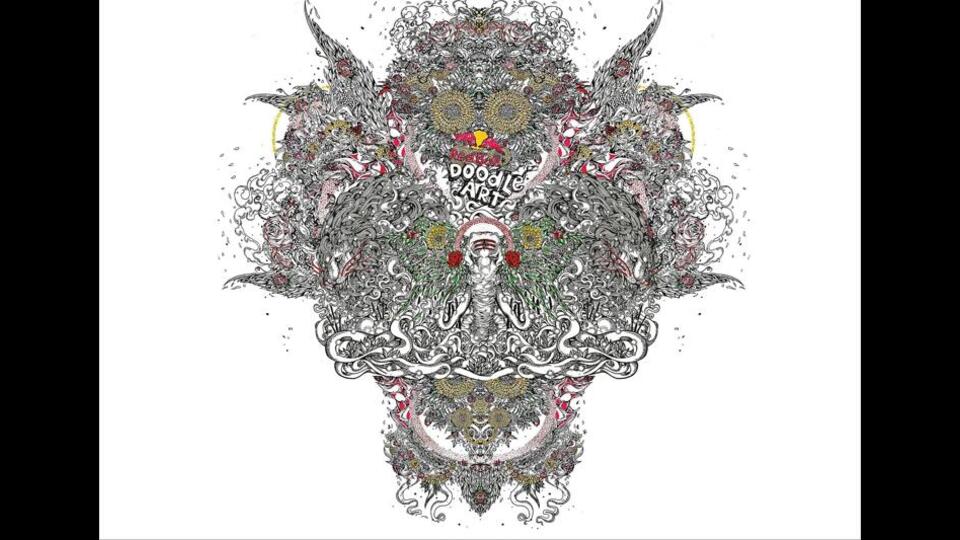
Doodling is unique. No form, no rules, no stress. Three artists say it’s legit art too. And it’s just taking off in India
Is doodling art? Or is it just the stuff we scribble on the margins of our notebooks until we find jobs in Statistical Analysis and Data Reconfiguration (sorry Chandler)? Three determined doodlers make the case for viewing the form with the dignity it deserves.
Santanu Kaushik Hazarika, 31, @Santanu_Hazarika_Art

Mumbai artist Santanu Kaushik Hazarika started out, like many of us did as kids, by drawing cartoon characters in his books. Some of his first scribble-doodles were spread over walls at home and desks in school. In college, his friends let them doodle decorative motifs on their arms. “I would basically vandalise any walls I saw,” he says. “I was never exposed to any other art form. All I had was a ballpoint pen and my notebooks.” Today, he paints, designs and even makes murals. But doodling (comic characters, mythical creatures like dragons, elements from Indian mythology) remains a constant.
It’s also what helped his convince his folks that he was meant for the arts after four years of studying Mechanical Engineering. Hazarika won the Red Bull World Doodle Art Championship in 2014 for a work on the theme of Hinduism. “I don’t blame them at all,” Hazarika says. “There is not much awareness about art and design, even less about doodling.” The win (his design was put on a T-shirt that and was sold online in 2015) gave him the confidence to pursue his journey as an artist.
“Doodling is considered to be an effective mental exercise,” says Hazarika of the sketches and patterns we idly make during a lecture, meeting, Zoom call or when there’s a pen at hand. Many believe the disconnected activity improves memory retention (in the same way as some people think better when they’re walking) and hones problem-solving skills. For many, it’s just meditative without meaning to be. “When you’re doodling, your mind is somewhere between a state of daydreaming and focus,” he explains.
And its best quality may just be that there are no rules. There is no right or wrong way to draw a leaf, a squiggle, a heart, a series of squares. It’s probably why, despite major gallery shows of artists such as Keith Haring and Hattie Stewart, Indian art enthusiasts struggle to name a single Indian doodler. Hazarika says there are better opportunities in the larger field of illustration.
Hazarika’s doodles have been exhibited in the Van Gogh Museum and the Moco Museum in Amsterdam as part of the Red Bull Championship win. In India, most doodlers take their work online and on social media. Turns out, there are some rules that separate art from self-indulgent sketching. “Doodles have a narrative, a story to communicate. And, the first step to any big masterpiece is actually a doodle, so why not study what can be done with this art form?” asks Hazarika.
Shamika Chaves, 36, @Shamika’s Doodles

Doodles are fun, and they’re funny. It’s what drew children’s book illustrator Shamika Chaves to them in 2010, when she started work as a graphic designer. The Mumbai artist started uploading a doodle a day on her blog. “I like to believe that doodling as an art form has a sense of humour. I realised that through doodling I wanted to develop my own illustration style which would give me an opportunity to dive into the world of children’s book illustrations,” she says.
Chaves has illustrated and designed more than 25 children’s books with publishers such as HarperCollins, Scholastic, Hachette,Parragon Publishing, FingerPrint, TreeShade Books and Birch Books. The art features odd faces, cute animals and birds, flowers with happy faces and big, expressive eyes that say it all. Her parents run a web- and graphic-design studio. But it’s on her Instagram that the quick sketches shine. One popular post is a sketch of Canadian folk artist Maud Lewis, which Chaves drew after she watched the Netflix film Maudie. Another post has art urging people to vote in the 2019 Lok Sabha elections.

Chaves credits social media for making doodles popular over the last decade. It’s shown everyday viewers how easy the art form is to appreciate. Yet, while Sam Cox, aka @MrDoodle has 3 million followers, India has miles to go. “Art in general is viewed as a luxury here, but we’ll get there someday,” she says.
Meanwhile, doodlers like her stay committed to the art form, even while purists scoff. “It is hard for sure, but then again, it also is subjective. What someone might think is phenomenal someone else may think is mediocre, like all artforms.”
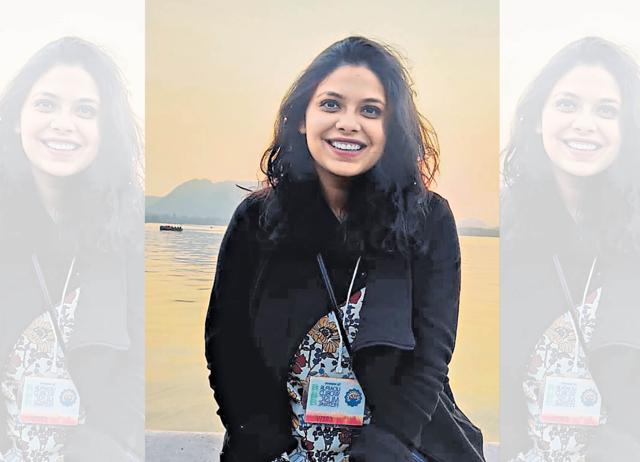
Disha Bhuraria, 32, @ThinkDoodles
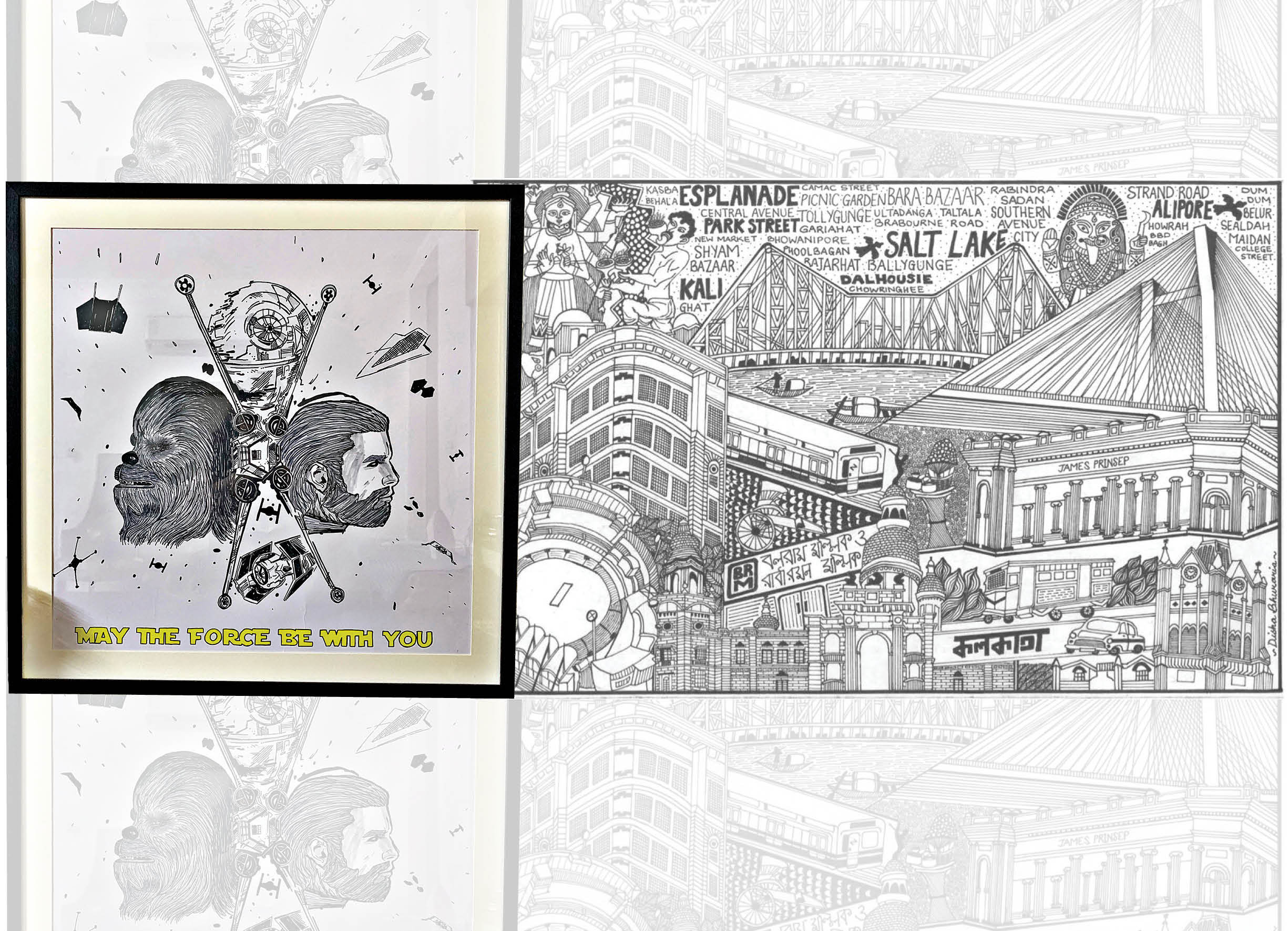
Bhuraia, at 23, would doodle to let her mind wander while she filled her time between an advertising job and an MBA entrance exam. A decade on, those doodles have taken over her life. The muralist travels across India to paint projects. She also has a home studio in Gurugram where much of the doodling happens.
Doodling is raw and random. It requires no complex pigment blending, no expensive materials, no rules, no obsession with colour theory. It’s exactly what makes it such a great form to pursue, she says. “I lack the patience for painting. Doodling made sense as I wanted to create something that required less shebang. Before I knew it, I was into learning intricate patterns, sourcing all kinds of pens from friends living abroad and also gaining some patience,” she says.
At most, doodle art in India ends up on merchandise, commercial work and the odd illustration. It’s not hallowed enough yet for album covers, luxury collabs, art galleries and high fashion. “Success depends on your skill, creativity and will to find the right market for your work,” Bhuraia says. She gets orders on Instagram to create customised work for birthdays, anniversaries and gifts. She works on it on weekends. Art for a 10x10 framed doodle runs anywhere from ₹3,000 to ₹5,000. Her murals work fetches her ₹150 to ₹400 per sq ft.
Things are changing, she’s found. “While traditional art forms may receive more formal recognition, doodling is appreciated for its spontaneity, inclusivity and personal touch,” she says. That no one takes it seriously might be its best quality yet. It’s allows artists a sense of freedom and expression.


