
 E-Paper



There are always ways to resist: Wknd interviews dystopian author Laila Lalami

 Prefer HTon Google


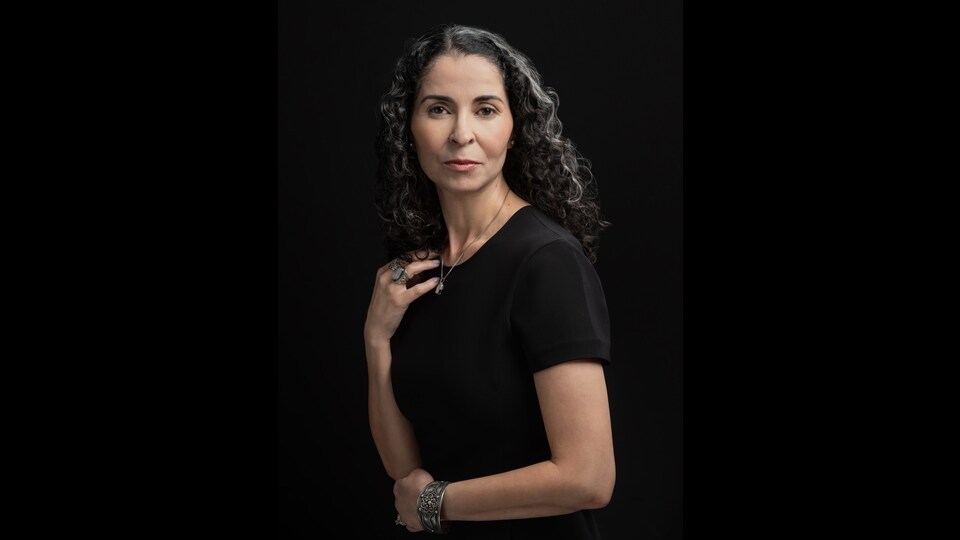
In her latest, set in a world much like ours, you can be detained for a dream. Is this our future? It doesn’t have to be, Lalami says. An exclusive interview.
Could your dreams be used against you?
In Moroccan-American author Laila Lalami’s new novel, The Dream Hotel, pre-crime surveillance has stretched its tentacles into our sleeping brains.
Lalami’s heroine, Sara Hussein, is a researcher with the Getty Museum and a busy mother of toddler twins. She is returning to the US from a work trip to London when she is detained at the airport and told that her dreams have raised her risk score too high. She is then transported to a “retention centre”.
These centres are privately run and have been in the news for holding people for extended periods; to say “without trial” would be a misnomer, since they have been accused of no crime yet. They must simply stay here until their risk level is deemed low enough for them to rejoin the general population.
The novel, with its dark, unsettling look at the future of surveillance and crime-prevention, invokes great works of the past, from Philip K Dick’s Minority Report (1956) to Franz Kafka’s The Trial (1925) and Margaret Atwood’s The Handmaid’s Tale (1985). Except, this tale unfolds in a world nearly identical to ours.
Having worked on it, on and off, for over 10 years, “I could not have imagined that it would be released in such a moment as we are living through today,” says Lalami, 57. Excerpts from an interview.

* The title of The Dream Hotel is determinedly misleading. How did you come up with it?
When I was trying to come up with a title, I wanted to convey the existence of a future in which people are neither free nor imprisoned, but somewhere in-between.
“Hotel” captures the idea of transience. And obviously “dream” because the book is about them. The other reason I like the title is because there has been a trend in certain countries of placing undocumented immigrants in hotels.
The Dream Hotel is also a play on the way governments corrupt language. When they want to move towards more punitive policies, they make them sound palatable. In the US, probably the most famous example is referring to torture as “enhanced interrogation”.
This is similar to imagining such centres as “dream hotels” in this dystopian future.
* The surveillance in the novel is eerily similar — barely a degree removed — from what we have in our world today…
Yes. I started working on The Dream Hotel in 2014, during the second Obama administration. The world was a different place back then, but I could see germs of what would happen with data collection. In rolling out their products, tech companies were thinking not about ethics but about power. By the time I finished this book, in mid-2024, Biden was President.
Little did I know that Trump would return to the presidency and immediately launch this highly visible programme of mass deportation, sending Immigration and Customs Enforcement (ICE) agents on raids in workplaces, stores, parks. In many cases, these agents are masked, and the deportation is indistinguishable from a kidnapping.
This is something we haven’t seen in the US before, at least not in recent memory. I could not have imagined that the book would be released in such a moment, which makes this a very strange publishing experience.
* How did the idea of dreams as a means of surveillance come to you?
In 2014, as I was getting out of bed one morning. I reached for my phone and the first thing I saw was this Google notification that said “If you leave right now, you will make it to the
At that moment it felt as if the curtains parted and I had a peek inside the vast data collection machines at work. I was unsettled and unhappy, and I thought, “Pretty soon the only privacy we’ll have will be in our dreams.”
Then I thought, what if someday that last frontier is penetrated? The idea felt exciting and seductive.
There’s something really revolutionary about sleep in this present moment in capitalist history. If you think about your activity on your smartphone as labour, then the only time you are not labouring in today’s age is when you are asleep. That is when you’re getting total release from capitalistic pressure.
In the book, a brain implant plays on this, offering less sleep but the same amount of rest. People use that time gained for more labour and capitalist extraction. And the tech companies use it for more data-extraction.
I then thought, what’s one way this data could be used? Immediately, its application was obvious in the context of America’s prison-industrial complex.
We already use risk-assessment algorithms in the US in some police departments… Everything you see in this novel has roots in our reality.
That’s what makes the book such an unsettling experience. It de-familiarises things you can see happening around you. It makes you think through the dangers of what is happening and what might yet happen. And hopefully it also gives you hope that there are ways to resist the system.
We are not cogs in a machine. We are human beings. We have within us both the capacity to create these terrible dystopian systems, and the capacity to build an alternative future together.
* Do you feel that kind of clear hope for the future?
While working on this book, there were times when I had to put it down just because it was so disturbing to me, even though I was the person writing it. I would reach a scene and think, “Oh my God, I don’t want the rest of this to happen.”
But the reality is that there is nothing about our present moment that is unprecedented.
If we stop thinking about data collection as data and think about it as archival material, it’s easier to see how fragile the whole thing is. Nothing is set in stone.
We are here because our ancestors actually managed to resist and survive. It is our duty to the people who are coming, our duty to the future, to actually resist this.
* What does such resistance look like to you?
In the book, Sara enters the detention centre and thinks, “I don’t belong in this world. I’m not like the others. I don’t know what they’ve done, but I’m not like them.” Then she realises she is like them, and they will have to work together or they’re not going to get out.
Hopefully the book will remind people that power is not something that flows only from the top down. It is a dynamic. It can flow sideways, upward, downward. And we all have a range of tools or powers at our disposal.
For example, we are consumers, so we have consumer power. We can choose what we do with our time, money and attention. We can choose to uninstall, for example, Instagram or Facebook. We are also citizens. We can choose to join with others on a particular cause.
We don’t always use the powers that we have. There are a lot of people working to make the world a better place, and we can add our power to theirs and help.
.
LAILA LALAMI: WRITE ANGLES
* The Dream Hotel, Laila Lalami’s sixth novel, is something of a departure from her usual themes of identity, loss and belonging, but not from her liquid style and stunning prose.
* Her previous works have included: The Moor’s Account (2014), a fictionalised tale of the life of a 16th-century Moroccan slave in the US. It was nominated for the Booker Prize and was a finalist for the Pulitzer. The Other Americans (2019), a family saga that begins with the suspicious death of a Moroccan immigrant in California. It was a National Book Award finalist. And Secret Son (2009), a coming-of-age tale set in Casablanca that was nominated for the Orange Prize (now the Women’s Prize). The Dream Hotel was also longlisted for the Women’s Prize, this year.
* Born in Rabat, Morocco, Lalami moved to the US at 23, for a PhD in linguistics at the University of Southern California. She is currently a distinguished professor of creative writing at the University of California, Riverside, and a Harvard Radcliffe Fellow.

Catch your daily dose of Fashion, Taylor Swift, Health, Festivals, Travel, Relationship, Recipe and all the other Latest Lifestyle News on Hindustan Times Website and APPs.


