
 E-Paper



Health risks in urban olive harvests: Experts caution against pollutants in city-grown oil

 Prefer HTon Google


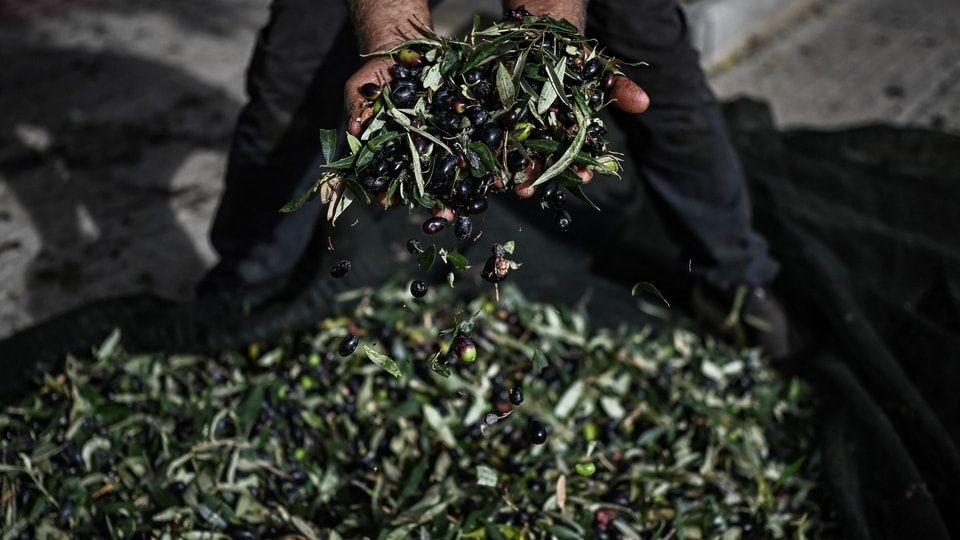
Glyfada's initiative to harvest olives for oil, started a decade ago, provides free oil to poorer citizens, with other Athens suburbs following suit.
Not far from one of Athens' busiest highways, passing motorists stop and stare at the bucolic agricultural scene going on in front of them on the streets of Glyfada. Nets spread out on the ground, workers picked olives beside a bus stop. With hundreds of olive trees on its streets, the seaside suburb hit upon the idea of harvesting their olives to make oil for its poorer citizens a decade ago.
Several other Athens suburbs have since followed. The western port of Patras also does the same, and Greece's second city Thessaloniki joined them this year. "In addition to keeping the valuable fruit from being lost... this nurtures the olive trees and also protects pedestrians" from slippery sidewalk accidents, the Athens municipality of Alimos said when it appealed for volunteers to help pick its olives earlier this month.
A staple in the Mediterranean diet for centuries, a one-litre bottle of olive oil now costs between nine and 18 euros ($9.50-19) on supermarket shelves in Greece. But the Glyfada olive harvest, estimated at around one tonne of olives this year, is being given away for free.
‘Good oil’
"This is good oil... all of Greece makes good olive oil," said Stavros Giakoumakis, the council's deputy mayor for greenery, who has overseen the project since 2014. "Our land is the land of plenty, boys. Whatever we plant takes root," gushed the 70-year-old, who also makes oil from his own olive trees on his native island of Crete. "If every municipality did the same, vulnerable families would have enough olive oil to last the year," he said.
Local resident Eleni Papachristopoulou, who moved to the area in the 1970s, said the trees on her street were planted over 50 years ago. "For years, the olives would fall on the ground and nobody picked them up," she said. With Spain and Italy, Greece is a major EU olive oil producer and has the highest annual consumption per capita in the bloc at around 12 kilograms per person, according to EU figures. Glyfada's street oil tastes tangy and stings the throat -- both signs of purity.
Pollution concerns
But health experts caution that produce grown in urban areas should be tested for harmful chemicals. A private group of experts, the Scientific Society of Olive Encyclopedists (4E), this month warned that "olive oil that comes from streets with increased traffic... is burdened with pollutants which in high concentrations constitute dangerous chemicals."
Of particular concern are mineral oil aromatic hydrocarbons (MOAHs), which according to the European Food Safety Authority can enter through environmental contamination, and may damage DNA and cause cancer. "Olive trees in areas where the atmosphere is polluted by exhaust gases may have an increased amount of MOAHs in the fruit, and consequently also in olive oil," said 4E member Constantinos Demopoulos, emeritus professor of biochemistry and food chemistry at the University of Athens.
"Unlabelled olive oil that circulates under the counter may not have the required composition, not necessarily out of malice but because of ignorance. I would not consume olive oil that has not been analysed, even if it came from a friend," he told AFP. 4E warned that local councils "appear to be unaware" of the risks, and that the inspection of street olive oil usually focuses on acidity and other characteristics.
Additional tests required to detect the presence of fossil fuel hydrocarbons require more "specialised" laboratories and come at a higher cost, it said. At Greece's state chemical laboratory, the country's foremost authority, acidity tests cost 20 euros. Aromatic hydrocarbons tests cost between 150 and 180 euros. Papachristopoulou said she was well aware of the pollution debate."We are worried, very much so. But people eat (the olives) -- s oon they won't have other options anyway," she said.


