
 E-Paper



High humidity levels can raise the risk of heat-related illnesses in urban climates: Research

 Prefer HTon Google


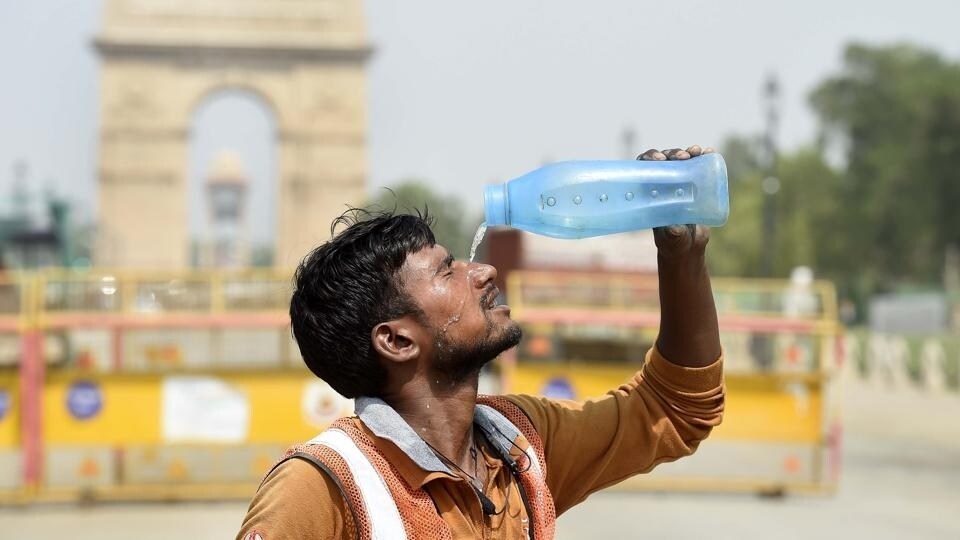
Yale scientists' latest study published in Nature examines the impact of temperature and humidity on urban heat stress using observations and a climate model.
A latest study, led by Yale School of the Environment scientists and published in Nature, investigated the combined effect of temperature and humidity on urban heat stress using observational data and an urban climate model calculation. Researchers found that the heat stress burden is dependent on local climate and a humidifying effect can erase the cooling benefits that would come from trees and vegetation.
"A widely held view is that urban residents suffer more heat burden than the general population owing to the urban heat island phenomenon. This view is incomplete because it omits another ubiquitous urban microclimate phenomenon called the urban dry island -- that urban land tends to be less humid than the surrounding rural land," said Xuhui Lee, Sara Shallenberger Brown Professor of Meteorology, who directed the study.
"In dry, temperate, and boreal climates, urban residents are actually less heat-stressed than rural residents. But in the humid Global South, the urban heat island is dominant over the urban dry island, resulting in two to six extra dangerous heat stress days per summer."
Lee and YSE doctoral student Keer Zhang, lead author of the study, say they were motivated to investigate the issue for several reasons: a large percentage of the global population lives in urban areas; many people in informal urban settlements do not have access to air conditioning; and the problem is going to get worse as temperatures rise and more people move to cities.
About 4.3 billion people, or 55 per cent of the world's population, live in urban settings, and the number is expected to rise to 80 per cent by 2050, according to the World Economic Forum.
The researchers developed a theoretical framework on how urban land modifies both air temperature and air humidity and showed that these two effects have equal weight in heat stress as measured by the wet-bulb temperature, in contrary to other heat indexes, which weigh temperature more heavily than humidity. Wet-bulb temperature combines dry air temperature with humidity to measure humid heat. The results of the study, the authors note, raise important questions."Green vegetation can lower air temperature via water evaporation, but it can also increase heat burden because of air humidity. The question then is to what extent this humidifying effect erases the cooling benefit arising from temperature reduction. We hope to answer this question in a follow-up study, where we are comparing observations of the wet-bulb temperature in urban greenspaces (with dense tree cover) and those in built-up neighborhoods," Lee said.
Zhang says she hopes the study can lead to further research on how cities can mitigate heat stress."Our diagnostic analysis on the urban wet-bulb island found that enhancing urban convection efficiency (the efficiency in dissipating heat and water) and reducing heat storage at night can reduce daytime and nighttime urban humid heat, respectively. We hope that our work will promote more research on optimizing urban shapes and materials for better thermal comforts," she says.


