
How often should BP patients check their blood pressure in winter?
The winter season can affect blood pressure levels. A doctor shares tips for accurate home monitoring and lifestyle changes for better health.
The winter season can exacerbate health problems for people with hypertension. With a drop in temperature, blood vessels contract, physical activity may decline, and dietary changes can lead to higher blood pressure readings. So, does that mean one should check blood pressure more frequently during winter?
Tavishi Dogra is a Deputy Chief Content Producer, Health & Wellness, at Hindustan Times. She has over 9 years of experience writing about fitness, nutrition, and mental well-being, translating medical research and expert insights into practical advice readers can trust.
Career journey and experience
Tavishi began her health journalism journey in 2017, and has since reported for RSTV, Financial Express, Jagran, HT Media Labs and Zee. She joined Hindustan Times to simplify wellness subjects by cutting through jargon.
From decoding health trends and interviewing doctors to testing fitness routines herself, Tavishi always approaches content with one filter: “Will this help someone make a better decision today?”
Subject expertise
With 9+ years tracking India’s health conversations, Tavishi knows the gap between clinical advice and daily life. She knows fads from fundamentals and curates science-backed, expert-recommended solutions.
In fitness, she breaks down bodyweight training, recovery, and posture fixes for desk-bound readers. In nutrition, she translates guidelines into affordable, desi meal tweaks. In mental well-being, she focuses on stigma-free, actionable tools — all backed by research, expert input, and lived context.
Education and professional background
Tavishi holds a Master’s degree in Journalism and Mass Communication and began her career reporting on public affairs for broadcast. Those early years in policy and TV shaped how she writes today: fast, factual, and human-first.
Editorial Philosophy
I write with one single goal: To simplify health in a world full of noise by finding what’s actually doable, safe, and evidence-based for my readers. I test claims against research and user experiences. When all else fails, I speak to the expert who sees 50 patients a day, not the one with the most followers.
Read moreRead less
Career journey and experience
Tavishi began her health journalism journey in 2017, and has since reported for RSTV, Financial Express, Jagran, HT Media Labs and Zee. She joined Hindustan Times to simplify wellness subjects by cutting through jargon.
From decoding health trends and interviewing doctors to testing fitness routines herself, Tavishi always approaches content with one filter: “Will this help someone make a better decision today?”
Subject expertise
With 9+ years tracking India’s health conversations, Tavishi knows the gap between clinical advice and daily life. She knows fads from fundamentals and curates science-backed, expert-recommended solutions.
In fitness, she breaks down bodyweight training, recovery, and posture fixes for desk-bound readers. In nutrition, she translates guidelines into affordable, desi meal tweaks. In mental well-being, she focuses on stigma-free, actionable tools — all backed by research, expert input, and lived context.
Education and professional background
Tavishi holds a Master’s degree in Journalism and Mass Communication and began her career reporting on public affairs for broadcast. Those early years in policy and TV shaped how she writes today: fast, factual, and human-first.
Editorial Philosophy
I write with one single goal: To simplify health in a world full of noise by finding what’s actually doable, safe, and evidence-based for my readers. I test claims against research and user experiences. When all else fails, I speak to the expert who sees 50 patients a day, not the one with the most followers.
Why does blood pressure rise in winter?
Blood pressure typically rises during the cold months due to constricted blood vessels caused by low temperatures, thereby increasing the heart's workload. "Most of these patients always feel their blood pressure escalating when it is cold", Dr Devendra Singh Yadav, Radiologist, Modern Diagnostic and Research Centre (MDRC), tells Health Shots. It is usually very taxing on these patients' hearts if left untreated. Also, one should not forget that the kidneys are affected by high blood pressure.
How often should patients check their BP at home?
Unless otherwise indicated, most patients with hypertension should be monitored once or twice a day. "There is a greater understanding of circadian patterns when BP is measured in the morning before breakfast and medication, and again later in the evening", says the doctor. Consistent timing is essential to ensure that comparisons are as accurate as possible, thereby enabling better management decisions.
What is the most accurate way to measure blood pressure at home?
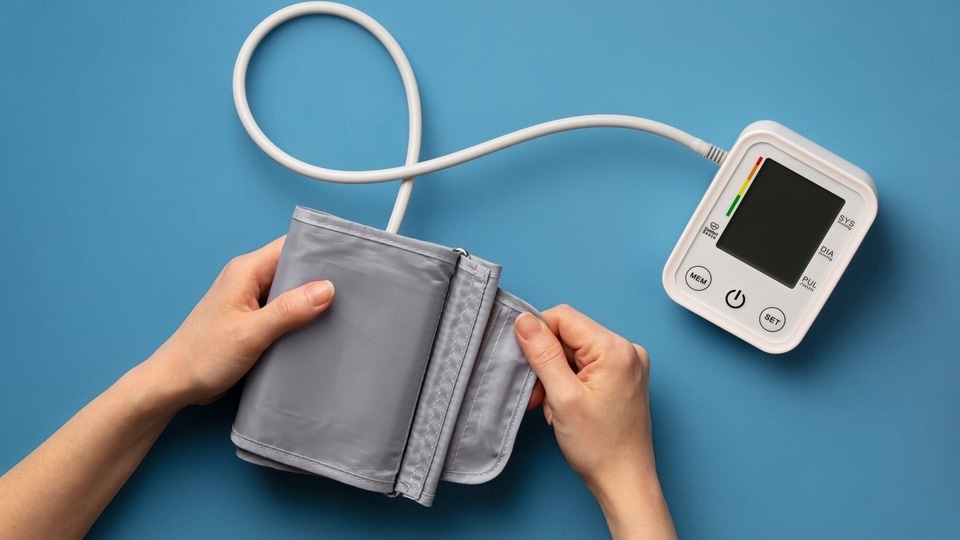
Frequent measurements and proper technique are required for accurate readings. "To take blood pressure readings at home, one should be seated in a relaxed position with feet flat on the floor and back supported. At least five minutes of relaxation must precede taking the readings," says the doctor. A validated automated blood pressure recorder would be preferred.
The arm on which the measurement is taken should be positioned at heart level, and the cuff should be the correct size. "Smoking, drinking caffeine, or engaging in physical activity should be avoided at least 30 minutes before the measurement to achieve an accurate blood pressure reading", says the radiologist.
Is it safe to check blood pressure multiple times?
Frequent blood pressure readings may be unreliable. Reading blood pressure over thrice a day can be alarming, as it may sometimes yield inconsistent readings. "Another error is using an untrained manual blood pressure checker. Reading blood pressures with an untrained checker may, at times, result in irregular readings," warns the doctor. Another error is neglecting to recognise symptoms such as dizziness, chest discomfort, or shortness of breath, even when blood pressure is normal.
What to do if blood pressure is consistently high?
If home blood pressure readings are consistently above the target level or there are symptoms indicative of a warning, medical advice should be sought. Although home blood pressure monitoring can be an effective way to monitor blood pressure, it does not replace medical advice from a physician.
How to reduce high BP in winter?
Managing blood pressure can be aided by practising healthy habits during winter. Indoor physical activity, such as light exercise, is beneficial for maintaining a healthy level of physical activity. "Layered clothing is also very helpful, and avoiding chilled air when not necessary helps prevent low blood pressure. It is essential to keep a check on sodium and processed foods, which tend to raise blood pressure," explains Dr Yadav. Stress management is also essential, including meditation, reading, or other hobbies that may relieve stress.
By integrating winter care with home blood pressure monitoring, patients with hypertension are better equipped to manage the winter months. "Continuous home monitoring can promote better cardiovascular health, and simple lifestyle modifications can improve outcomes", says the doctor.
(Note to readers: This article is for informational purposes only and not a substitute for professional medical advice. Always seek the advice of your doctor with any questions about a medical condition.)
ABOUT THE AUTHORTavishi DograTavishi Dogra is a Deputy Chief Content Producer, Health & Wellness, at Hindustan Times. She has over 9 years of experience writing about fitness, nutrition, and mental well-being, translating medical research and expert insights into practical advice readers can trust. Career journey and experience Tavishi began her health journalism journey in 2017, and has since reported for RSTV, Financial Express, Jagran, HT Media Labs and Zee. She joined Hindustan Times to simplify wellness subjects by cutting through jargon. From decoding health trends and interviewing doctors to testing fitness routines herself, Tavishi always approaches content with one filter: “Will this help someone make a better decision today?” Subject expertise With 9+ years tracking India’s health conversations, Tavishi knows the gap between clinical advice and daily life. She knows fads from fundamentals and curates science-backed, expert-recommended solutions. In fitness, she breaks down bodyweight training, recovery, and posture fixes for desk-bound readers. In nutrition, she translates guidelines into affordable, desi meal tweaks. In mental well-being, she focuses on stigma-free, actionable tools — all backed by research, expert input, and lived context. Education and professional background Tavishi holds a Master’s degree in Journalism and Mass Communication and began her career reporting on public affairs for broadcast. Those early years in policy and TV shaped how she writes today: fast, factual, and human-first. Editorial Philosophy I write with one single goal: To simplify health in a world full of noise by finding what’s actually doable, safe, and evidence-based for my readers. I test claims against research and user experiences. When all else fails, I speak to the expert who sees 50 patients a day, not the one with the most followers.Read More
Catch your daily dose of Fashion, Taylor Swift, Health, Festivals, Travel, Relationship, Recipe and all the other Latest Lifestyle News on Hindustan Times Website and APPs.

E-Paper


