
 E-Paper



2019 Lok Sabha elections: Can BJP repeat its 2014 performance in Maharashtra?
The saffron alliance won 42 of the 48 Lok Sabha seats in the 2014 general polls (the BJP won 23 seats on its own), an unprecedented win that reduced the then ruling parties to single digits


Can the BJP manage another spectacular win in the 2019 polls in Maharashtra?
Five years ago, the Modi wave pushed the Bharatiya Janata Party (BJP) from the last position among four main political parties that have dominated the state over last two decades, to numero uno.
The saffron alliance won 42 of the 48 Lok Sabha seats in the 2014 general polls (the BJP won 23 seats on its own), an unprecedented win that reduced the then ruling parties to single digits. The Congress won 2 seats in a state it had controlled, barring exceptions, since Independence.
The big challenge for the Devendra Fadnavis-led BJP in the state in 2019 is to do a once-more, without the Modi wave. With the two main alliances pitched against one another, every seat lost by the saffron alliance is one seat less for the NDA and one seat more for the UPA. Fadnavis’ task is to minimise losses to the NDA. With a month-and-a-half to go for the four-phase polls in the state, it looks like the primary advantage is with the BJP.
SAFFRON TIE-UP
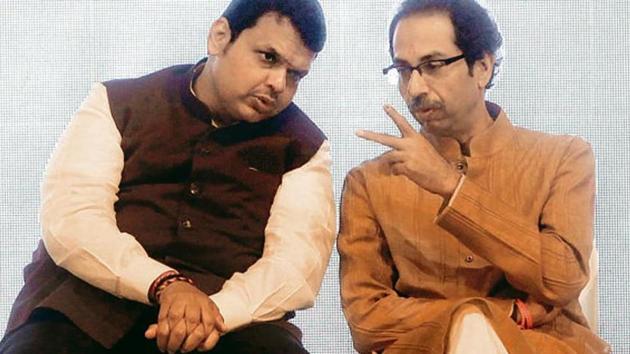
The pre-poll tie-up with the Shiv Sena managed tacitly through backchannel talks is the BJP’s big strategic win ahead of the elections. By avoiding a three-corner fight, the BJP has prevented a split in its vote bank and potential losses, especially in urban constituencies. While CM Devendra Fadnavis had from day one backed the saffron alliance, the BJP’s performance in Lok Sabha bypolls and later Assembly polls in the three crucial Hindi heartland states pushed the top leadership towards the tie-up.
“The first win for us was when we got the Sena on our side. In this election, the role of alliances will be important as the Opposition is bandying together against the Modi government. With the alliance, a tally of 35+ seats is within reach for us,” said a senior BJP functionary.
Despite the bitterness between the allies for the last four-and-a-half years, the BJP and Sena have already rolled out a plan to campaign together first by holding joint meetings of workers, followed by public rallies. They are also likely to bring out a common minimum programme for the state to show a united front. The allies have managed to iron out creases in the alliance. For instance, the Sena has cleared the path for BJP state president and MP Raosaheb Danve’s election in Jalna by quelling rebellion by Sena minister Arjun Khotkar. The BJP has cancelled land acquisition for ambitious Nanar oil refinery acting on its ally’s demand. The co-ordination between the saffron allies is in stark opposition to the disarray between their opponents, Congress-NCP.
MODI, WELFARE SCHEMES
The 2019 polls do not have a Modi wave similar to 2014, but the PM continues to be a key factor in the elections. The BJP’s campaign strategy will centre around his personality, as the party’s recent presidential style slogans – Phir Ek bar Modi Sarkar or Modi hai to Mumkin hai or Main bhi Chowkidar – indicate. This narrative has been built by projecting the lack of alternative PM candidate from the Opposition. The state issues aside, Maharashtra BJP leaders say the party will contest polls on this issue. The other main plank will be the government’s report card. The campaign will be cemented by several public rallies that will be held by the PM himself in as many as half of the state’s Lok Sabha constituencies.
“The campaign as well as the strategy for the 2019 general polls is from the Centre. Our job is to implement what we have been asked to do. Post Pulwama attack, there is a clear shift of sentiment again in favour of the decisive leadership of PM from a slight dip earlier. PM Modi, the nationalism narrative and welfare schemes of the Centre will form the spine of our campaign,” said a BJP minister.
Fadnavis through his public rally speeches has been speaking about the schemes stressing on what the government has delivered especially to farmers and poor namely the Jan Dhan Yojana, Kisan Sanman Nidhi, Pradhan Mantri Awaas Yojana. “The difference between the 2014 polls and 2019 polls for us is that we are now in power. In power, we are more accountable to the people. We will face these polls by presenting what we have achieved in the last four-and-a-half years – from building mega highways to rural electrification and creating more jobs to building homes,” said Madhav Bhandari, BJP spokesperson.
PREP AND SANGH PARIVAR
If there’s one difference between the preceding Congress-NCP governments and the BJP, it is the latter has used power to strengthen and expand the party base. Internal critics of the party say this expansion has come at the cost of the core BJP workers and largely by taking in “opportunists across party lines”.
But the logic of the BJP top brass is to accommodate outsiders if it helps the party electorally. In the last five years, the BJP has expanded its elected representatives across urban and rural self-government bodies to become number one in the state. This network will come in handy in the general polls. The recent poaching of Sujay Vikhe Patil, son of Radhakrishna Vikhe Patil, leader of Opposition and senior Congress leader, by the BJP is just one such example. Sujay will be given a ticket from Ahmednagar constituency in Western Maharashtra, while the sitting BJP MP Dilip Gandhi will be asked to sit out of the contest. Besides Gandhi, several other non-performing MPs are likely to be asked to step down, including from Solapur, Latur, Gadchiroli-Chimur, Bhandara-Gondia and Pune.
“The candidate for every seat is being decided post detailed surveys and considering local factors, especially caste. The CM has clearly said that we can’t be complacent because of IAF air strikes or Modi factor,” said a BJP state functionary.
Beyond candidate selection, the party organization has been preparing for these polls for the last year-and-a-half working at the booth-level cadre.
At the grassroots, the Sangh Parivar’s several wings, from Rashtriya Swayamsevak Sangh (RSS) to Swadeshi Jagran Manch, also come together during polls to gauge sentiment and give feedback. This is routed through the organization secretary incharge of the BJP, who is nominated by the RSS, for every region, explained a BJP organisational secretary. “Even a state-level booth co-ordinator from a small district can get a call from party president Amit Shah’s team for feedback or review. So the organization is activated. The ground-level support from Sangh Parivar during elections is important for mobilisation as well as feedback,” said a BJP state strategist.
ECONOMY, FARM DISTRESS
Despite its obvious strengths, the party faces challenges, especially owing to rural agrarian distress and the ongoing drought. Over half the state is reeling from drought this year. The farm economy figures also point to a slowdown with single digit growth since July 2017 and as low as 2.7 in October to December 2018.
“There has been a lot of propaganda and marketing of schemes, from loan waiver to crop insurance, but farm incomes have been wiped out. Two years of drought and demonetisation has not allowed farmers to recover from economic shocks. They were promised double incomes in 2014. There is deep discontent, but this has been diverted to an extent by the nationalism narrative. A lot would depend on how the Congress raises farm distress,” said Vijay Jawandia, farm activist from Vidarbha region. Vidarbha voted all 10 saffron MPs in 2014, but this time the BJP-Sena may face potential losses here.
While the Modi factor is important, issues such as unemployment, caste polarization and the difference between promises and deliverables will have an impact on the elections.
“In a region like Marathwada, people are facing drought since October. One can assume that they will vote based on what they are facing and currently the picture is not rosy. Similarly, unemployment is quite stark, so youngsters in rural areas may be angry. But, a lot depends on perception, electoral management,’’ said Surendra Jondhale, political analyst. He added that on both these counts, BJP scores very high. Both Jawandia and Jondhale agree that unlike 2014, this election is without the wave.
Beyond economy, at least two communities, Muslims as well as Dalits, are expected to vote against the party. The BJP does not expect the minority vote and believes polarisation in such constituencies will help its candidates. And, with regards to Dalit votes, there is likely to be a split in the vote bank with Congress as well as Dalit leader Prakash Ambedkar’s Vanchit Bahujan Aghadi claiming the Opposition votes. “The Maratha versus OBC polarisation may also have an impact on the BJP as OBCs are unhappy with the 10% reservation to the poor and 16% to Marathas. The OBCs have traditionally supported the BJP. But the caste equations will get played out depending on candidates and local constituency level issues as well,” said Jondhale.
The party’s support base, the urban middle class is expected to back it, especially for Modi, citing lack of options.


