E-Paper



Meet the desi doggos finding favour, and homes across the country

 Prefer HTon Google


As demand for indigenous breeds grows among pet owners, prices are rising too. Here’s a look at the breeds that are winning dog shows and now finding takers across India.
In 2017, when Srinidhi Rao wanted a pet, he was worried about getting a big dog home. “I had a very aggressive Doberman for a couple of months who terrorised my mother and sister,” recalls the 29-year-old civil engineer from Mysuru. “So when someone suggested I take a Mudhol Hound home, I was apprehensive.” The breed is native to south India and is commonly used as a pet or hunting animal. “I’d never heard about the breed,”Rao recalls. “I assumed that a hound would be ferocious and intimidating.”
But fawn-coloured Robo, now two, is handsome, as tall as a goat and about as benign. He’s the most-loved member in the Rao household and has a large fan-following in the children at their housing complex in Mysuru . “He is so big, but acts like any other dog. He craves attention and often crawls into our laps to sleep,” says Rao. “Bringing Robo home was probably one of my best decisions.”
More Indians are warming up to the idea of adopting a native breed pet dog like Mudhol Hounds, Rajapalayams, Kombai and Chippiparai Hounds instead of popular foreign breeds like Labrador Retrievers, German Shepherds and Siberian Huskies. Coimbatore’s VS Ravi, president of Native Dog Breeds Speciality Club (which is affiliated to the Kennel Club of India) says that demand for local breeds has risen in the last couple of years. “Pups that sold for barely ₹2,000 to ₹5,000 are now being sold for ₹10,000 to ₹15,000, mostly because people now know about their existence,” he says.
The immediate trigger, especially in southern India, may have been the pro-jallikattu protests in 2017, which brought back the focus on local animal species, says S Ramanathan, secretary of the Madurai Canine Club. The club hosted a native breed dog show in February this year. “There was a big craze for adopting native Indian breeds, especially the ones from Tamil Nadu. People started Facebook pages to spread awareness about them and flaunting the dogs they had taken home,” he says.
It came with the usual problems. Breeders are largely from the outskirts of cities, so potential customers were worried about the lineage of the animals. “Several dog shows now allow native breeds to participate for free or at discounted prices. Word of mouth and social media have also given it a big boost,” says Ravi.
If a native dog’s looks were previously a deterrent for potential pup seekers, those very features are now the game-changer. “The Rajapalayam, with its milky white fur and pink snout, is the most popular,” says Ramanathan.”But, most people are now realising that having a healthy dog that is more acclimatised to Indian weather is better than one with a furry coat.”
Robo rarely falls sick and doesn’t gain weight easily. “He eats regular home food – eggs, ragi and vegetables,” Rao says. “He also adapts easily to a new environment, especially when I leave him with friends or relatives when I am travelling.”
For breeders, the next step is setting standards for certification, just like for international breeds. Ravi, one of the few authorised members by the KCI to certify and register native Indian breeds. He claims to have micro-chipped over 10,000 native breed dogs and documented their lineage details and registration numbers since 2015.
CHIPPIPARAI HOUND
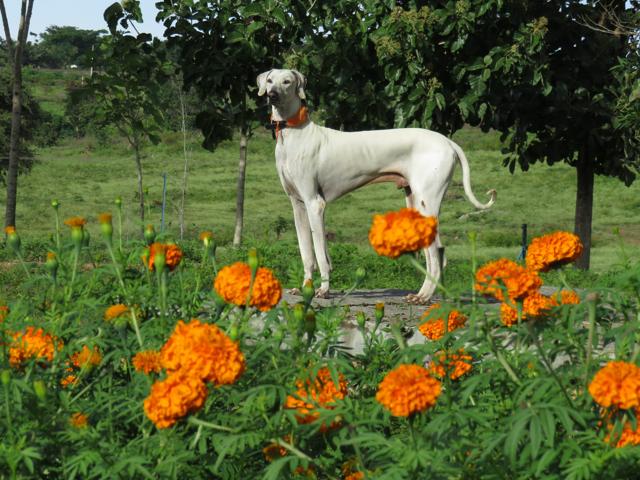
Features: Dome-shaped head, large black snout, long bony body, tail that rolls up like the handle of an umbrella
Origin: The Chippiparai region in Virudhunagar district, Tamil Nadu
Temperament: Known to be dedicated one human being for all of its life
Interesting feature: 270-degree vision, with extremely keen eyesight
Price rise: ₹2,000 to ₹5,000 a pup in 2017. Now ₹15,000. Breeders market it as an alternative to foreign show dogs like Afghan Hounds, which cost ₹75,000 to a lakh a pup
.
PASHMI HOUND
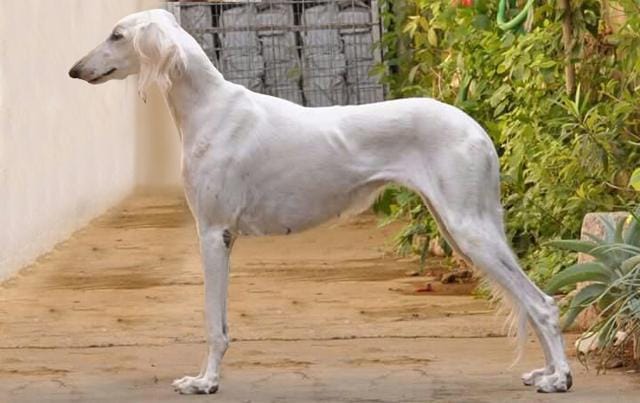
Features: Tall, slender and feathered, small head and long furry ears
Origins: Probably descended from Afghan Hounds brought by the Pathans who settled in the Deccan plateau. Now found in Maharashtra, Karnataka and Andhra Pradesh
Temperament: Usually gentle, but sometimes spirited. It makes a good guard dog
Interesting feature: Phenomenal speed, stamina and endurance in running
Price: ₹5,000 a pup in 2017. Now ₹20,000. Often compared to foreign show dogs like Salukis, which cost ₹30,000 to ₹50,000 a pup
.
KOMBAI
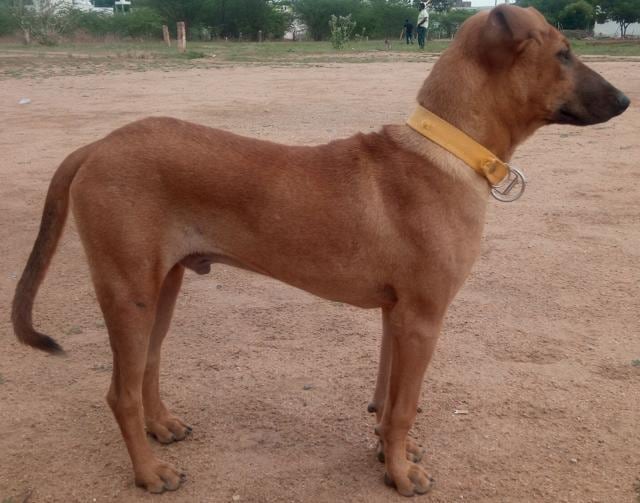
Features: Small, stocky and muscular
Origins: Kombai, Tamil Nadu
Temperament: Very energetic, slightly aggressive
Interesting feature: One of the bravest breeds. Rumoured to be strong enough to kill a bear.
Price: ₹5,000 a pup in 2017. Now ₹15,000. Often seen as an alternative to foreign dogs like Bull Terriers, which cost ₹40,000 a pup
MUDHOL HOUND
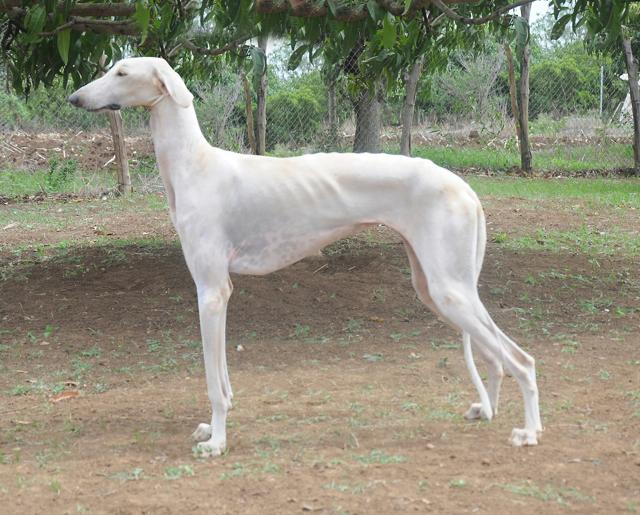
Features: Long and narrow head, large eyes, piercing gaze, broad between the ears, tapering muzzle.
Origins: Bagalkot, Karnataka
Temperament: Devoted and gentle, making it a good family dog
Interesting feature: Strong immune system and adaptability to hot climates
Price: ₹5,000 a pup in 2017. Now ₹15,000. Often pitched to buyers who want foreign show dogs like Salukis, which cost ₹30,000 to ₹50,000 a pup
.
RAJAPALYAM
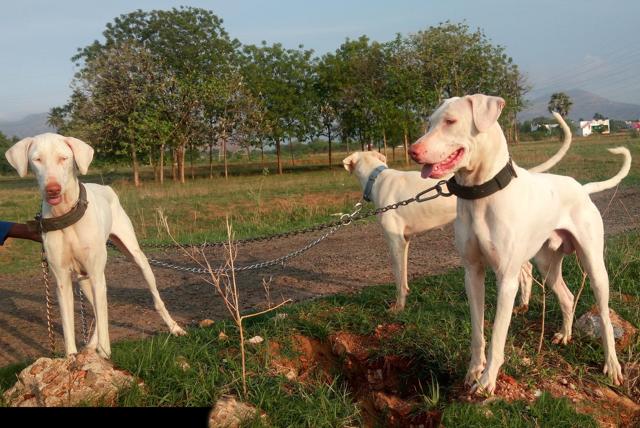
Features: Milky white coat, characteristic pink nose
Origins: Rajapalayam, Tamil Nadu
Temperament: It is loyal, loves company and may develop separation anxiety
Interesting feature: A keen ability to differentiate between friend and threat. Used as hunting dogs in the Nayak dynasty between the 16th and 18th century
Price: ₹5,000 a pup in 2017. Now ₹25,000. Often compares to foreign show dogs like Whippets, which cost ₹40,000 a pup.