
 E-Paper



Maharashtra govt clears decks for a more vertical Mumbai
State issues new Development Control and Promotion Regulations, clearing a new Floor Space Index that will translate to more vertical growth till 2034.

 Prefer HTon Google


The state government on Thursday issued new Development Control and Promotion Regulations (DCPR) — rules that will govern all construction and land use activity in Mumbai — clearing decks for a more vertical development until 2034.
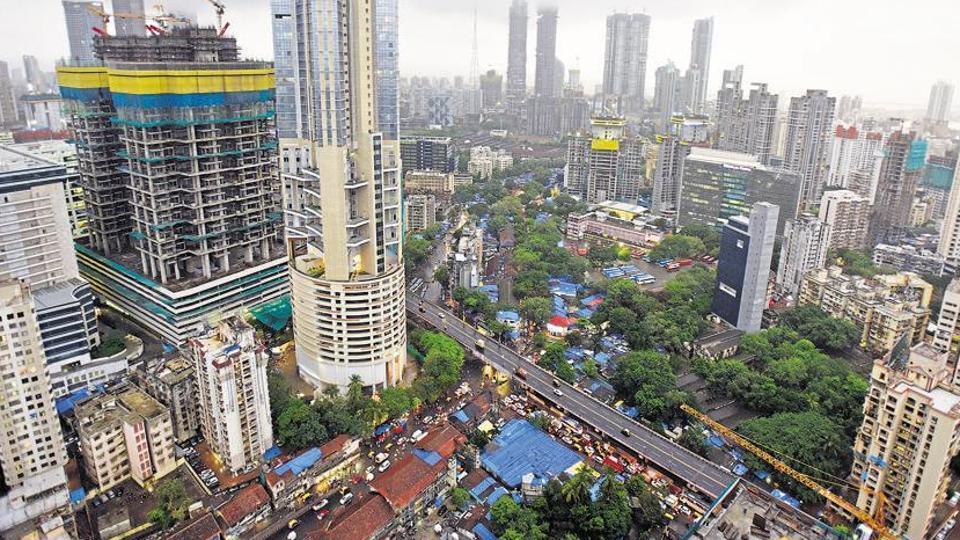
The DCPR clears a new Floor Space Index (FSI) regime for the city in the range of 2.5 to 5-plus, allowing maximum buildable rights for commercial towers (5 +), followed by redevelopment for residential use under various special categories.
This includes for buildings declared as unsafe, private buildings older than 30 years, development on no development zones, slum redevelopment, cessed buildings and cluster redevelopment, among other things.
Majority of the residential redevelopment under these categories have been granted an FSI of up to 4. However, in all these cases, a compensatory FSI of 35% more can be loaded on these plots. FSI refers to the ratio of the total buildable area on a plot to the size of the plot. In land-starved Mumbai, it typically indicates how high a building can be constructed.
The state government also issued the notification for the Development Plan (DP) — laying out an overall development blueprint for the city. This has, however, been issued in two separate parts including a final DP and an excluded part that includes major modifications done to the draft DP. There were more than 1,000 such modifications. Citizens will have the option to offer suggestions and objections to these modifications until June 7.
The DP has opened up 2,230 hectares of No Development Zone (NDZ) — equalling nine times the mill land area in Girgaum — for redevelopment, in an apparent bid to boost affordable housing and create five lakh homes. The DCPR shows that a major chunk of this land of this land (41%) can be used for purposes other than affordable housing by the owner.
Only 30% of the land is to be used for affordable housing. But the owners of NDZ plots, now reassigned as Special Development Zone (SDZ), may not opt for affordable housing at all, and instead build a tourism-related complex on this land, such as a theme park or a hotel. Further, the definition of affordable housing has been given a miss.
The FSI for affordable housing component on such land is 2.5, while without affordable housing developers get FSI of 0.5. The FSI earlier on NDZ lands was only 0.2. Paving the way for high rises, the DCPR also eased regulation for construction of skyscrapers giving the civic commissioner special powers to clear buildings up to 120 metres or around 40 storeys. This permission can be given within seven days. Buildings higher than this require clearance from a high rise committee. Earlier, the civic commissioner’s powers for high rises were limited to 23 storeys or 73 metres beyond which the permission has to come from the high rise committee.
Some of the new regulations introduced include 33 (7) A, incentive FSI for unsafe and non-cessed tenant occupied buildings in Mumbai city and suburbs. Such buildings and its tenants will get 50 % incentive floor space index (FSI) after rehabilitating existing residents and tenants. Until now, these benefits were applicable to only cessed buildings in the island city.
Under the section, each tenant shall be rehabilitated and given the carpet area occupied by him for residential purpose in the old building subject to the minimum fixed carpet area of 300 sq ft and/or maximum carpet area up to 753 sq ft free of cost. The state government has also introduced another section, 33(7)(B), for the redevelopment of private buildings more than 30 years old and has given them additional FSI of up to 15 per cent more free of cost for redevelopment. This can add 10 sq m more area to each individual tenant or resident of such a building. “This is the last time citizens will have an opportunity to raise objections. While NDZ lands have been opened up in the name of affordable housing, there is no clear reservation or definition for affordable housing,’’ said urban planner and director of UDRI, Pankaj Joshi.
Another rule includes incentive for reconstruction of BDD chawls at Naigaon, Worli, NM Joshi Marg and Sewri. Under the Urban Renewal Scheme, an FSI of 4 has been proposed under the DCR. There are around 18,000 tenants living in these chawls and will be entitled to a free ownership of 500 sq ft carpet area flat.
The FSI is 4 on the gross plot area as in the urban renewal scheme. The state government has set a cut off of June 13, 1996 and no new tenancy will be created after the date will be eligible for the scheme. In a turn around from the last DP which reduced the FSI in a bid to decongest the city, this DP has increased base permissible FSI in the city to 3 and the suburbs to 2.5.


