
 E-Paper



Mumbai then and now: City’s encounter with epidemics
In a pictorial presentation on Saturday, organised by the Mumbai-based Khaki Lab, Manjiri Kamat, history professor and associate dean, faculty of humanities, University of Mumbai, talked about the bubonic plague, Spanish flu, cholera and smallpox epidemics that caused devastation in the city.


Disturbing scenes of migrants leaving the city in large numbers, creation of makeshift hospitals to accommodate hundreds of patients, and door-to-door testing in high-density areas have a sense of déjà vu, given that Mumbai has faced its fair share of epidemics in the past.
In a pictorial presentation on Saturday, organised by the Mumbai-based Khaki Lab, Manjiri Kamat, history professor and associate dean, faculty of humanities, University of Mumbai, talked about the bubonic plague, Spanish flu, cholera and smallpox epidemics that caused devastation in the city.
“Much like today, several people left the city in huge numbers after the outbreak of the bubonic plague of 1896 in Bombay. The city was caught unawares and there was no cure for it then,” said Kamat. The city’s mortality rate was very high. It is said to have originated in Hong Kong from where it spread via trade ships to Bombay.
The then municipal corporation with police teams conducted door-to-door testing in high-density areas. The outbreak resulted in the formation of the Bombay City Improvement Trust to create affordable housing and improve east-west connectivity in the city.
Following an international conference on sanitation in 1866, held in Istanbul, the then British government in India reportedly made quarantining more rigorous and cancelled several pilgrimages to contain the spread of diseases like cholera and smallpox. In 1892, the Bombay Compulsory Vaccination Act was introduced to contain the spread of smallpox.
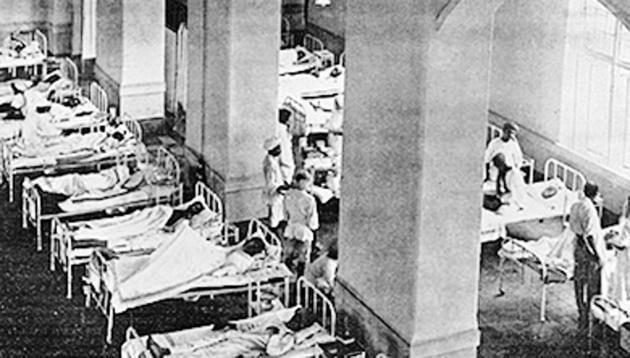
“In her essay on the outbreak of the Spanish flu or influenza pandemic of 1918, Dr Mridula Ramanna states that space was made available at Sir JJ Hospital, Gokuldas Tejpal (GT) Hospital, and the Infectious Diseases Hospital (Kasturba Gandhi Hospital), and the government encouraged isolation of infected patients,” Kamat said. In her talk, she described how many institutions like the Prince of Wales Museum (Chhatrapati Shivaji Maharaj Vastu Sangrahalaya) and the Royal Institute of Science in Fort were converted into makeshift arrangements to accommodate patients and soldiers of the First World War.
“Looking at history, we are in a better position now to handle a crisis than we were ever before, thanks to technology. We must learn from history and be well-prepared for the future,” said Bharat Gothoskar, founder of Khaki Lab.


Stay updated with all the Breaking News and Latest News from Mumbai. Click here for comprehensive coverage of top Cities including Bengaluru, Delhi, Hyderabad, and more across India along with Stay informed on the latest happenings in World News.


