E-Paper



Climate and Us | With its updated NDC, India stands up for the Global South
The updated NDC — to reduce the emissions intensity of its GDP by 45%, and achieve about 50% cumulative non-fossil fuel electric power by 2030 — reiterates its demands on the developed world to commit to climate finance.


Last week, the Union Cabinet approved India’s nationally determined contribution (NDC) which has possibly already been submitted to the United Nations Framework Convention on Climate Change (UNFCCC) and will be uploaded by the UNFCCC on their website this week.
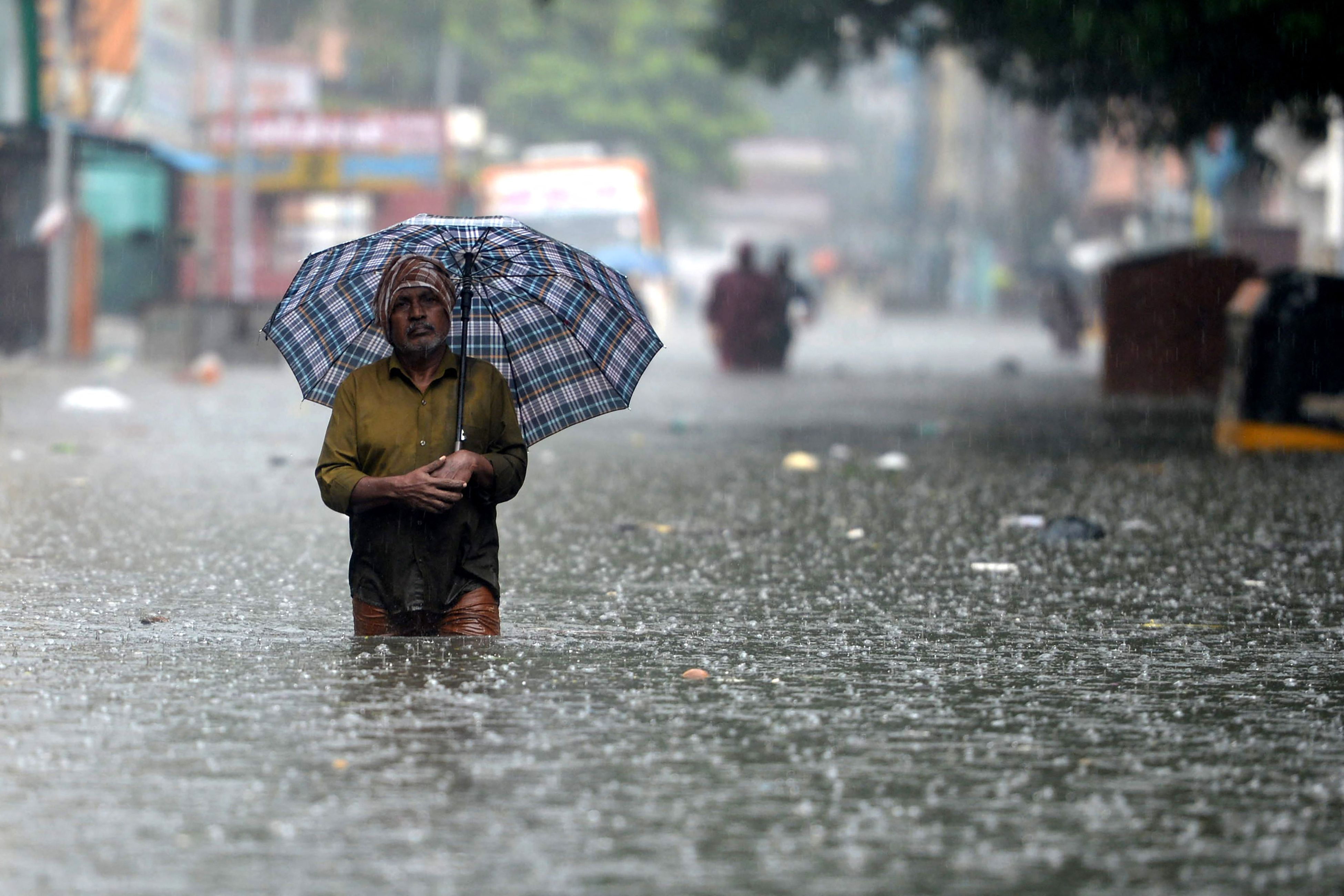
The submission of the NDC symbolises India’s commitment to act against the climate crisis and charting a path of growth that will be environmentally sustainable. India is among the most vulnerable to the climate crisis. Every monsoon, large parts of the country take a body blow to their economy, infrastructure, and people’s lives due to uneven distribution and extreme rainfall.
HT reported on Sunday that east and Northeast India recorded the lowest rain for July and also experienced its warmest July in 122 years, according to a monthly climate report by India Meteorological Department (IMD) on Friday. In June, two Northeastern states, Assam and Meghalaya recorded the highest June rainfall in 122 years.
In July, the paddy belt of east and northeast India suffered a prolonged dry period which led to delayed and even no sowing in many parts. This month again, IMD has warned of flooding rain over central India and parts of the west coast during the next three to four days due to the development of a low-pressure area over northwest Bengal, off the Odisha, West Bengal coasts. Once again, crop loss is expected over central India given the floods. While very low or no rain is likely over, rain deficient states in the Indo-Gangetic Plains during this week will further affect paddy yields. Being highly dependent on agriculture, the country's rural population is at high risk from the vagaries of monsoon.
It is significant that India has recognised the urgency of the climate crisis and has been putting the voice of the Global South forward in the UN climate negotiations. The Union environment ministry said in a statement last Wednesday that India’s updated NDC has two broad quantitative goals — to reduce the emissions intensity of its Gross Domestic Product (GDP) y 45% by 2030 from the 2005 level, and achieve about 50% cumulative electric power installed capacity from non-fossil fuel-based energy resources by 2030. The third new goal included in the NDC is to put forward and propagate a healthy and sustainable way of living based on the traditions and values of conservation and moderation through a mass movement for ‘LIFE– Lifestyle for Environment’ as a key to combating the climate crisis.
The ministry, in FAQs on the updated NDC, stated that the target of achieving 50% cumulative electric power installed capacity from non-fossil fuel-based sources will be taken up with the help of the transfer of technology and low-cost international finance, including from the Green Climate Fund. And while there was no mention of the previously articulated net-zero by 2070 deadline, an official at the environment ministry said that the two quantitative commitments are in sync with achieving that.
Officials in the ministry have clarified that the quantitative goal of achieving 50% installed capacity of power from non-fossil fuel sources is “conditional.” This means that India’s delivery of the goal will be dependent on the flow of climate finance from developed countries and access to new technologies for renewable energy. India has repeatedly articulated the need for climate finance to support the energy transition in developing countries.
Speaking at the Glasgow climate summit on November 1, 2021, Prime Minister Narendra Modi announced that India’s non-fossil energy capacity will reach 500 GW by 2030, meeting 50% of the country’s energy requirements by then. He said that India will reduce its total projected carbon emissions by one billion tonnes by 2030, reduce the carbon intensity of its economy by 45% by 2030 over 2005 levels, and achieve net-zero emissions by 2070.
In Glasgow, Modi also added that such ambitious action will be impossible without adequate climate finance from developed nations, calling on rich countries to make $1 trillion available as climate finance “as soon as possible.”
The hypocrisy of developed countries on the delivery of climate finance is clear as day. In 2009, at the Conference of the Parties (COP) 15 in Copenhagen, developed countries committed to a goal of mobilising jointly $100 billion a year by 2020 to address the needs of developing countries. They specified that the finance would come from a wide range of sources — public and private, bilateral, and multilateral, including alternative sources of finance.
But a climate finance delivery plan — co-led by the minister of environment and climate change, Canada, Jonathan Wilkinson and state secretary, federal ministry for the environment, Germany, Jochen Flasbarth released days ahead of COP26 last year — said developed countries will likely be able to mobilise $100 billion only in 2023, with a delay of three years compared to what was promised.
The UNFCCC’s standing committee on finance has estimated that developing countries need almost $6 trillion up to 2030 to implement their NDCs under the Paris Agreement. So, developed countries may announce net-zero goals for mid-century, but such announcements are meaningless unless they are backed by plans of mobilising climate finance and short-term goals. At COP 27, in Sharm El Sheikh, India will have to be a stronger voice on climate justice and the developed countries’ obligation to deliver finance based on their historical contribution to the crisis. With the submission of an updated NDC, India will also have a moral high ground to strengthen its voice.
At home, however, India perhaps is expected to do much more. Critical in this endeavour is creating a strong adaptation strategy to protect India’s vulnerable populations and animals from climate extremes. India can also achieve much more than what it has announced on the renewable energy front.
India last submitted its NDC to UNFCCC in 2015. That commitment comprised eight targets for 2021-2030, including reducing the emissions intensity of its GDP by 33- 35% by 2030 from the 2005 level; achieving about 40% cumulative electric power installed capacity from non-fossil fuel-based energy resources by 2030 with the help of the transfer of technology and low-cost international finance; and creating an additional carbon sink of 2.5- 3 billion tonnes of CO2 equivalent through additional forest and tree cover by 2030.
Of these, India achieved an emission intensity reduction of 24% in 2016. The next update on emissions intensity is expected early in 2023, when the next Biennial Update Report will be submitted to UNFCCC. India’s non-fossil installed capacity is already 41%. With a well-planned domestic strategy, India can go further than the goal of 50% in installed capacity from non-fossil sources by 2030. The Central Electricity Authority has projected that just solar and wind could amount to 50% of installed capacity by 2030.
Navroz Dubash, professor, the Centre for Policy Research, has pointed this out in his response to India’s NDC. “India already has a domestic target of 450GW renewable energy capacity, but nothing analogous now remains in the international sphere. The new electricity pledge has the benefit of simplicity and clarity, but is not the benchmark for tracking Indian progress – the domestic pledge is,” he said.
The NDC announcement, coming days ahead of India’s 75th Independence Day, reflects the importance of the issue for the government. India will have to continue to provide solutions and push for climate justice globally while achieving far more than what’s committed, through ambitious and fair domestic policies.
From the climate crisis to air pollution, from questions of the development-environment tradeoffs to India’s voice in international negotiations on the environment, HT’s Jayashree Nandi brings her deep domain knowledge in a weekly column
The views expressed are personal
 ABOUT THE AUTHORJayashree Nandi
I write on the environment and climate crisis and I believe these are the most important stories of our times.