“Revolution of rising expectations” was a much-used phrase in the India of the 1960s. It was about public aspirations for a better life outstripping the State’s ability to match them. But another phrase is waiting to be born — rise of diminishing expectations. It is about the gap between what we expect to be available to us as entitlements and the ability of the State to make it available.
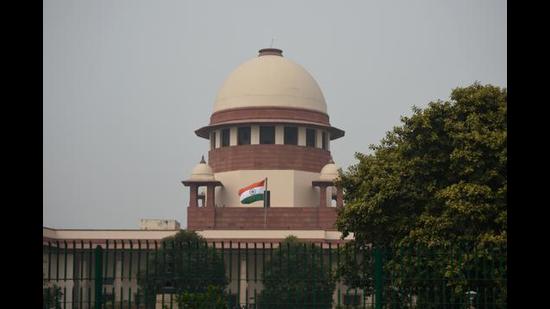
India’s judiciary has not always reassured seekers of justice. (Amal KS/HT PHOTO)
This is, like all generalisations, unfair to many an earnest politician, honest, hardworking official, and worthy institution. Readers of this column will know, admire and respect a number of public servants who work tirelessly in their field of duty. But who can deny that the words politician and bureaucrat are not exactly a compliment today? We expect less from the political class than we did in the early years of our Republic. So also from the class of officials. Institutions have also suffered a similar erosion of public confidence. Hearing our judiciary being criticised is deeply demoralising. It plunges diminishing expectations into a pit of utter despondency, despair.
And this is exactly where in the last few days I have, to my relief, my delight, my touchwood elation, found so much that reverses and annuls the cynicism. There is hope.
A fortnight ago, I saw the Tamil feature film Jai Bhim! which tells the real story of a tribal from the Irula community having died of torture in police custody, while being interrogated for a theft he did not commit. It ends in the perpetrators being arrested and convicted, the young widow being compensated – all because of the perseverance of a young lawyer K Chandru and the Madras High Court (HC)’s sensitivity. Chandru went on to become a judge, retiring with an outstanding reputation for courage and probity. The film about criminal injustice to a tribal being reversed by the house of justice did more than anything else in recent times to strengthen my faith in our judiciary.
In her eye-opener of a column in Mint Lounge on November 18, Gita Aravamudan points out that custodial torture and deaths are an old and die-hard phenomenon in India. And she cites the Chief Justice of India (CJI) NV Ramana’s stirring words spoken on August 8 at the National Legal Services Authority of India: “The threat to human rights and bodily integrity are the highest in police stations…To keep police excesses in check, dissemination of information about the constitutional right to legal aid and availability of free legal aid services is necessary.”
This holds out hope. India signed the UN Convention Against Torture on October 18, 1997. But a quarter century on, it is yet to ratify its signing. Why? Will the higher judiciary be moved to ask why this hesitancy? It well could.
Recently, the Supreme Court (SC) gave a historic pronouncement in an altogether different field. Quashing the orders of the Bombay HC that acquitted a man charged with sexual assault on a girl on the ground that the man had groped her over her clothes without skin-to-skin contact, it said limiting the definition of “touch” to a narrow and pedantic definition would be an “absurd interpretation”. Justices UU Lalit, Ravindra Bhat and Bela Trivedi said that sexual intent was what mattered. The offender was sentenced to three years rigorous imprisonment. Few things can be more confidence-inspiring for the vulnerable girl child and her carers. Cases under the Protection of Children from Sexual Offences (POCSO), we may note, reached 43,000 this year.
And, crowning this, has come the SC’s intervention to protect the investigation into the deaths of farmers in Lakhimpur Kheri. The farmers, the bench led by CJI Ramana said, were “rammed from behind” and “then run over” and this matter deserved an “impartial, fair, just and thorough investigation”. Few things can be more restorative of our sense of expectation from the most crucial of institutions.
India’s judiciary has not always reassured seekers of justice. Judges are only human beings placed by their calling. They can miss the chance to intervene decisively. For now, however, the rise in diminishing expectations has been given a pause by the judiciary.
Gopalkrishna Gandhi is a former administrator, diplomat and governor
Gopalkrishna Gandhi read English Literature at St Stephen’s College, Delhi. A civil servant and diplomat, he was Governor of West Bengal, 2004-2009. He is currently Distinguished Professor of History and Politics at Ashoka UniversityRead More

 E-Paper