
 E-Paper



In Uttar Pradesh, a poll potboiler in the making
Like always, no matter what the results, UP promises to provide the ingredients for a potboiler.

 Prefer HTon Google


The Bharatiya Janata Party's (BJP) aim of winning at least 370 of the 543 seats in the Lok Sabha in the ongoing general elections, and, together with its partners, in excess of 400, is hugely dependent on its ability to maximise its tally in Uttar Pradesh (UP), which sends the most representatives, 80, to the Lok Sabha.
In 2014, the party won 71 seats and 42.3% of the popular vote. In 2019, it won more votes, 49.6%, but fewer seats, 62. This time, the thinking before the elections were announced was that the party would do far better, perhaps win even more seats than it did in 2014.
There was enough reason to think so.
UP is home to Prime Minister Narendra Modi’s Lok Sabha constituency, Varanasi, and he is a hugely popular leader in the state. As is the state’s chief minister (CM), the monk-administrator Yogi Adityanath who also heads the influential Gorakhnath math. The BJP won the 2017 state elections with 39.7% of the vote and 77.4% of the seats and retained power in 2022 with 41.3% of the votes and 63.3% of the seats. The consecration of the Ram Mandir in Ayodhya in January — it has drawn huge crowds since — created a wave not just across the Hindi heartland where the BJP is dominant, but even south of the Vindhyas. The party managed to forge a partnership with the Rashtriya Lok Dal, until then in the Opposition camp, and retained many of its existing alliances, such as those with the Apna Dal (Soneylal) or ADAL and Suheldev Bharatiya Samaj Party (SBSP).
And the Opposition appeared in disarray: The Congress has been desperately struggling for the past two decades to recuperate in the state; the Bahujan Samaj Party (BSP) wants to have no truck with either the ruling alliance or the Opposition one, and seems to have lost relevance even among a section of its most loyal base; and the Samajwadi Party (SP), which put up a creditable performance in 2022 is trying to retain its space and build a base for the 2027 assembly polls.
But as the elections progressed, the script played out differently (though the ending may be the same), as even some leaders of the BJP admit. With polling complete in 34 of the state’s 80 seats and 379 of the 543 across India, this is perhaps a good time to try and understand what is happening in the crucible of Indian politics.
The euphoria over the temple started to subside even as the BJP fielded Arun Govil, who played Ram in the TV serial version of the Ramayan, from the Muslim-dominated Meerut constituency in west UP. The open rebellion by their loyal voters, the Rajputs, rattled the BJP leadership the most. Taking umbrage over their poor representation in ticket distribution despite the two tallest leaders of their community holding the position of CM and Union defence minister (Rajnath Singh), the Rajputs organised panchayats, pledging support to the party that could defeat the BJP. Some just didn’t turn up to vote. In the first phase, turnout in UP was 61.1%, 5.5 percentage points lower than in 2019; in the second, it was 55.2%, 6.9 percentage points lower. Only in the third phase did things pick up, but that too was only with respect to the gap with 2019. The turnout was 57.6%, compared to 60% in 2019.
After four phases of polling, the Sangh Parivar does not see the intense Modi wave of 2014 and 2019 that swallowed all other poll issues. It also fears the erosion of the Hindu vote bank built on issues ranging from the “liberation” of three Hindu shrines in the state to the bogey of “love jihad”.
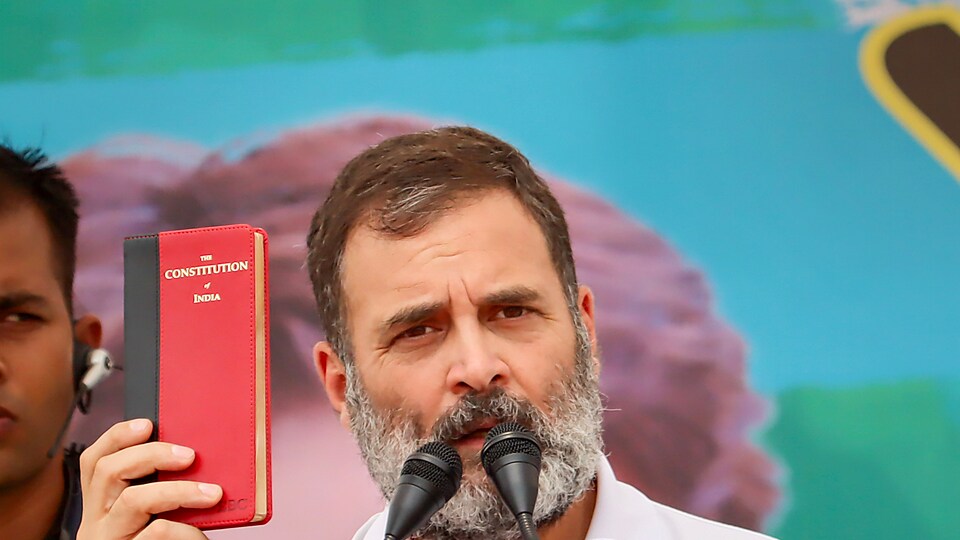
In its endeavour to upset the BJP’s applecart, the SP has fielded Hindu candidates in Muslim-dominated constituencies — a Dalit woman in Meerut and a Jat in Muzaffarnagar — to check polling on communal lines. But the Muslims, fearing the return of the BJP-led National Democratic Alliance government at the Centre, anecdotally appear to have decided to consolidate behind the Congress-SP alliance, ignoring other Muslim candidates. The formation of the INDIA bloc has given a national look to the SP. Crowds are visible at its meetings, but the question is whether they will convert into votes. And the biggest fault line that is worrying the BJP, whose success in the state is built on a larger Hindu consolidation across caste and caste lines, is caste. Perhaps triggered by rash statements by some BJP leaders, and fear-mongering by some in the Opposition, a section of Dalits fear amendments to the Constitution, created by one of the community’s torchbearers BR Ambedkar, to end their quota. The noise over these issues has diluted the potency of factors such as welfare schemes.
There are other key questions in these elections. What is the future of the Congress in the state: How will the party fare in Rae Bareli, the only seat it held in 2019 and where it has fielded Rahul Gandhi? Since his nomination, the BJP high command has been busy strategising his defeat. The recent meeting of Shah and Raghuraj Pratap Singh from neighbouring Kunda is significant to that end – Singh, popularly known as Raja Bhaiya, has a considerable hold on Rajputs and others in the region. And what of the BSP: Is there any hope of its revival and can it play spoiler in close contests?
Like always, no matter what the results, UP promises to provide the ingredients for a potboiler.
The views expressed are personal


