
 E-Paper



It’s a mixed bag for Naveen Patnaik in 2 decades of his Odisha rule | Opinion
Since then the ‘novice’ Patnaik has turned a veteran in the world of politics, vanquishing his opponents and winning on a trot for the fifth time as he was elected chief minister of Odisha again in 2019 assembly polls.

 Prefer HTon Google


Once dismissed as a novice when he arrived in Odisha in 1997 after the death of his father and former chief minister Biju Patnaik, the Doon School-educated Naveen Patnaik has proved to be nothing less than a phenomenon in Indian politics as he completed 20 years of his chief ministership on March 5.
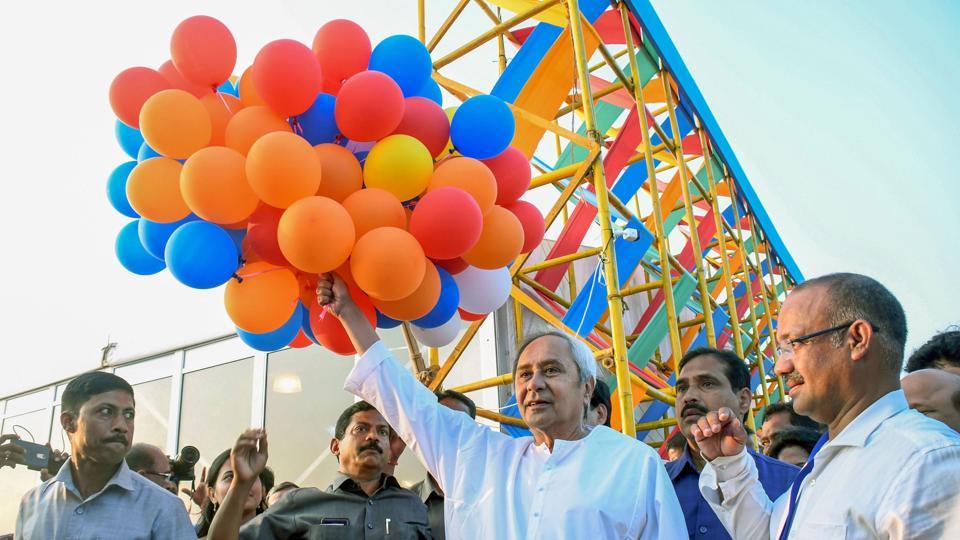
Virtually unknown to everyone in Odisha during the lifetime of his hugely popular father, Patnaik arrived to take charge of the newly-formed Biju Janata Dal (BJD) in December 1997 to harness the sympathy generated by his father’s death. In March 2000, he was elected as the chief minister of Odisha as the BJD in association with the Bharatiya Janata Party (BJP) swept the assembly polls.
Since then the ‘novice’ Patnaik has turned a veteran in the world of politics, vanquishing his opponents and winning on a trot for the fifth time as he was elected chief minister of Odisha again in 2019 assembly polls.
So far, only three Indian politicians have a record better than Patnaik—Manik Sarkar of Tripura, Pawan Kumar Chamling of Sikkim and Jyoti Basu of West Bengal. Sarkar of CPI(M)-ruled Tripura for exactly 20 years between March 1998 and March 2018 when he lost power to the BJP. Basu left the office of CM of Bengal in 2000 after ruling the eastern state for 23 continuous years while Chamling lost the assembly polls in August 2019 after helming the Himalayan state for little more than 24 years. On Thursday, the 73-year-old Patnaik is all set to overtake Sarkar’s records.
In Odisha, as its longest-serving chief minister, the enigmatic Patnaik still remains the least understood politician as he rarely gives a clue as to what is playing in his mind. In the last two decades, he has changed the face of the state, but the jury is still out on his successes and failures.
Here are accounts of Patnaik’s five successes and five failures.
Successes
1. Economy
When he took charge of the cyclone-battered Odisha in March 2000, the state’s finances were in tatters due to the profligacy of the previous regimes. By the end of 2001-02, the state had become a revenue deficit to the extent of 6.06% of its Gross State Domestic Product. The state was heavily dependent on Ways and Means advances and overdrafts of Reserve Bank of India for day to day cash requirements. The situation had become so bad that the 10th Finance Commission put Odisha under the category of fiscally stressed states. Things started looking up when the state government enacted Odisha Fiscal Responsibility and Budget Management (FRBM) Act in June 2005 leading to large-scale fiscal consolidation.
After adhering to the FRBM Act, Odisha’s revenue deficit and fiscal deficit improved with the state becoming revenue surplus by 2009-10. In the last two decades, Odisha’s economy has grown 13 times as its GSDP reached Rs 5.34 lakh crore ($75 billion) in 2019-20 (an estimate) from Rs 46,756 crore in 2000-01. The per capita income of Odisha has also grown seven times from 10662 in 1999-2000 to Rs 101,587 in 2019-20. Between 1950 and 1980, Odisha grew just about at 2.77% while the country grew at 3.5%. Since 2012-13, Odisha’s GDP has been growing at an average annual rate of 8.10%, faster than the national GDP in the past seven years, except in 2014-15 and 2017-18. The state has managed to maintain an average revenue surplus (as a percentage of GSDP) ie 2.5% during the last five years.
Sitakanta Panda, assistant professor of economics at the department of liberal arts, Indian Institute of Technology, Bhilai, says between 2000 and 2013, Odisha economy saw the highest growth rate compared to 17 major states. But Panda adds: “The rate of poverty reduction for the Scheduled Tribes and the Scheduled Castes has been dismal. Obviously it’s coincidental to the rule of Naveen Patnaik”.
2. Poverty reduction/food security
Infamous for starvation deaths and child sale in much of the 80s and 90s, the image of Odisha evoked an image of emaciated men and women subsisting on morsels of food. During the 60s, hunger deaths of thousands of people were reported from the drought-hit Kalahandi- Koraput districts. But much of it changed after the government started providing rice at Rs 2 per kg to 55 lakh BPL families since 2008. In 2013, it lowered the rates to Rs 1 per kg of rice. In 2016, it started 158 Aahar centres in urban and rural areas where people get cooked rice and mix of lentil and vegetables at Rs 5.
Till 2004-05, Odisha had one of the highest incidences of poverty in the country but helped by high growth rates poverty in Odisha recorded the sharpest fall in India by 24.61% points between 2004-05 & 2011-12. The incidence of poverty too has come down from 47.15 % in 1999-2000 to 32.59 %, as per Niti Aayog’s sustainable development goals India Index Baseline Report 2018. From being a state which was foodgrain deficit and dependent on foodgrains from Punjab and Haryana to feed its own people, Odisha is now is the country’s third-largest contributor to the PDS.
3. Empowerment of women
To make women self-reliant, Patnaik in 2001 started “Mission Shakti”, an initiative in which rural women form Self Help Groups and do their own business enterprise through low-interest bank loans. So far 70 lakh women through 6 lakh women self-help groups have benefitted through Mission Shakti with Rs 5000 crore savings and Rs 2000 crore annual credit exposure through banks. Other schemes like Mamata Yojana, a maternity benefit scheme, has helped cut down infant and maternal mortality.
More than five lakh tribal girls now live free of cost in government hostels while women get Rs 10 lakh health coverage under Biju Swasthya Kalyan Yojana. It has reserved 50% of the seats in panchayati raj or civic bodies for women through an amendment in the law. Last year, BJD gave 33% of the tickets in the Lok Sabha poll to women candidates.
4. Human Development Index
Through the administration of a host of social welfare schemes, the human development indices have improved. Maternal mortality rates(Maternal deaths per 1 lakh live births) in Odisha have come down to 168 in 2019 from 358 in 2001 though it is still significantly higher than the national average of 122. Similarly, the infant mortality rate has gone down to 40 now from 96 in 2000.
The literacy rates have grown to 73.5% in 2011 from 63.1% in 2001 while the dropout rates at the primary level have come down sharply from 41.8% in 2000-01 to 2.60% in 2010-11 at primary level and at upper primary level from about 57% in 2000-01 to 7.23% in 2010-11.
5. Natural disaster management
In 1999, in one of the worst cyclones of India’s meteorological history, more than 10,000 people were killed in 12 districts of Odisha as windspeed touching 300 km per hour pounded the coastline. Recovering from the epic mishandling of natural disaster, Odisha has subsequently kept the death toll in all-natural disasters in double digits including last year’s Cyclone Fani when 64 people died. The state has 879 multipurpose cyclone shelters. It was the first state in India to have its own disaster management authority and a specialised force called Odisha Disaster Rapid Action Force that fans out to affected places to clear roadblocks and rescue people.
All vulnerable parts of the state have active Cyclone Management Centres, where the local sarpanch spearheads the preparedness. It has 16 district-level Disaster Management Planning Committees, which reach out to 155 block-level bodies and 22,000 village-level bodies. The United Nations now hails Odisha as a role model for disaster management.
Failures
1. Low agriculture yield
Though Odisha claimed to have clocked an average annual growth rate of about 4.5% between 2000-01 and 2016-17 in agriculture against a national average of 3.1%, the growth has been volatile. The state receives an average rainfall of more than 140cm, above the national average of 110cm. However, rainfall is quite erratic and unevenly distributed and in the absence of adequate irrigation coverage, the average yield in 2015-16 was 1738 kg per hectare against all-India average of 2056 kg per hectare.
A little over 43% of its cultivable land is covered by irrigation while the all-India average is 51.9%. Lack of adequate irrigation frequently results in crop failures and in famine-like situations. Despite the rise in Odisha’s productivity in major crops like paddy, groundnut, gram and lentils, it is still below those of some of the best states in India. It still imports a large part of potato, eggs, pulses and meat from neighbouring states. Potato Mission, launched a few years ago to make the state self-sufficient has been a non-starter.
2. Corruption in government
Despite Patnaik’s avowed aversion for corruption, the National Crime Records Bureau (NCRB) in its 2017 report showed Odisha registering the second-highest number of cases of corruption in government offices in the country after Maharashtra. While Maharashtra topped the list with the registration of 925 corruption cases in 2017, Odisha registered 494 such cases.
In 2016 too, Odisha was at second position after Maharashtra for registering maximum corruption cases in 2016. Though Odisha Vigilance claimed to have a conviction rate of 51% in 2018, a large number of corruption cases were pending trial in different courts. Till last year, 6817 corruption cases against Odisha government officials were pending trials.
“Up to 2010, most disproportionate assets cases against government officials were not more than a few lakhs. But since last seven to eight years such assets tend to run in crores. Corruption in government offices of Odisha is rising,” alleged Pradip Pradhan, an anti-corruption activist.
3. Unemployment
Despite the rise in industrialisation over the last two decades and clocking GDP growth over 8%, rising unemployment has taken the sheen off the high growth as thousands of educated youths continue to leave the state for jobs. As per the Periodic Labour Force Survey done by the National Statistical Organisation between January and March 2019, Odisha had the highest unemployment rate of 32% among the youth in the 15-29 age group.
As per the annual economic survey 2018-19, the unemployment rate in Odisha was more pronounced in urban areas (8.4%) than rural areas (6.9%). Though the share of the services sector to Odisha’s GDP continued to rise, it did not see a commensurate rise in employment.
4. Mining scam/chit fund scam
In the last two decades, the state saw two of the biggest scams- mining scam and chit fund scam. The two scams brought out Patnaik’s government’s systemic inability in stopping the plunder of its precious natural resources and loot of people’s savings. Between 2004 and 2012, iron and manganese ores worth Rs 1.99 lakh crore were extracted from Odisha’s mines, but much of it was above the allowed limit set by the various government agencies like Indian Bureau of Mines and Odisha Pollution Control Board.
Though mining is a highly regulated sector, the justice MB Shah Commission of Inquiry that probed into the irregularities, pegged the scam at Rs 59,000 crore. Similarly, about a million people in rural and urban Odisha lost about Rs 5000 crore as the 50-odd chit fund companies they had invested their life’s savings wound up leaving them high and dry. Many of the chit fund companies enjoyed the patronage of ruling party MLAs and MPs. In 2013, Odisha enacted a special act to protect the interest of small depositors and set up a corpus fund of Rs 300 crore to help the small investors, but it was a case of too little too late.
5. Rising crime against women
Women have been the principal supporters of Naveen Patnaik government over the last two decades, yet when it comes to their safety, Odisha lags behind other states. As per the latest statistics released by NCRB, crimes against women are on the rise in the state as 20,098 cases in 2017 as against 17,837 cases in 2016. With 94 complaints per one lakh population, Odisha recorded the second-highest number of crimes against women in the country after Assam in 2017.
Since 2014, Odisha is consistently topping the list in case of “disrobing of women” leaving the states like Uttar Pradesh and Bihar far behind. In 2018, Odisha topped the list of states in cases of “use of child pornography or storing child pornography material”. As per NCRB, the conviction rate of crime against women in Odisha was a measly 6.2% against a national average of 18.7% in 2016.


