
 E-Paper



It’s time women authored Bihar’s political script
Candidate lists, rallies, and back-rooms are still dominated by men while women are still cast as foot soldiers, never as theorists, never as architects

 Prefer HTon Google


Over 35 million women constitute nearly half of Bihar’s electorate. More than 1.4 lakh women currently hold office in panchayats, enabled by the state’s pioneering 50% reservation in local bodies. Bihar set a national precedent in 2016 by reserving 35% of government jobs for women, significantly increasing female representation across classrooms, police stations, and district administrations. The Mukhyamantri Balika Cycle Yojana has facilitated mobility and access for over 9 million schoolgirls since 2007 — transforming aspiration into momentum.
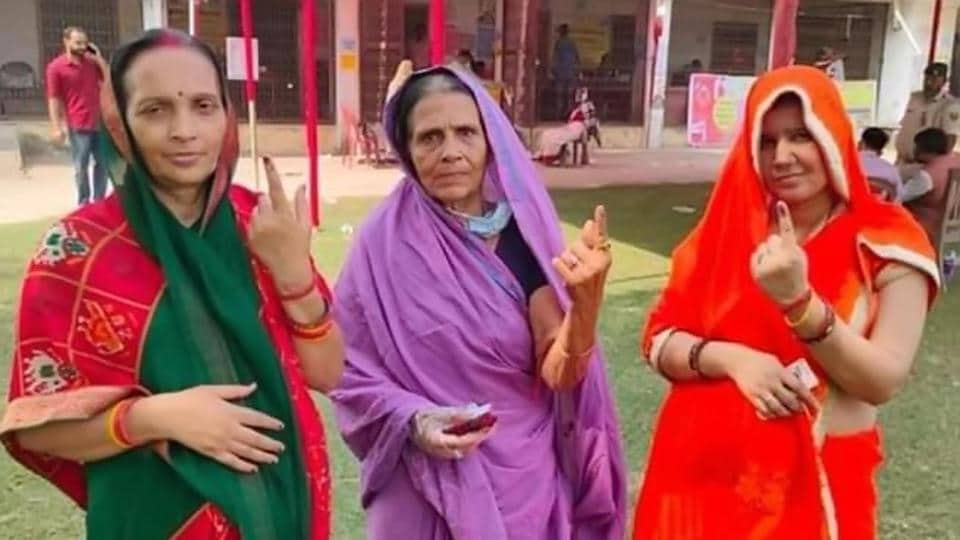
But Bihar’s women are far from passive beneficiaries. They are the architects of the state’s daily functionality: the Jeevika didis running microcredit ecosystems, the Anganwadi workers who anchor maternal and child welfare, the Asha workers navigating floodplains with registers and resolve. And in classrooms, teacher didis cycling into villages with the promise of change.
Yet, female authorship remains largely unacknowledged in the political script of Bihar’s growth story. None of the much-touted women-centric structural interventions and policies in Bihar is bereft of women’s participation. The liquor prohibition movement, later co-opted as a political victory, was rooted in village-level mobilisations led by women. Bicycle Yojana emerged from the collectively articulated pain of ambitious girls who dropped out of school. Every scheme, now articulated in a language of political philanthropy, was first seeded in the cerebral and collective consciousness of women.
While women have long shaped the state’s moral and material grammar, their presence has not translated into proportionate power. The representational void is staggering — only 26 women in a 243-member state Assembly. Just three of Bihar’s 40 Lok Sabha MPs are women. No major political formation consistently fields women in meaningful numbers. Even the recently passed Women’s Reservation Bill remains in legislative limbo — deferred to a census, delimitation, and an ever-receding horizon. Performative inclusion recasts power as patronage — and renders gratitude a substitute for rights and, more importantly, for women’s political agency. Women are celebrated in dashboards and speeches. However, numbers — though necessary — are not sufficient. They diagnose presence, but not power. In the political lexicon, development is too often framed as generosity, participation as a privilege extended, rightful benefits as charity, and equality as altruism. This re-framing flattens the moral economy of governance and obscures the structural legitimacy of women’s demands. What is owed becomes optional. What is earned is repackaged as benevolence. And what should be political is rendered ornamental.
More troubling still is the vacuum of political articulation by and for women. Bihar — whose intellectual and democratic legacies are often summoned in national discourse — now bears witness to a strange quietude. For generations, women in Bihar have tilled fields, built families, administered welfare schemes — and then ceded the podium. A temperament forged through endurance and custodianship has too often meant withdrawal from public claim-making. That retreat, philosophical as it may have seemed, has had a political cost.
It is time to recalibrate. Because what Bihar needs now is not another expansion of benefits — but a transformation of authorship. And for that, it need not look beyond its own historical and civilisational archive.
In post-Independence Bihar, Tarkeshwari Sinha stood in Parliament at 26, debating budgets with acumen. Prabhavati Devi reimagined women’s work through schools, ashrams, and prison reforms — while her husband, Jayaprakash Narayan, led the nation towards an alternative politics. Long before them, this land — Magadh, Mithila, Vaishali — had nurtured voices that shaped philosophy, policy, and public life. Gargi and Maitreyi debated metaphysics in Janaka’s court. Chandanbala rose from enslavement to architect the Jain sangha. Vishakha advised kings and patronised the Buddha’s sangha. Even myth remembers Sita and Sati not for passive suffering, but for choosing dignity over spectacle, agency over silence.
And yet, these names rarely find mention in political manifestos, campaign speeches, or public memory. Bihar’s political culture continues to evolve — caste configurations, digital landscapes, social media mediated spectacle. Despite this churn, imagination remains stubbornly masculine. Candidate lists, rallies, and back-rooms are still dominated by men while women politicians are still cast as foot soldiers, never as theorists, never as architects.
This exclusion is not accidental. It is systemic. But it is also unchallenged. Why must every cycle, every LPG cylinder, every ration card be framed as political favour?
Why must structural empowerment be repackaged as benevolence and demanded back as loyalty? Each of these interventions by the State built lives, yes. But they also built constituencies. Empowerment was not a gift. It was a negotiation. And it was earned. The questions need asking — urgently, unflinchingly, and by women themselves. Who else to hold accountable, if not us? And the more important question is: Are Bihar’s political women naming these truths as sharply and collectively as they must?
We have Dalit leaders under whose patronage entire caste groups consolidate. We have minority leaders whose mandates carry the weight of historical representation. But where are the women leaders who have stood unequivocally for women, who have made gender the core of their politics, not an auxiliary concern? Who among them has meaningfully resisted the patriarchal architectures that elevated them? Or have too many remained confined to the script — present, visible, but never allowed to author?
As Bihar stands once again on the cusp of an electoral reckoning, the question is not who will win but who will imagine Bihar anew?
Shubhrastha is co-author of The Last Battle of Saraighat: The Story of the BJP’s Rise in the North-east. The views expressed are personal


