
 E-Paper



Joining hands for water security as warming rises
Discussions at India International Water Week will span river-basin management, wastewater reuse, early-warning systems and environmental flows.

 Prefer HTon Google


Water connects us in ways few other resources do. Rivers do not recognise administrative boundaries, aquifers may sustain several communities, and rain that falls today becomes tomorrow’s drinking water, irrigation source, groundwater or river flow. Thus, securing water for our future generations is a shared responsibility.
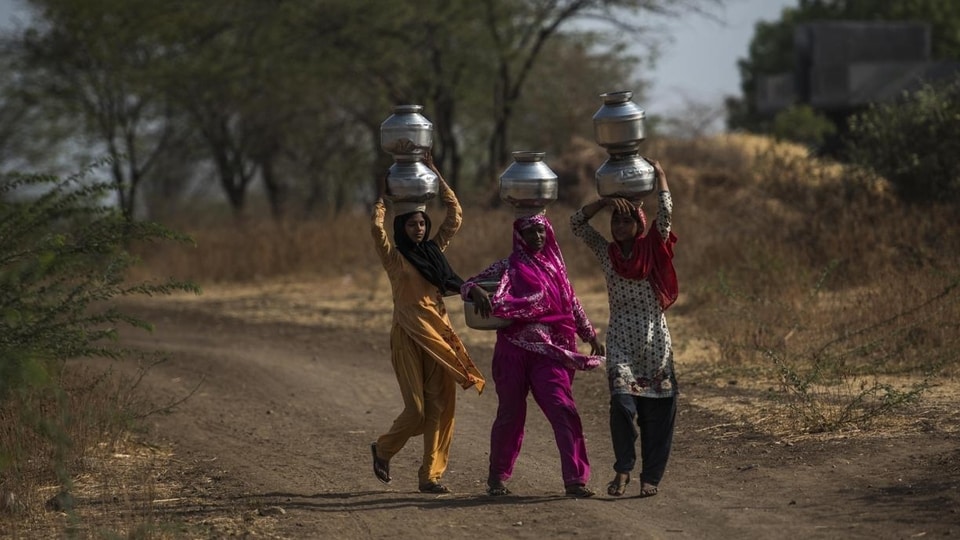
It is in this spirit that India will welcome the global water community to the 9th India International Water Week, organised by the ministry of Jal Shakti on September 22-26, 2026 in New Delhi. The theme, Climate Resilient Water Management, is particularly relevant at a time when the climate crisis is making the water cycle increasingly unpredictable. India International Water Week is a platform where governments, experts, industry, communities, and international partners build partnerships for the future. It also seeks to further the spirit and lessons from the recent Departmental Summit on Water, an idea mooted by Prime Minister Narendra Modi, where India’s states and UTs came together to deliberate on the sector’s challenges, share experiences, and identify the way forward.
Also Read | Global temperature rise set to cross 1.5°C threshold by end of decade: UN report
India brings to this dialogue extensive experience of implementing water and sanitation programmes at scale. The Jal Jeevan Mission has brought tap water to more than 15.9 crore rural households, from 3.23 crore households in 2019. Jal Jeevan Mission 2.0 is centered on transforming water-supply infrastructure into dependable public service delivery systems. Gram Panchayats and its Village Water & Sanitation Committees (VWSCs) are being empowered as local micro utilities for operating, maintaining and monitoring rural water services. Jal Seva Aankalan, a Gram Panchayat-led digital drinking water service functionality assessment, marks a decisive shift from infrastructure creation to sustained service delivery, placing Gram Panchayats and village institutions through Jan Bhagidari at the centre of assessing the regularity, adequacy, quality and sustainability of drinking water supply in Har Ghar Jal villages. Through the Namami Gange Programme, India seeks to rejuvenate the river Ganga and its tributaries by combining sewage infrastructure and pollution abatement with ecological restoration, biodiversity conservation and people’s participation.
Under Swachh Bharat Mission-Grameen, more than 12 crore toilets have been constructed in rural areas. The second phase of this mission has also focused upon solid and liquid waste management. Across these programmes runs a common thread — Jan Bhagidari, with the conviction that public policy is strongest when people move from being beneficiaries to becoming partners.
The same approach guides our water-conservation efforts. Through initiatives such as Jal Sanchay Jan Bhagidari and the Catch the Rain campaign, our objective is to make water conservation a people’s movement.
India’s experience also teaches us that there is no single solution to water challenges. Needs vary depending on geography, urbanisation, and community needs, among other factors. This diversity makes our states and UTs a rich reservoir of experience in groundwater recharge, irrigation efficiency, community management of drinking-water systems and wastewater reuse. When such experiences are shared, successful local solutions can travel far beyond the places where they began.
Discussions at India International Water Week will span river-basin and aquifer management, wastewater reuse, water-use efficiency, forecasting, early-warning systems and environmental flows.
Better data, modelling and digital systems can help us understand how water availability is changing, anticipate risks and improve efficiency. But technology delivers its greatest value when it enables better decisions by governments, local institutions and communities. This is why the participation of practitioners, start-ups and young people is especially important. Under JJM’s institutional reform, the Sujalam Bharat digital public infrastructure ecosystem is leveraging data and technology to improve planning, source sustainability, performance monitoring and citizen-centric governance.
Also Read | The case for a climate risk budget for India
Public investment will remain fundamental, but climate-resilient water infrastructure will increasingly require innovative financing, responsible private participation and partnerships that mobilise resources while keeping public purpose at its core.
As the climate crisis brings more uncertain rainfall, intense precipitation, prolonged dry periods, floods and groundwater stress, resilience will require source sustainability, better science and forecasting, adaptive infrastructure, sound institutions and informed communities. This is the larger purpose of India International Water Week: to bring leadership, science, implementation, technology, finance, and public participation to a common table. The climate crisis may make the water cycle more uncertain. Our response cannot be uncertain. It must be collective, scientific, inclusive and sustained.
CR Patil is Union minister of Jal Shakti. The views expressed are personal


