Just Like That | Notes on Gulzar, dramas, and the journey of Kathak
On Gulzar Saheb, a close friend with a great sense of humour, who celebrated his 88th birthday; two landmark drama events of long-standing importance in Delhi; and the release of a new book on Kathak
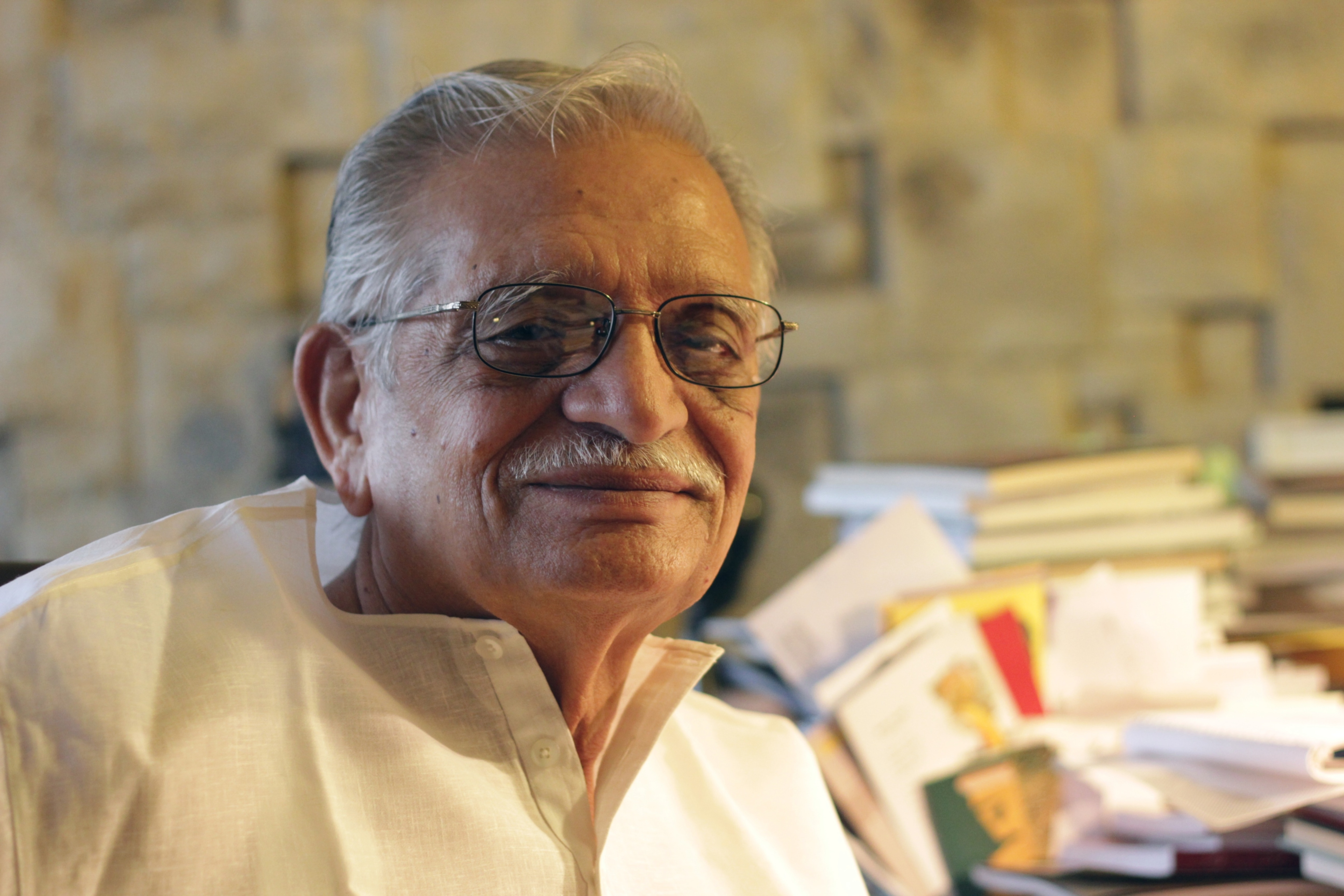
I consider Gulzar to be one of my closest friends. It was my privilege to translate into English four volumes of his poetry, Selected Poems, Neglected Poems, Suspected Poems, and Green Poems — all for Penguin books. (HT Photo)
On August 18 this year, Sampooran Singh Kalra, universally known as Gulzar, celebrated his 88th birthday. His life is a biographer’s dream, from his coming as a refugee to Delhi after Partition, his move to Mumbai, his initially working as a motor mechanic, his first song, Mera gora ang lai le, for the film Bandini in 1963, his marriage to actress Rakhee, and his emergence as one of India’s finest poets, lyricists, film directors and scriptwriters.
I consider Gulzar to be one of my closest friends. It was my privilege to translate into English four volumes of his poetry, Selected Poems, Neglected Poems, Suspected Poems, and Green Poems — all for Penguin books. The name Neglected Poems has an interesting background. I was behind schedule in my translation of this volume, and needed to be reminded to get on with it. Few people are aware of what a great sense of humour Gulzar has. One evening — and we used to talk frequently — he called me in Bhutan, where I was India’s ambassador. In the course of our conversation, he asked me where I had reached with the translations. I said I’m sorry I am behind schedule. To which, very casually he remarked: “I think we should call this volume Neglected Poems.” There was silence on my side, and then we both had a good laugh. I resumed work on the translations the very next day.
Even more a matter of pride for me was when Gulzar translated my long poem, Yudhishtar and Draupadi, from English to Hindustani. His way of telling me was, again, unique. On a visit to Delhi, he called to say he needed to see me urgently for 10 minutes. Of course, I said yes. I went to the Habitat Centre where he was staying, and found him lying in bed propped on a pillow. He said that he was a little under the weather, but wanted me to hear one of his nazms (poems). He then read it out in his deep baritone. I found the imagery very moving, and told him so. He looked at me intently, and asked me to hear just one more.
As he was reading that, the penny dropped. Both were sonnets from Yudhishtar and Draupadi! When I exclaimed in surprise, he laughed. “Yahi tau batane ke liye aapko bulaya tha (This is the reason why I called you!)” He had finished the translation of the entire book, without breathing a word to me. The book was published again by Penguin in 2012, with my original and his translation, expectedly with more success! Happy birthday, Gulzar Saheb, and may you have many more!
Krishna and Ramayana
Every year, two landmark events of long-standing importance take place in Delhi. For a week before Janmashtami, there is the dance drama “Krishna” at Kamani. On the first day of the Navratras, the dance drama “Ramayana” can be seen, next to Kamani on the lawns of the Shriram Bhartiya Kala Kendra. Ramayana has been staged without a break since 1957, and Krishna since 1977.
Interestingly, the first production of Ramayana was facilitated by a government grant given by Prime Minister Jawaharlal Nehru of ₹26,000 (this covered roughly half the cost at that time) to Sumitra Charatram (the talented wife of business icon, Lala Charatram), who ran the Kala Kendra. Today, her mantle has been taken over by her indefatigable daughter, Shobha Deepak Singh, ably assisted by her husband, Deepak. Each year, the shows are packed. The first show of Ramayana this year will be on September 26.
Kathak Lok by Shovana Narayan
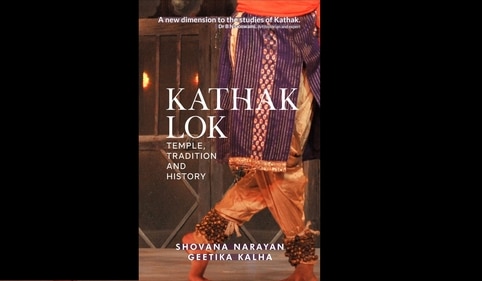
The renowned Kathak dancer, Shovana Narayan, in association with bureaucrat-writer, Geetika Kalha, released her book Kathak Lok recently at the India International Centre in Delhi. The book is the result of 7,000 kilometres of travel through North India, and five years of research, to understand the existence of Kathak villages, and what Kathak represents. I was delighted to speak at the launch, along with noted poet Ashok Vajpayee and professor BN Goswami — arguably India’s most erudite art historian — in a session chaired by former governor NN Vohra.
Kathak Lok.
Pavan K Varma is author, diplomat, and former Member of Parliament (Rajya Sabha)
Just Like That is a weekly column where Varma shares nuggets from the world of history, culture, literature, and personal reminiscences with HT Premium readers

 E-Paper